

- Data-driven decision-making.
- Open government data.
- Responsible data use.
- Citizen engagement.
- Incentives.
Five hacks for digital democracy
Beth Simone Noveck
Source: www.nature.com
Networking the complexity community since 1999
Month: April 2017
Five hacks for digital democracy
Beth Simone Noveck
Source: www.nature.com
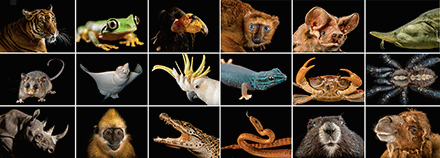
An ecosystem consists of communities of interacting species and the physical environment on which they depend. Although it is well accepted that Earth consists of many different ecosystems, human societies much less readily recognize that Earth itself is an ecosystem, dependent on interacting species and consisting of finite resources. As the human population has grown and increasingly dominated available resources, “ecosystem Earth” has begun to show increasing signs of stress. Loss of biodiversity, environmental degradation, and conflict over resources among the dominant species are typical signs that a biological system is nearing a state change, which could range from collapse of the dominant species, to development of alternative biological communities, to collapse of the entire system. In this special issue, we identify our impacts on ecosystem Earth, seek to understand the barriers to change, and explore potential solutions. Decades of research on ecosystem dynamics can help to guide our thinking about a sustainable future. Bottom-up reductions in human population growth and resource consumption, changes to how we think about our place in the system, and a willingness to prioritize persistence of the other species within our biological community will lead to a healthier planetary ecosystem. It is essential that humanity begins to better appreciate our role as just one part of a large and interdependent biological community. Our ability to dominate the planet’s resources makes us directly responsible for determining the future of the ecosystem on which we, and all other forms of life, depend.
Ecosystem Earth
Sacha Vignieri, Julia Fahrenkamp-Uppenbrink
Science 21 Apr 2017:
Vol. 356, Issue 6335, pp. 258-259
DOI: 10.1126/science.356.6335.258
Source: science.sciencemag.org
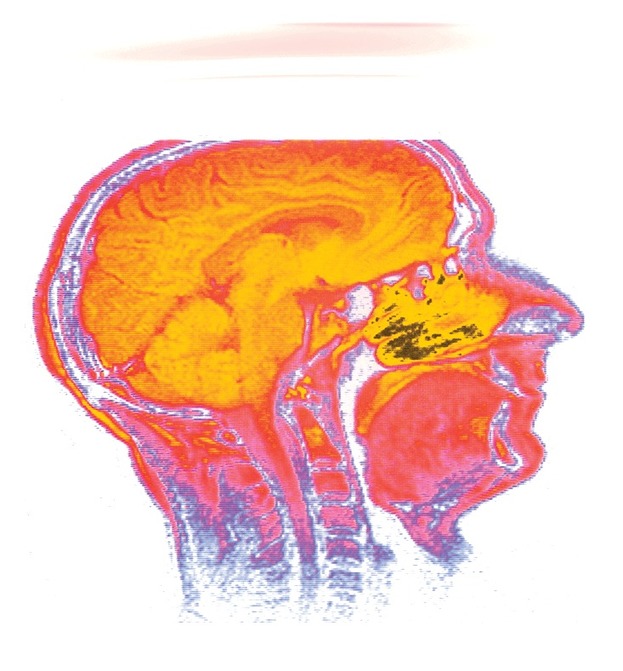
But perhaps consciousness is not uniquely troublesome. Going back to Gottfried Leibniz and Immanuel Kant, philosophers of science have struggled with a lesser known, but equally hard, problem of matter. What is physical matter in and of itself, behind the mathematical structure described by physics? This problem, too, seems to lie beyond the traditional methods of science, because all we can observe is what matter does, not what it is in itself—the “software” of the universe but not its ultimate “hardware.” On the surface, these problems seem entirely separate. But a closer look reveals that they might be deeply connected.
Source: issue
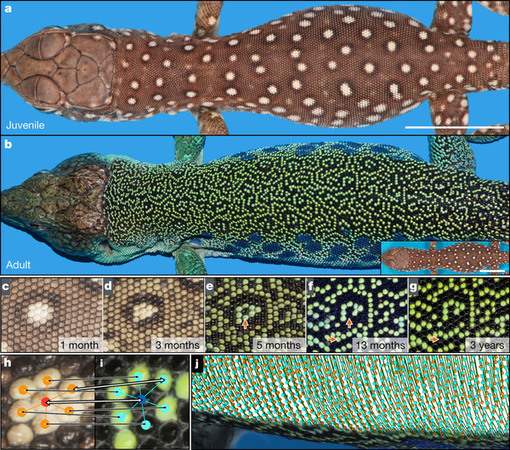
In vertebrates, skin colour patterns emerge from nonlinear dynamical microscopic systems of cell interactions. Here we show that in ocellated lizards a quasi-hexagonal lattice of skin scales, rather than individual chromatophore cells, establishes a green and black labyrinthine pattern of skin colour. We analysed time series of lizard scale colour dynamics over four years of their development and demonstrate that this pattern is produced by a cellular automaton (a grid of elements whose states are iterated according to a set of rules based on the states of neighbouring elements) that dynamically computes the colour states of individual mesoscopic skin scales to produce the corresponding macroscopic colour pattern. Using numerical simulations and mathematical derivation, we identify how a discrete von Neumann cellular automaton emerges from a continuous Turing reaction–diffusion system. Skin thickness variation generated by three-dimensional morphogenesis of skin scales causes the underlying reaction–diffusion dynamics to separate into microscopic and mesoscopic spatial scales, the latter generating a cellular automaton. Our study indicates that cellular automata are not merely abstract computational systems, but can directly correspond to processes generated by biological evolution.
A living mesoscopic cellular automaton made of skin scales
Liana Manukyan, Sophie A. Montandon, Anamarija Fofonjka, Stanislav Smirnov & Michel C. Milinkovitch
Nature 544, 173–179 (13 April 2017) doi:10.1038/nature22031
Source: www.nature.com
We explain the anomaly of election results between large cities and rural areas in terms of urban scaling in the 1948-2016 US elections and in the 2016 EU referendum of the UK. The scaling curves are all universal and depend on a single parameter only, and one of the parties always shows superlinear scaling and drives the process, while the sublinear exponent of the other party is merely the consequence of probability conservation. Based on the recently developed model of urban scaling, we give a microscopic model of voter behavior in which we replace diversity characterizing humans in creative aspects with social diversity and tolerance. The model can also predict new political developments such as the fragmentation of the left and ‘the immigration paradox’.
Universal Scaling Laws in Metro Area Election Results
Eszter Bokányi, Zoltán Szállási, Gábor Vattay
Source: arxiv.org
 Complexity Digest