Author: cxdig

On Importance Sampling and Multilinear Extensions for Approximating Shapley Values with Applications to Explainable Artificial Intelligence

Tim Pollmann and Jochen Staudacher

Complexities 2026, 2(1), 7

Shapley values are the most widely used point-valued solution concept for cooperative games and have recently garnered attention for their applicability in explainable machine learning. Due to the complexity of Shapley value computation, users mostly resort to Monte Carlo approximations for large problems. We take a detailed look at an approximation method grounded in multilinear extensions proposed in 2021 under the name “Owen sampling”. We point out why Owen sampling is biased and propose unbiased alternatives based on combining multilinear extensions with stratified sampling and importance sampling. Finally, we discuss empirical results of the presented algorithms for various cooperative games, including real-world explainability scenarios.

Read the full article at: www.mdpi.com

Human mobility in the metaverse mirrors patterns in the physical world

Kishore Vasan, Márton Karsai & Albert-László Barabási
Scientific Reports

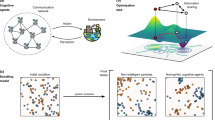
The metaverse is a virtual space enabling interactions beyond geographical boundaries, promising to transform how people engage with each other both in the digital and the physical worlds. The lack of geographical boundaries and travel costs in the metaverse prompts us to ask if the fundamental laws that govern human mobility in the physical world apply. We collected data on avatar movements from Decentraland, along with their network mobility extracted from NFT purchases on Ethereum and Polygon. We find that despite the absence of mobility costs, an individual’s inclination to visit new locations diminishes over time, limiting movement to a small fraction of the metaverse. We also find a lack of correlation between land prices and visitation, a deviation from the patterns characterizing the physical world. Finally, we identify the scaling laws that characterize meta mobility and show that we need to add preferential selection to the existing models to explain quantitative patterns of metaverse mobility. Our ability to predict the characteristics of the emerging meta mobility network implies that the laws governing human mobility are rooted in fundamental patterns of human dynamics, rather than the nature of space and cost of movement.

Read the full article at: www.nature.com

Twelfth International Conference on Guided Self-Organization (GSO-2026)

​”Information Processing in Complex Systems”

The 12th International Conference on Guided Self-Organization takes place during October 14-15, 2026 in Binghamton, NY (USA), during The 2026 Conference on Complex Systems (CCS 2026) . GSO-2026 is organized by The State University of New York at Binghamton and The International Association for Guided Self-Organization (TIA-GSO).

Research Aims and Topics

GSO “aims to regulate self-organization for specific purposes, so that a dynamical system may reach specific attractors or outcomes. The regulation constrains a self-organizing process within a complex system by restricting local interactions between the system components, rather than following an explicit control mechanism or a global design blueprint.” 

Information processing in complex self-organizing systems involves the storage, transfer, and modification of information through the interactions of components within the system. Unlike traditional computers, which process digital information in a centralized manner, complex systems like biological organisms or social networks process information in decentralized, distributed, and often analog ways. The study of information processing in complex systems seeks to define a set of universal properties that can describe the dynamics of diverse systems, from brain networks to financial markets, using a common language. Understanding information processing in complex systems is fundamental to designing self-organizing systems, engineering collective behavior and developing energetically efficient models of computation. Modern approaches use frameworks from fields such as information theory, dynamical systems, and machine learning to model how systems ranging from economies to ant colonies process information.

The GSO-2026 conference will bring together invited experts and researchers in unconventional computation, swarm intelligence, open-ended evolution, and complex adaptive systems. Special topics of interest include: synthetic and systems biology, agent-based modeling, evolutionary and adaptive computation, socio- and bio-inspired algorithms, swarm robotics, physics of self-organizing behavior, information-driven self-organization, and self-organizing cyber-physical systems.

More at: www.guided-self.org

Call for Abstracts: CCS 2026: The 2026 Conference on Complex Systems @ Binghamton, NY, USA

Abstract submission deadline:   May 1, 2026

We call for submissions of abstracts for oral and poster presentations on a wide variety of complex systems research. Relevant topics include (but are not limited to):

  • Theoretical foundations of complex systems
  • Nonlinear dynamics and chaos
  • Systems theory, information theory, and systems science
  • Game theory, decision theory, and socio-economical applications
  • Self-organization, pattern formation, and collective behavior
  • Structure and dynamics of complex networks
  • Sustainability and adaptability of complex systems
  • Bio-inspired systems, machine learning, and evolutionary computation
  • Data-driven approaches to complex systems
  • Applications to the humanities, art, and literature
  • Historical and philosophical aspects of complex systems
  • Complex systems and education

More at: ccs26.cssociety.org

The degree of fine-tuning in our universe – and others

Adams, Fred C.
Both the fundamental constants that describe the laws of physics and the cosmological parameters that determine the properties of our universe must fall within a range of values in order for the cosmos to develop astrophysical structures and ultimately support life. This paper reviews the current constraints on these quantities. The discussion starts with an assessment of the parameters that are allowed to vary. The standard model of particle physics contains both coupling constants (α ,αs ,αw) and particle masses (mu ,md ,me) , and the allowed ranges of these parameters are discussed first. We then consider cosmological parameters, including the total energy density of the universe (Ω) , the contribution from vacuum energy (ρΛ) , the baryon-to-photon ratio (η) , the dark matter contribution (δ) , and the amplitude of primordial density fluctuations (Q) . These quantities are constrained by the requirements that the universe lives for a sufficiently long time, emerges from the epoch of Big Bang Nucleosynthesis with an acceptable chemical composition, and can successfully produce large scale structures such as galaxies. On smaller scales, stars and planets must be able to form and function. The stars must be sufficiently long-lived, have high enough surface temperatures, and have smaller masses than their host galaxies. The planets must be massive enough to hold onto an atmosphere, yet small enough to remain non-degenerate, and contain enough particles to support a biosphere of sufficient complexity. These requirements place constraints on the gravitational structure constant (αG) , the fine structure constant (α) , and composite parameters (C⋆) that specify nuclear reaction rates. We then consider specific instances of possible fine-tuning in stellar nucleosynthesis, including the triple alpha reaction that produces carbon, the case of unstable deuterium, and the possibility of stable diprotons. For all of the issues outlined above, viable universes exist over a range of parameter space, which is delineated herein. Finally, for universes with significantly different parameters, new types of astrophysical processes can generate energy and thereby support habitability.

Read the full article at: ui.adsabs.harvard.edu