Month: August 2017

Lens of Time: Secrets of Schooling

Collective behavior is embodied in swarms of insects, flocks of birds, herds of antelope, and schools of fish. In each of these cases, individuals move through their environment and respond to threats and opportunities almost simultaneously, forming an undulating enclave that seems to operate as a single entity. Such coordinated movement requires the rapid and efficient transfer of information among individuals, but understanding exactly how this information spreads through the group has long eluded scientists. Studying this behavior in schools of fish has been incredibly challenging, because the cues that drive it occur at lightening speed, come from multiple directions and sources, and of course because all of it takes place underwater. Now, Iain Couzin and his colleagues at the Max Planck Institute for Ornithology at the University of Konstanz, Germany are using new observation techniques and technologies—including high-speed video, motion-tracking software, and advanced statistical modeling—to reveal the mysterious mechanics of schooling fish. Their findings may shed light on the evolution and benefits of collective behavior across the animal kingdom.

Source: www.biographic.com
Molecules react to their environment

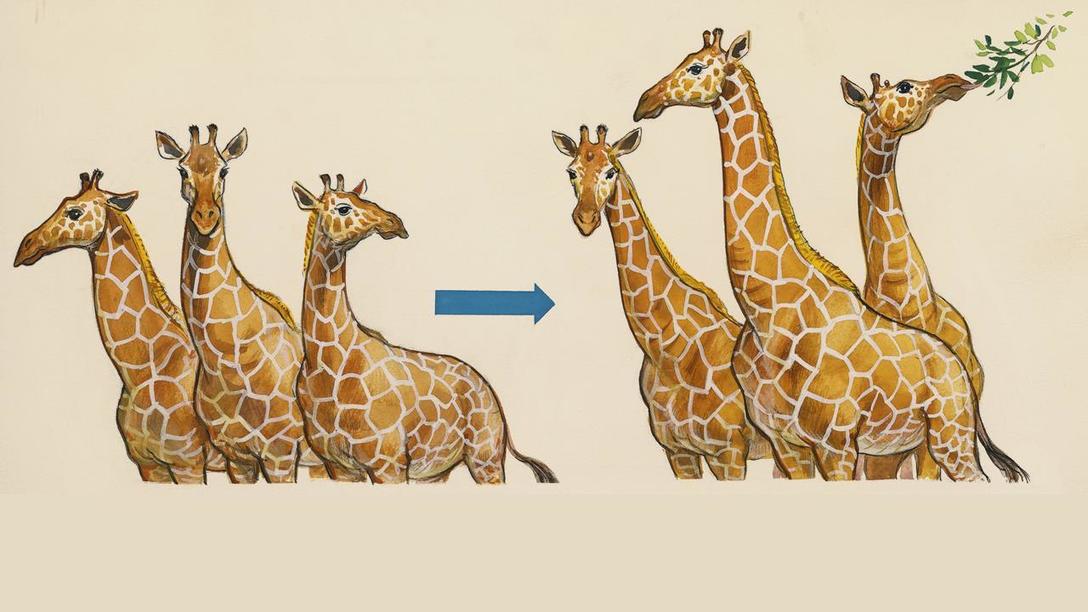
Le Chatelier’s principle is neither hard to state nor to understand. But it’s kind of hard to find the right words. It’s typically expressed as something like: ‘If a dynamic equilibrium is disturbed by changing the conditions, the position of equilibrium moves to counteract the change.’ But there is a clear implication of intentionality here: it’s as though the system is determined to keep its balance.

Sometimes, Le Chatelier’s principle is more or less equated with homeostasis in physiology – the maintenance of a steady state in a changing environment. Some homeostasis, such as pH regulation, does indeed involve the kind of shift in chemical equilibria described by Le Chatelier’s principle. The confusing thing is that biological homeostasis is also a survival mechanism and therefore connected to Darwinian adaptation. We have evolved sweat glands, yet the regulation of body temperature by sweating can be explained by purely physical laws.

Source: www.chemistryworld.com

Mapping the Curricular Structure and Contents of Network Science Courses

As network science has matured as a well-established field of research, there are already a number of courses on this topic developed and offered at various higher education institutions, often at postgraduate levels. In those courses, instructors have adopted different approaches with different focus areas and curricular designs. We collected information about 30 existing network science courses from various online sources, and analyzed the contents of their syllabi or course schedules. The topics and their curricular sequences were extracted from the course syllabi/schedules and represented as a directed weighted graph, which we call the topic network. Community detection in the topic network revealed seven topic clusters, which had a reasonable matching with the concept list previously generated by students and educators through the Network Literacy initiative. The minimum spanning tree of the topic network revealed typical flows of curricular contents, starting with examples of networks, moving onto random networks and small-world networks, then branching off to various subtopics from there. These results illustrate the current state of the consensus formed among the network science community on what should be taught about networks and how, which may also be informative for K-12 education and informal education.


Mapping the Curricular Structure and Contents of Network Science Courses
Hiroki Sayama

Source: arxiv.org

Sustainable development of smart cities: a systematic review of the literature

This paper aims to analyse scientific studies focusing on both environmental sustainability and smart city concepts to understand the relationship between these two. In order to do so the study identifies information about researchers, models, frameworks and tools focused on the chosen themes. This research uses a qualitative methodology, through a systematic review of the literature, which examines the terms, ‘smart city’ and ‘sustainability’, aimed at sustainable development of smart cities. For this, three databases were used: Scopus, Science Direct, and Emerald Insight. This paper provides detailed information on the most recent scientific articles focusing on smart cities and sustainability issues. The paper can serve as a basis for researchers seeking background information for further investigations. The findings provide invaluable insights for scholars researching on the subject, and public managers considering applying those into practice in their cities.


Sustainable development of smart cities: a systematic review of the literature
Evelin Priscila Trindade, Marcus Phoebe Farias Hinnig, Eduardo Moreira da Costa, Jamile Sabatini Marques, Rogério Cid Bastos and Tan Yigitcanlar
Journal of Open Innovation: Technology, Market, and Complexity 2017 3:11
https://doi.org/10.1186/s40852-017-0063-2

Source: jopeninnovation.springeropen.com

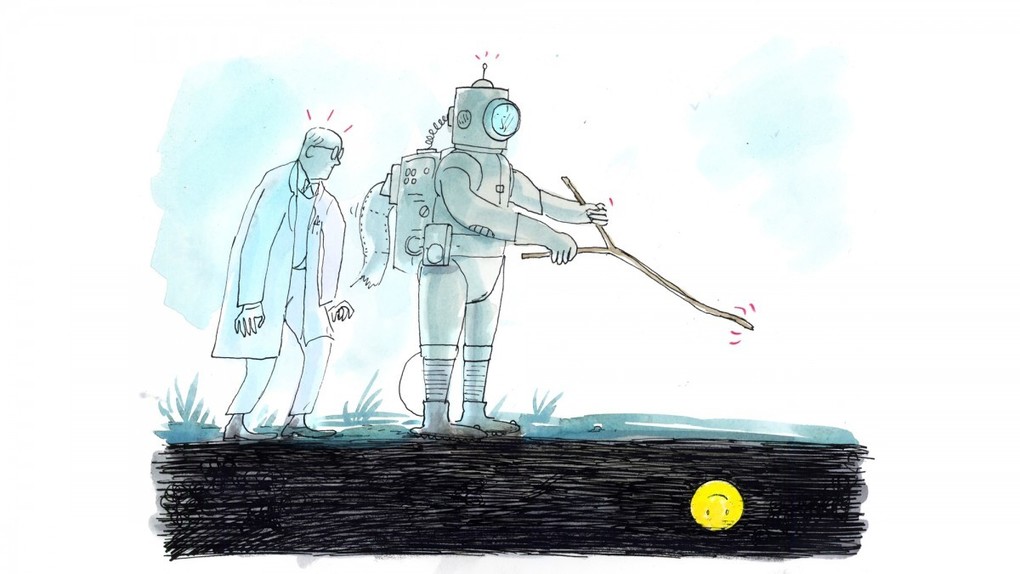
An algorithm trained on emoji knows when you’re being sarcastic on Twitter

Detecting the sentiment of social-media posts is already useful for tracking attitudes toward brands and products, and for identifying signals that might indicate trends in the financial markets. But more accurately discerning the meaning of tweets and comments could help computers automatically spot and quash abuse and hate speech online. A deeper understanding of Twitter should also help academics understand how information and influence flows through the network. What’s more, as machines become smarter, the ability to sense emotion could become an important feature of human-to-machine communication.

Source: www.technologyreview.com