

Corina Tarnita deciphers bizarre patterns in the soil created by competing life-forms. She’s found that they can reveal whether an ecosystem is thriving or on the verge of collapse.
Source: www.quantamagazine.org
Networking the complexity community since 1999
Month: January 2018
Corina Tarnita deciphers bizarre patterns in the soil created by competing life-forms. She’s found that they can reveal whether an ecosystem is thriving or on the verge of collapse.
Source: www.quantamagazine.org
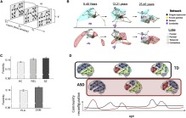
The development of advanced neuroimaging techniques and their deployment in large cohorts has enabled an assessment of functional and structural brain network architecture at an unprecedented level of detail. Across many temporal and spatial scales, network neuroscience has emerged as a central focus of intellectual efforts, seeking meaningful descriptions of brain networks and explanatory sets of network features that underlie circuit function in health and dysfunction in disease. However, the tools of network science commonly deployed provide insight into brain function at a fundamentally descriptive level, often failing to identify (patho-)physiological mechanisms that link system-level phenomena to the multiple hierarchies of brain function. Here we describe recently developed techniques stemming from advances in complex systems and network science that have the potential to overcome this limitation, thereby contributing mechanistic insights into neuroanatomy, functional dynamics, and pathology. Finally, we build on the Research Domain Criteria framework, highlighting the notion that mental illnesses can be conceptualized as dysfunctions of neural circuitry present across conventional diagnostic boundaries, to sketch how network-based methods can be combined with pharmacological, intermediate phenotype, genetic, and magnetic stimulation studies to probe mechanisms of psychopathology.
From Maps to Multi-dimensional Network Mechanisms of Mental Disorders
Urs Braun, Axel Schaefer, Richard F. Betzel, Heike Tost, Andreas Meyer-Lindenberg, Danielle S. Bassett
Neuron
Volume 97, Issue 1, 3 January 2018, Pages 14-31
Source: www.sciencedirect.com
Spreading broadly refers to the notion of an entity propagating throughout a networked system via its interacting components. Evidence of its ubiquity and severity can be seen in a range of phenomena, from disease epidemics to financial systemic risk. In order to understand the dynamics of these critical phenomena, computational models map the probability of propagation as a function of direct exposure, typically in the form of pairwise interactions between components. By doing so, the important role of indirect exposure remains unexplored. In response, we develop a simple model that accounts for the effect of both direct and indirect exposure, which we deploy in the novel context of failure propagation within a real-world engineering project. We show that indirect exposure has a significant effect in key aspects, including the: (a) final spreading event size, (b) propagation rate, and (c) spreading event structure. In addition, we demonstrate the existence of hidden influentials in large-scale spreading events, and evaluate the role of direct and indirect exposure in their emergence. Given the evidence of the importance of indirect exposure, our findings offer new insight on particular aspects that need to be included when modelling network dynamics in general, and spreading processes specifically.
Modelling indirect interactions during failure spreading in a project activity network
Christos Ellinas
Source: arxiv.org
• Sustainability challenges require both specialized and integrative approaches.
• Domination of specialism and reductionism calls for emphasis on comprehensiveness.
• The GHH framework can be used as a tool to add comprehensiveness in education.
• The framework consists of three dimensions: generalism, holism, and holarchism.
• The dialectical approach combines comprehensive and differentiative approaches.
Source: www.sciencedirect.com

This unique book offers a comprehensive and integrated introduction to the five fundamental elements of life and society: energy, information, feedback, adaptation, and self-organization. It is divided into two parts. Part I is concerned with energy (definition, history, energy types, energy sources, environmental impact); thermodynamics (laws, entropy definitions, energy, branches of thermodynamics, entropy interpretations, arrow of time); information (communication and transmission, modulation–demodulation, coding–decoding, information theory, information technology, information science, information systems); feedback control (history, classical methodologies, modern methodologies); adaptation (definition, mechanisms, measurement, complex adaptive systems, complexity, emergence); and self-organization (definitions/opinions, self-organized criticality, cybernetics, self-organization in complex adaptive systems, examples in nature).
In turn, Part II studies the roles, impacts, and applications of the five above-mentioned elements in life and society, namely energy (biochemical energy pathways, energy flows through food chains, evolution of energy resources, energy and economy); information (information in biology, biocomputation, information technology in office automation, power generation/distribution, manufacturing, business, transportation), feedback (temperature, water, sugar and hydrogen ion regulation, autocatalysis, biological modeling, control of hard/technological and soft/managerial systems), adaptation and self-organization (ecosystems, climate change, stock market, knowledge management, man-made self-organized controllers, traffic lights control).
Energy, Information, Feedback, Adaptation, and Self-organization
The Fundamental Elements of Life and Society
Spyros G Tzafestas
Source: link.springer.com

