
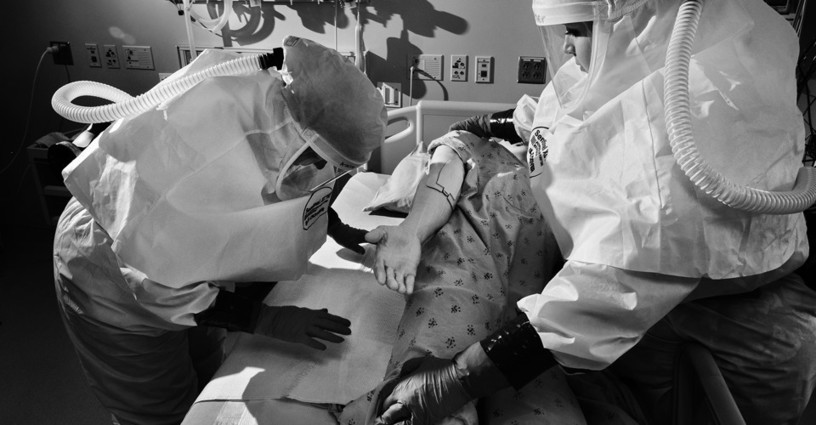
The epidemics of the early 21st century revealed a world unprepared, even as the risks continue to multiply. Much worse is coming.
Source: www.theatlantic.com
Networking the complexity community since 1999
Month: June 2018
The epidemics of the early 21st century revealed a world unprepared, even as the risks continue to multiply. Much worse is coming.
Source: www.theatlantic.com

In this episode, Haley interviews research professor and leader of the Self-Organizing Systems Lab at UNAM, Carlos Gershenson. Gershenson discusses findings from his book, Complexity: 5 Questions, which is comprised of “interview style contributions by leading figures in the field of complexity”. He also shares his own perspectives on the past, present and future of complexity science, as well as how philosophy plays a role in the emergence of science.
Source: www.human-current.com
Following a series of successful satellites organised at previous ECCS/CCS events, (UrbanNet2013 at ECCS13, CitiNet 2014 at ECCS14, UrbanNet2015 at NetSci 2015, UrbanNet2016 at CCS2016 and UrbanSys2017 at CCS2017), the objective of the UrbanSys2018 satellite of CCS2018 is to create a space for exchanging state-of-the-art results and innovative ideas on how to address the problems and opportunities opened by smart cities through complex systems theory and methodologies. In this sense, we have launched a call for contributions for the satellite. Particular attention will be devoted to new data-driven approaches for improving the planning and management of urban infrastructures, including land use, transportation, energy and tourism planning, to mention some examples.
Source: urbansys2018.ifisc.uib-csic.es
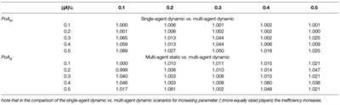
In this paper we study space debris removal from a game-theoretic perspective. In particular we focus on the question whether and how self-interested agents can cooperate in this dilemma, which resembles a tragedy of the commons scenario. We compare centralised and decentralised solutions and the corresponding price of anarchy, which measures the extent to which competition approximates cooperation. In addition we investigate whether agents can learn optimal strategies by reinforcement learning. To this end, we improve on an existing high fidelity orbital simulator, and use this simulator to obtain a computationally efficient surrogate model that can be used for our subsequent game-theoretic analysis. We study both single- and multi-agent approaches using stochastic (Markov) games and reinforcement learning. The main finding is that the cost of a decentralised, competitive solution can be significant, which should be taken into consideration when forming debris removal strategies.
Space Debris Removal: Learning to Cooperate and the Price of Anarchy
Richard Klima, Daan Bloembergen, Rahul Savani, Karl Tuyls, Alexander Wittig, Andrei Sapera and Dario Izzo
Front. Robot. AI, 04 June 2018 | https://doi.org/10.3389/frobt.2018.00054
Source: www.frontiersin.org
This thesis looks at how cities operate as Complex Adaptive Systems (CAS). It focuses on how certain characteristics of urban form can support an urban environment’s capacity to self-organize, enabling emergent features to appear that, while unplanned, remain highly functional. The research is predicated on the notion that CAS processes operate across diverse domains: that they are ‘generalized’ or ‘universal’. The goal of the dissertation is then to determine how such generalized principles might ‘play out’ within the urban fabric. The main thrust of the work is to unpack how elements of the urban fabric might be considered as elements of a complex system and then identify how one might design these elements in a more deliberate manner, such that they hold a greater embedded capacity to respond to changing urban forces. The research is further predicated on the notion that, while such responses are both imbricated with, and stewarded by human actors, the specificities of the material characteristics themselves matter. Some forms of material environments hold greater intrinsic physical capacities (or affordances) to enact the kinds of dynamic processes observed in complex systems than others (and can, therefore, be designed with these affordances in mind). The primary research question is thus:
What physical and morphological conditions need to be in place within an urban environment in order for Complex Adaptive Systems dynamics arise – such that the physical components (or ‘building blocks’) of the urban environment have an enhanced capacity to discover functional configurations in space and time as a response to unfolding contextual conditions?
WOHL, Sharon. Complex Adaptive Systems & Urban Morphogenesis. A+BE | Architecture and the Built Environment, [S.l.], n. 10, p. 1-238, june 2018. ISSN 2214-7233. Available at: <https://journals.open.tudelft.nl/index.php/abe/article/view/2397>. Date accessed: 12 june 2018. doi: https://doi.org/10.7480/abe.2018.10.
Source: journals.open.tudelft.nl

