Month: February 2025

Calls for the 2025 CSS Emerging Researcher, Junior, and Senior Scientific Awards

The Complex Systems Society announces the tenth edition of the CSS Scientific Awards. 

The Emerging Researcher Award recognizes promising researchers in Complex Systems within 3 years of their PhD defense.

The Junior Scientific Award is aimed at recognizing excellent scientific record of young researchers within 10 years of their PhD defense.

The Senior Scientific Award will recognize outstanding contributions of Complex Systems scholars at any stage of their careers.

Deadline: April 30th, 2025.

See https://cxdig.wordpress.com/community/awards for the list of previous awardees.

More at: cssociety.org

Maximizing Free Energy Gain

Kolchinsky, A.; Marvian, I.; Gokler, C.; Liu, Z.-W.; Shor, P.; Shtanko, O.; Thompson, K.; Wolpert, D.; Lloyd, S.

Entropy 2025, 27, 91

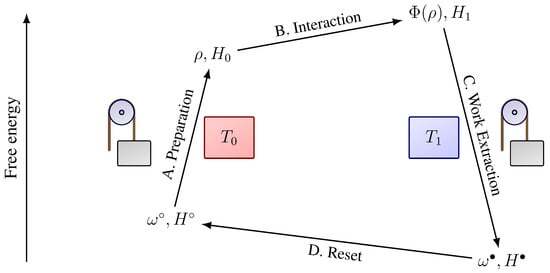
Maximizing the amount of work harvested from an environment is important for a wide variety of biological and technological processes, from energy-harvesting processes such as photosynthesis to energy storage systems such as fuels and batteries. Here, we consider the maximization of free energy—and by extension, the maximum extractable work—that can be gained by a classical or quantum system that undergoes driving by its environment. We consider how the free energy gain depends on the initial state of the system while also accounting for the cost of preparing the system. We provide simple necessary and sufficient conditions for increasing the gain of free energy by varying the initial state. We also derive simple formulae that relate the free energy gained using the optimal initial state rather than another suboptimal initial state. Finally, we demonstrate that the problem of finding the optimal initial state may have two distinct regimes, one easy and one difficult, depending on the temperatures used for preparation and work extraction. We illustrate our results on a simple model of an information engine.

Read the full article at: www.mdpi.com

Predicting System Dynamics of Universal Growth Patterns in Complex Systems

Leila Hedayatifar, Alfredo J. Morales, Dominic E. Saadi, Rachel A. Rigg, Olha Buchel, Amir Akhavan, Egemen Sert, Aabir Abubaker Kar, Mehrzad Sasanpour, Irving R. Epstein, Yaneer Bar-Yam

Predicting dynamic behaviors is one of the goals of science in general as well as essential to many specific applications of human knowledge to real world systems. Here we introduce an analytic approach using the sigmoid growth curve to model the dynamics of individual entities within complex systems. Despite the challenges posed by nonlinearity and unpredictability in system behaviors, we demonstrate the applicability of the sigmoid curve to capture the acceleration and deceleration of growth, predicting an entitys ultimate state well in advance of reaching it. We show that our analysis can be applied to diverse systems where entities exhibit nonlinear growth using case studies of (1) customer purchasing and (2) U.S. legislation adoption. This showcases the ability to forecast months to years ahead of time, providing valuable insights for business leaders and policymakers. Moreover, our characterization of individual component dynamics offers a framework to reveal the aggregate behavior of the entire system. We introduce a classification of entities based upon similar lifepaths. This study contributes to the understanding of complex system behaviors, offering a practical tool for prediction and system behavior insight that can inform strategic decision making in multiple domains.

Read the full article at: arxiv.org

Conformity to continuous and discrete ordered traits

Elisa Heinrich Mora, Kaleda K. Denton, Michael E. Palmer, and Marcus W. Feldman

PNAS 122 (3) e2417078122

Conformist and anticonformist biases in acquiring cultural variants have been documented in humans and several nonhuman species. We introduce a framework for quantifying these biases when cultural traits are ordered, with greater and lesser values, and either continuous (e.g., level of a behavior) or discrete (e.g., number of displays of a behavior). Unlike previous models, we do not measure a cultural variant’s popularity by its distance to the population mean, but rather by its distance to other variants. We find that conformity can produce a variety of population distributions that need not center around the initial population’s mean variant. Anticonformity may lead to highly polarized or uniformly distributed populations, depending on its strength and on individuals’ precision when copying others.

Read the full article at: www.pnas.org