Mayo AM, Carrigee C, Harrison AB, Mayo ML, Pilkiewicz KR
PLOS Complex Syst 3(10): e0000136.
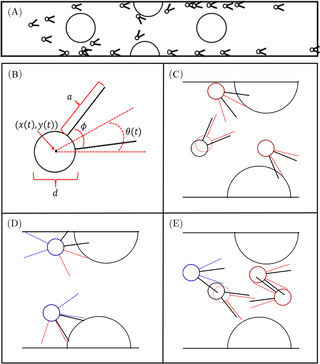
In a famous Chinese parable, a man is shown both heaven and hell. In the latter, a group of men sit around a lavish banquet table, unable to eat because their chopsticks are too long to reach their mouths. In the former, the exact same scenario plays out, except here the men feed each other. In this paper, we compare the behavior of cockroaches to that of vibrating brush-head robots, known as bristlebots, as groups of each attempt to squeeze through a narrow passage. Although the bots and the bugs have different means of locomotion, they navigate their environment in a similar fashion. As in the parable, however, a small of amount of regard for others leads to a much happier outcome. The robots try to push past each other and form logjams that block up the passage, whereas the roaches practice patience and stop and wait for those in front of them to move through the passage first. This result may seem innocuous, but it demonstrates how simple organisms, incapable of sophisticated decision-making, require only the slightest amount of sociality to collectively solve complex problems, such as how to smoothly navigate a challenging environment as a cohesive unit.In a famous Chinese parable, a man is shown both heaven and hell. In the latter, a group of men sit around a lavish banquet table, unable to eat because their chopsticks are too long to reach their mouths. In the former, the exact same scenario plays out, except here the men feed each other. In this paper, we compare the behavior of cockroaches to that of vibrating brush-head robots, known as bristlebots, as groups of each attempt to squeeze through a narrow passage. Although the bots and the bugs have different means of locomotion, they navigate their environment in a similar fashion. As in the parable, however, a small of amount of regard for others leads to a much happier outcome. The robots try to push past each other and form logjams that block up the passage, whereas the roaches practice patience and stop and wait for those in front of them to move through the passage first. This result may seem innocuous, but it demonstrates how simple organisms, incapable of sophisticated decision-making, require only the slightest amount of sociality to collectively solve complex problems, such as how to smoothly navigate a challenging environment as a cohesive unit.
Read the full article at: journals.plos.org