Category: Books

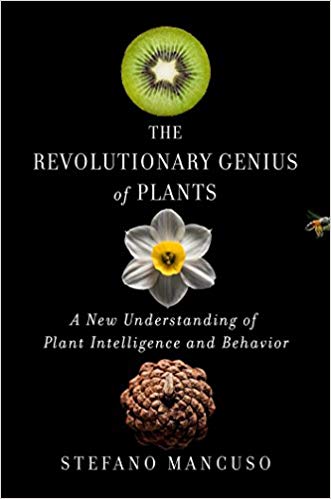
The Revolutionary Genius of Plants: A New Understanding of Plant Intelligence and Behavior (Stefano Mancuso)

Do plants have intelligence? Do they have memory? Are they better problem solvers than people? The Revolutionary Genius of Plants—a fascinating, paradigm-shifting work that upends everything you thought you knew about plants—makes a compelling scientific case that these and other astonishing ideas are all true.

Plants make up eighty percent of the weight of all living things on earth, and yet it is easy to forget that these innocuous, beautiful organisms are responsible for not only the air that lets us survive, but for many of our modern comforts: our medicine, food supply, even our fossil fuels.

On the forefront of uncovering the essential truths about plants, world-renowned scientist Stefano Mancuso reveals the surprisingly sophisticated ability of plants to innovate, to remember, and to learn, offering us creative solutions to the most vexing technological and ecological problems that face us today. Despite not having brains or central nervous systems, plants perceive their surroundings with an even greater sensitivity than animals. They efficiently explore and react promptly to potentially damaging external events thanks to their cooperative, shared systems; without any central command centers, they are able to remember prior catastrophic events and to actively adapt to new ones.

Every page of The Revolutionary Genius of Plants bubbles over with Stefano Mancuso’s infectious love for plants and for the eye-opening research that makes it more and more clear how remarkable our fellow inhabitants on this planet really are. In his hands, complicated science is wonderfully accessible, and he has loaded the book with gorgeous photographs that make for an unforgettable reading experience. The Revolutionary Genius of Plants opens the doors to a new understanding of life on earth.

Source: www.amazon.com

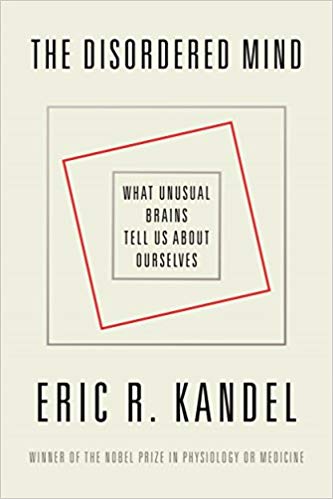
The Disordered Mind: What Unusual Brains Tell Us About Ourselves (Eric R. Kandel)

Eric R. Kandel, the winner of the Nobel Prize in Physiology or Medicine for his foundational research into memory storage in the brain, is one of the pioneers of modern brain science. His work continues to shape our understanding of how learning and memory work and to break down age-old barriers between the sciences and the arts.

In his seminal new book, The Disordered Mind, Kandel draws on a lifetime of pathbreaking research and the work of many other leading neuroscientists to take us on an unusual tour of the brain. He confronts one of the most difficult questions we face: How does our mind, our individual sense of self, emerge from the physical matter of the brain? The brain’s 86 billion neurons communicate with one another through very precise connections. But sometimes those connections are disrupted. The brain processes that give rise to our mind can become disordered, resulting in diseases such as autism, depression, schizophrenia, Parkinson’s, addiction, and post-traumatic stress disorder. While these disruptions bring great suffering, they can also reveal the mysteries of how the brain produces our most fundamental experiences and capabilities―the very nature of what it means to be human. Studies of autism illuminate the neurological foundations of our social instincts; research into depression offers important insights on emotions and the integrity of the self; and paradigm-shifting work on addiction has led to a new understanding of the relationship between pleasure and willpower.

By studying disruptions to typical brain functioning and exploring their potential treatments, we will deepen our understanding of thought, feeling, behavior, memory, and creativity. Only then can we grapple with the big question of how billions of neurons generate consciousness itself.

Source: www.amazon.com

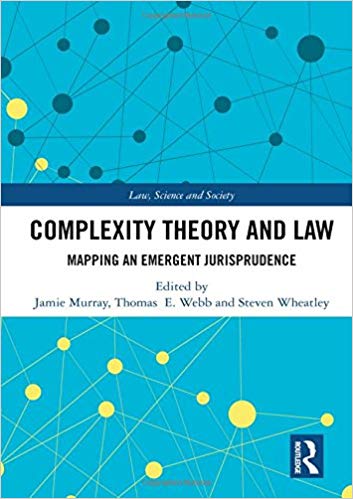
Complexity Theory and Law: Mapping an Emergent Jurisprudence (Jamie Murray et al.)

This collection of essays explores the different ways the insights from complexity theory can be applied to law. Complexity theory – a variant of systems theory – views law as an emergent, complex, self-organising system comprised of an interactive network of actors and systems that operate with no overall guiding hand, giving rise to complex, collective behaviour in law communications and actions. Addressing such issues as the unpredictability of legal systems, the ability of legal systems to adapt to changes in society, the importance of context, and the nature of law, the essays look to the implications of a complexity theory analysis for the study of public policy and administrative law, international law and human rights, regulatory practices in business and finance, and the practice of law and legal ethics. These are areas where law, which craves certainty, encounters unending, irresolvable complexity. This collection shows the many ways complexity theory thinking can reshape and clarify our understanding of the various problems relating to the theory and practice of law.

Source: www.amazon.com

Beyond Weird: Why Everything You Thought You Knew about Quantum Physics Is Different (Philip Ball)

“Anyone who is not shocked by quantum theory has not understood it.”

Since Niels Bohr said this many years ago, quantum mechanics has only been getting more shocking. We now realize that it’s not really telling us that “weird” things happen out of sight, on the tiniest level, in the atomic world: rather, everything is quantum. But if quantum mechanics is correct, what seems obvious and right in our everyday world is built on foundations that don’t seem obvious or right at all—or even possible.

An exhilarating tour of the contemporary quantum landscape, Beyond Weird is a book about what quantum physics really means—and what it doesn’t. Science writer Philip Ball offers an up-to-date, accessible account of the quest to come to grips with the most fundamental theory of physical reality, and to explain how its counterintuitive principles underpin the world we experience. Over the past decade it has become clear that quantum physics is less a theory about particles and waves, uncertainty and fuzziness, than a theory about information and knowledge—about what can be known, and how we can know it.  Discoveries and experiments over the past few decades have called into question the meanings and limits of space and time, cause and effect, and, ultimately, of knowledge itself. The quantum world Ball shows us isn’t a different world. It is our world, and if anything deserves to be called “weird,” it’s us.

Source: www.amazon.com

Towards Digital Enlightenment – Essays on the Dark and Light Sides of the Digital Revolution, Dirk Helbing (Ed.)

A new collection of essays by the author of the successful volume Thinking Ahead – Essays on Big Data, Digital Revolution, and Participatory Market Society
Examines the dangers of a world in which algorithms and social bots aim to control both the societal dynamics and individual behaviors.
Introduces novel approaches on how to redefine collective trust and build platforms to support core societal values

Towards Digital Enlightenment
Essays on the Dark and Light Sides of the Digital Revolution
Editors: Helbing, Dirk (Ed.)

Source: www.springer.com