

Category: Conferences

NetSci 2017 – Conference Agenda Manager

NetSci 2017 Conference
JW Marriott Hotel, Indianapolis, IN
June 19 – 23, 2017
http://netsci2017.net/

Join us in Indianapolis in June for NetSci 2017!

LAST CHANCE TO REGISTER ONLINE

Online registration ends Sunday. June 11 at midnight (EDT). After this, only on-site registration will be available.  Complete your conference registration by going to: http://netsci2017.net/registration

SEE OUR FULL SCHEDULE: SATELLITES,  SCHOOL, SPEAKERS, SESSIONS, AND POSTERS

22 organized Satellites on a variety of topics in the first two days: http://netsci2017.net/program/satellites

Our International School with lectures on key topics in the field: http://netsci2017.net/program/school

12 exciting keynote and invited speakers: http://netsci2017.net/program/speakers

See our full agenda of lightning talks, oral presentations, and posters with a searchable agenda: http://netsci2017.net/cam

Sincerely,
Oalf Sporns & Fil Menczer
Co-Chairs, NetSci 2017

Contact us at netsci17@iu.edu with questions. Follow us on Twitter and Facebook @netsci2017

Source: netsci2017.net
6th International Young Scientists Conference in HPC and Simulation, 1-3 November, 2017, Kotka, Finland

Simulation and systems thinking is one way to explain the complex world in which we live. By collecting data and creating computer models, scientists can make predictions on critical problems, such as how to influence the flow of traffic, how an epidemic will spread or the probability of individuals in society becoming addicted to drugs. The conference will cover the aspects related to HPC, BigData, large scale simulation of complex systems and offers an ideal range of topics for final year Master’s student or starting PhD students interested in this domain.

Source: ysc.escience.ifmo.ru

Call for Late Breaking Abstracts, CCS’17

The flagship conference of the Complex Systems Society will go to Latin America for the first time in 2017. The Mexican complex systems community is enthusiast to welcome colleagues to one of our richest destinations: Cancun.

The conference will include presentations by Mario Molina (Environment, Nobel Prize in Chemistry), Raissa D’Souza (network science), Ranulfo Romo (neruoscience), Jaime Urrutia-Fucugauchi (geophysics), Antonio Lazcano (origins of life), Marta González (human mobility), Dirk Brockmann (epidemiology), Kristina Lerman (information sciences), Stefano Battiston (economics) John Quackenbush (computational biology), Giovanna Miritello (data science), César Hidalgo (collective learning), and many more.

There will be a discussion panel on the past, present, and future of complexity, 23 satellites, and more than 300 oral presentations. Join us for a rich exchange of the latest scientific advances.

We invite abstract contributions (500 words maximum) for poster presentations in the following tracks:
• Foundations of Complex Systems
• Information and Communication Technologies
• Language, Linguistics Cognition and Social Systems
• Economics and Finance
• Infrastructures, Planning and Environment
• Biological and (Bio)Medical Complexity
• Socio-Ecological Systems
• Complexity in Physics and Chemistry

Posters will be available during the whole week of the conference.


Upload your abstracts at https://easychair.org/conferences/?conf=ccs17


Important dates:

  • Late breaking abstract deadline August 18th
  • Notifications within two weeks of submission
  • Conference September 17-22

Source: ccs17.unam.mx

Algorithmic Design for Hybrid Collective Intelligence

The Algorithmic Design for Hybrid Collective Intelligence satellite (ADHEsIoN’17) is a one-day event in September 20, 2017, as part of the Conference on Complex Systems (CCS’17). This conference is the official annual conference of the Complex Systems Society and is scheduled to convene in September 17-22, 2017. The conference is interdisciplinary in nature, focusing on understanding how elements interact to give rise to global properties, along with how global properties can constrain these elements.

Overview

Across an increasingly broad spectrum of everyday life, artificial intelligence (AI) is challenging the utility of human intelligence. Yet modern AI often gains its power from exploiting big data resulting from human collective behaviors (e.g. web posting, crowdsourcing). Hence, while AI is often contrasted with human intelligence, both may be more synergistic than is usually admitted. We call for a reflection, on designs and processes that may oppose, or support, the intersection of AI and human intelligence, working towards an AI-enhanced, hybrid collective intelligence.

Submission Guidelines

We invite abstracts (~500 words; 1 Figure) for oral presentations (~20 min.) of work that address relevant challenges across a range of socio-technical domains including, but not limited to:​

  • AI-supported Team Collaboration: AI to promote smart pairing between individuals, tasks and resources, whilst preserving some control over the time of delivery; curating group dynamics for enhanced synchronicity and productivity whilst maintaining transparency;
  • Collective Decision Making: Promote enhanced collective decision making by exploiting the effect of simple rules on social network structures whilst avoiding discriminating effects;  
  • Collective Learning: Identify and exploit insight from past operations to support future actions (e.g. project bidding) whilst identifying and eliminating outliers in a robust, evidence-based way;  
  • Human-Computer Interaction: Elicit and aggregate information from online activity (e.g. user reputation) for various operations (e.g. online rating system) whilst dealing with ambiguity (e.g. self-contradictions, missing data) and malicious manipulations (e.g. spamming);
  • Open Science: Promote the reuse, redistribution and reproduction of research, whilst maintaining appropriate attribution of credit and rigor
  • Organizational Design: Organizations designed such that they promote enhanced collective functions (e.g. social learning, culture) whilst preserving accountability and auditability;
  • Rumor Propagation within Social/Collaborative Platforms: Maintaining their self-organized nature, whilst restricting the diffusion of falsehoods and emergence of ‘echo chambers’;
  • Science of Science: Using modern bibliographic data to identify fruitful research trajectories and develop robust productivity measures, whilst reducing the marginalization of underrepresented groups; 

Pervasive theoretical challenges across these exemplar domains include: 

  • Regulating self-organization of the collective in an auditable way;
  • Generating value from dormant information; 
  • Prediction and intrinsic limitations; 
  • Big vs. Useful Data;


Abstracts should be submitted at https://easychair.org/conferences/?conf=adhesion17. Deadline for submission is 30th of June 2017. All questions about submissions should be emailed to the organizers listed below.

Organizing committee

  • Dr Christos Ellinas (University of Bristol, Stevens Institute of Technology); 
  • Dr. Marc Santolini (Northeastern University; Harvard Medical School); 
  • Dr. Thomas Maillart (University of Geneva); 
  • Prof. Seth Bullock (University of Bristol); 

Source: ccs2017.wixsite.com

Research days on self-organization and swarm intelligence in cyber physical systems – Lakeside Labs

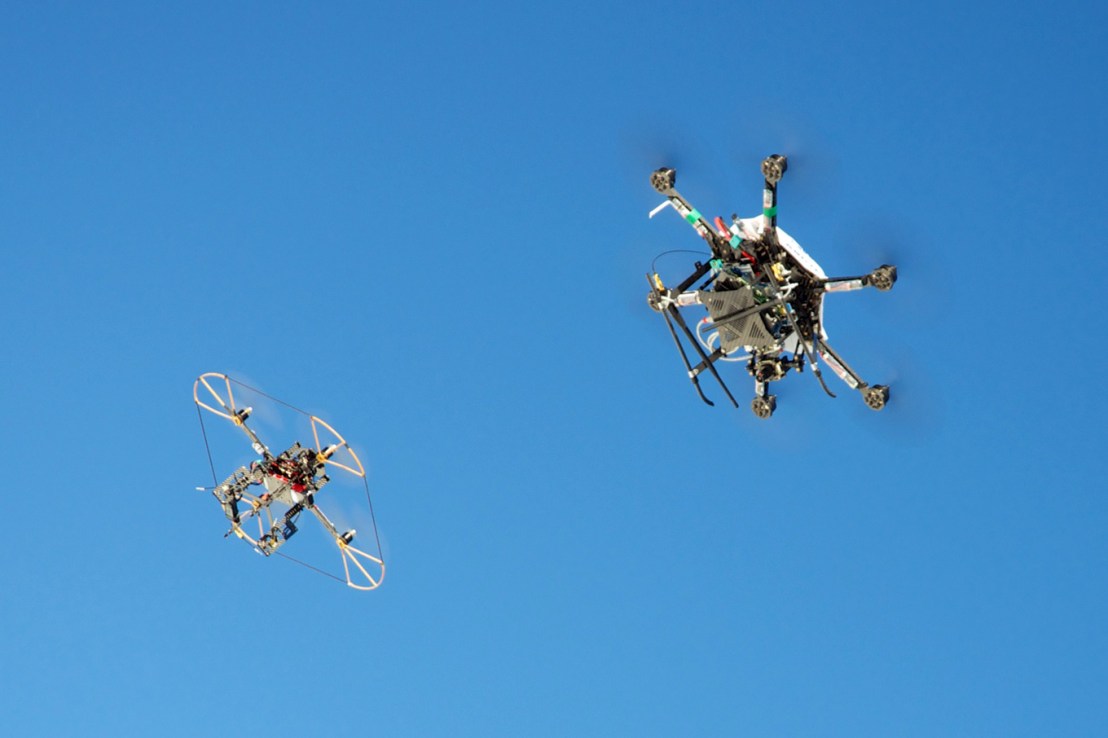
The 2017 Research Days comprises a three-day workshop on self-organization and swarm intelligence in cyber physical systems (CPS). A group of experts in this domain will introduce their research topics in invited talks. Keynote speaker is Gianni A. Di Caro from Carnegie Mellon University (USA). The program also includes laboratory sessions with training on micro-robots. The workshop takes place from July 10 – 12, 2017 in the Lakeside Science and Technology Park, Klagenfurt, Austria. Registration is possible for a limited number of people. Interested researchers should apply as soon as possible.

Source: www.lakeside-labs.com