
Category: Conferences

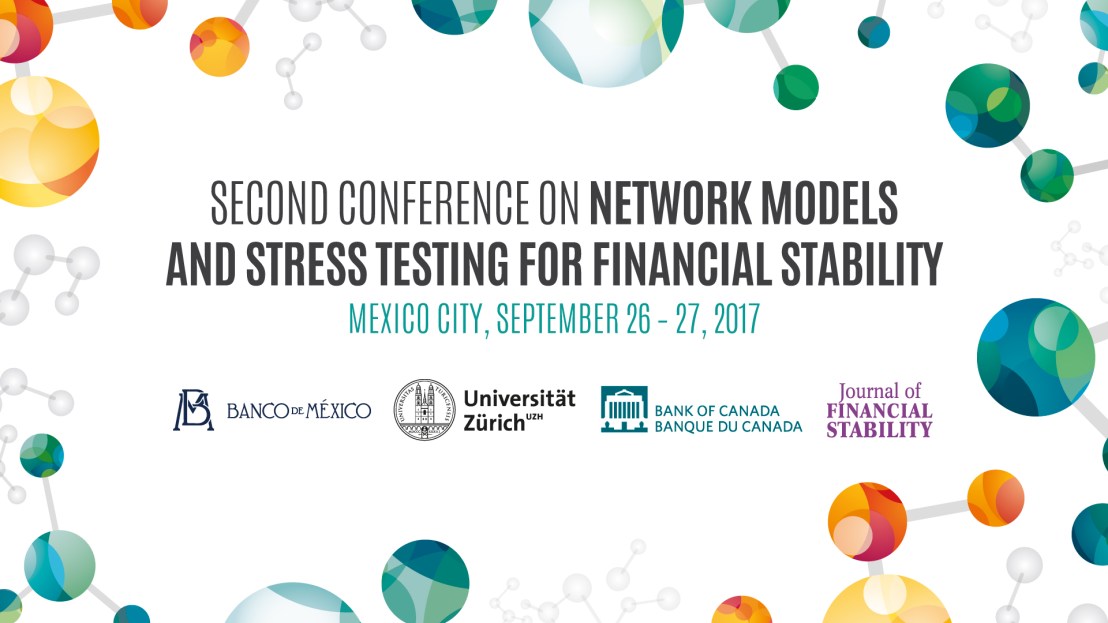
Second Conference on Network models and stress testing for financial stability


NMST-wallpaperBanco de México, the University of Zurich, Bank of Canada and the Journal of Financial Stability continue with the series of biennial conferences addressing novel research on network models and stress testing for financial stability.

The development of network and stress testing models have proven to be useful in achieving a better understanding of systemic risk. These approaches have been applied to study the implications of changes in the regulatory landscape, to understand and detect new threats to the stability of financial systems, and other financial stability related topics.

The conference aims to bring together policymakers and academics as well as industry representatives to examine progress in designing a safer financial system, to study the intended and unintended consequences of regulation on the global financial system, and to explore recent methodological advances in the study of systemic risk.


Mexico City, 2017/09/26-27

Source: www.banxico.org.mx

Brains, Minds & Machines Summer Course 2017

The basis of intelligence – how the brain produces intelligent behavior and how we may be able to replicate intelligence in machines – is arguably the greatest problem in science and technology. To solve it, we will need to understand how human intelligence emerges from computations in neural circuits, with rigor sufficient to reproduce similar intelligent behavior in machines. Success in this endeavor ultimately will enable us to understand ourselves better, to produce smarter machines, and perhaps even to make ourselves smarter. Today’s AI technologies, such as Watson and Siri, are impressive, but their domain specificity and reliance on vast numbers of labeled examples are obvious limitations; few view this as brain-like or human intelligence. The synergistic combination of cognitive science, neurobiology, engineering, mathematics, and computer science holds the promise to build much more robust and sophisticated algorithms implemented in intelligent machines. The goal of this course is to help produce a community of leaders that is equally knowledgeable in neuroscience, cognitive science, and computer science and will lead the development of true biologically inspired AI.


Brains, Minds and Machines
Directors: Gabriel Kreiman, Children’s Hospital, Harvard Medical School; and Tomaso Poggio, Massachusetts Institute of Technology
Location: Marine Biological Laboratory, in Woods Hole, MA.
Course Dates: Aug. 13 – Sept. 3, 2017
Deadline: March 14, 2017

Source: cbmm.mit.edu

2017 IEEE Symposium on Artificial Life (IEEE ALIFE 2017)

IEEE ALIFE 2017
2017 IEEE Symposium on Artificial Life
http://www.ele.uri.edu/ieee-ssci2017/ALIFE.htm

as part of
2017 IEEE Symposium Series on Computational Intelligence (IEEE SSCI 2017)
Hilton Hawaiian Village Resort, Honolulu, Hawaii
Nov. 27-Dec. 1, 2017
http://www.ieee-ssci.org


IEEE ALIFE 2017 brings together researchers working on the emerging areas of Artificial Life and Complex Adaptive Systems, aiming to understand and synthesize life-like systems and applying bio-inspired synthetic methods to other science/engineering disciplines, including Biology, Robotics, Social Sciences, among others.

IEEE ALIFE 2017 will be a part of the 2017 IEEE Symposium Series on Computational Intelligence (SSCI 2017). IEEE SSCI 2017 plans to have 24 separate symposia, plus plenary sessions, tutorials, and more, all for one registration price. Accepted papers after peer-review will be published in the IEEE SSCI conference proceedings.


Important dates:

Tutorial Proposals:            Mar. 10, 2017
Paper Submissions:          July 2, 2017 
Notification to Authors:    Aug. 27, 2017
Final Submission:              Sept. 24, 2017
Early Registration:            Sept. 24, 2017

Source: www.ele.uri.edu

Complex Networks 2017

The International Conference on Complex Networks and their Applications aims at bringing together researchers from different scientific communities working on areas related to complex networks.

Two types of contributions are welcome: theoretical developments arising from practical problems, and case studies where methodologies are applied. Both contributions are aimed at stimulating the interaction between theoreticians and practitioners.


The 6th International Conference on Complex Networks and Their Applications
November 29 – December 01 2017
Lyon, France

Source: www.complexnetworks.org

ECAL 2017 – 14th European Conference on Artificial Life

Lyon, France, 4 – 8 September 2017
Create, play, experiment, discover: revealing the experimental power of virtual worlds
ECAL, the European Conference on Artificial Life, is a biennial scientific gathering supported by the International Society for Artificial Life (ISAL)

Source: project.inria.fr