
Category: Papers

Why collective behaviours self-organize to criticality: a primer on information-theoretic and thermodynamic utility measures

Qianyang Chen and Mikhail Prokopenko

Roy. Soc. Open Science

Collective behaviours are frequently observed to self-organize to criticality. Existing proposals to explain these phenomena are fragmented across disciplines and only partially answer the question. This primer compares the underlying, intrinsic, utilities that may explain the self-organization of collective behaviours near criticality. We focus on information-driven approaches (predictive information, empowerment and active inference), as well as an approach incorporating both information theory and thermodynamics (thermodynamic efficiency). By interpreting the Ising model as a perception-action loop, we compare how different intrinsic utilities shape collective behaviour and analyse the distinct characteristics that arise when each is optimized. In particular, we highlight that thermodynamic efficiency—measuring the ratio of predictability gained by the system to its energy costs—reaches its maximum at the critical regime. Finally, we propose the Principle of Super-efficiency, suggesting that collective behaviours self-organize to the critical regime where optimal efficiency is achieved with respect to the entropy reduction relative to the thermodynamic costs.

Read the full article at: royalsocietypublishing.org
Probabilistic alignment of multiple networks

Teresa Lázaro, Roger Guimerà & Marta Sales-Pardo 
Nature Communications volume 16, Article number: 3949 (2025)

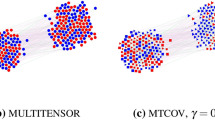
The network alignment problem appears in many areas of science and involves finding the optimal mapping between nodes in two or more networks, so as to identify corresponding entities across networks. We propose a probabilistic approach to the problem of network alignment, as well as the corresponding inference algorithms. Unlike heuristic approaches, our approach is transparent in that all model assumptions are explicit; therefore, it is susceptible of being extended and fine tuned by incorporating contextual information that is relevant to a given alignment problem. Also in contrast to current approaches, our method does not yield a single alignment, but rather the whole posterior distribution over alignments. We show that using the whole posterior leads to correct matching of nodes, even in situations where the single most plausible alignment mismatches them. Our approach opens the door to a whole new family of network alignment algorithms, and to their application to problems for which existing methods are perhaps inappropriate.

Read the full article at: www.nature.com

Matrix-Weighted Networks for Modeling Multidimensional Dynamics: Theoretical Foundations and Applications to Network Coherence

Yu Tian, Sadamori Kojaku, Hiroki Sayama, and Renaud Lambiotte

Phys. Rev. Lett. 134, 237401

Networks are powerful tools for modeling interactions in complex systems. While traditional networks use scalar edge weights, many real-world systems involve multidimensional interactions. For example, in social networks, individuals often have multiple interconnected opinions that can affect different opinions of other individuals, which can be better characterized by matrices. We propose a general framework for modeling such multidimensional interacting dynamics: matrix-weighted networks (MWNs). We present the mathematical foundations of MWNs and examine consensus dynamics and random walks within this context. Our results reveal that the coherence of MWNs gives rise to nontrivial steady states that generalize the notions of communities and structural balance in traditional networks.

Read the full article at: link.aps.org

Nitrogen-fixing organelle in a marine alga

TYLER H. COALE, et al.

SCIENCE 11 Apr 2024 Vol 384, Issue 6692 pp. 217-222

Symbiotic interactions were key to the evolution of chloroplast and mitochondria organelles, which mediate carbon and energy metabolism in eukaryotes. Biological nitrogen fixation, the reduction of abundant atmospheric nitrogen gas (N2) to biologically available ammonia, is a key metabolic process performed exclusively by prokaryotes. Candidatus Atelocyanobacterium thalassa, or UCYN-A, is a metabolically streamlined N2-fixing cyanobacterium previously reported to be an endosymbiont of a marine unicellular alga. Here we show that UCYN-A has been tightly integrated into algal cell architecture and organellar division and that it imports proteins encoded by the algal genome. These are characteristics of organelles and show that UCYN-A has evolved beyond endosymbiosis and functions as an early evolutionary stage N2-fixing organelle, or “nitroplast.”

Read the full article at: www.science.org

Large Language Models and Emergence: A Complex Systems Perspective

David C. Krakauer, John W. Krakauer, Melanie Mitchell

Emergence is a concept in complexity science that describes how many-body systems manifest novel higher-level properties, properties that can be described by replacing high-dimensional mechanisms with lower-dimensional effective variables and theories. This is captured by the idea “more is different”. Intelligence is a consummate emergent property manifesting increasingly efficient — cheaper and faster — uses of emergent capabilities to solve problems. This is captured by the idea “less is more”. In this paper, we first examine claims that Large Language Models exhibit emergent capabilities, reviewing several approaches to quantifying emergence, and secondly ask whether LLMs possess emergent intelligence.

Read the full article at: arxiv.org