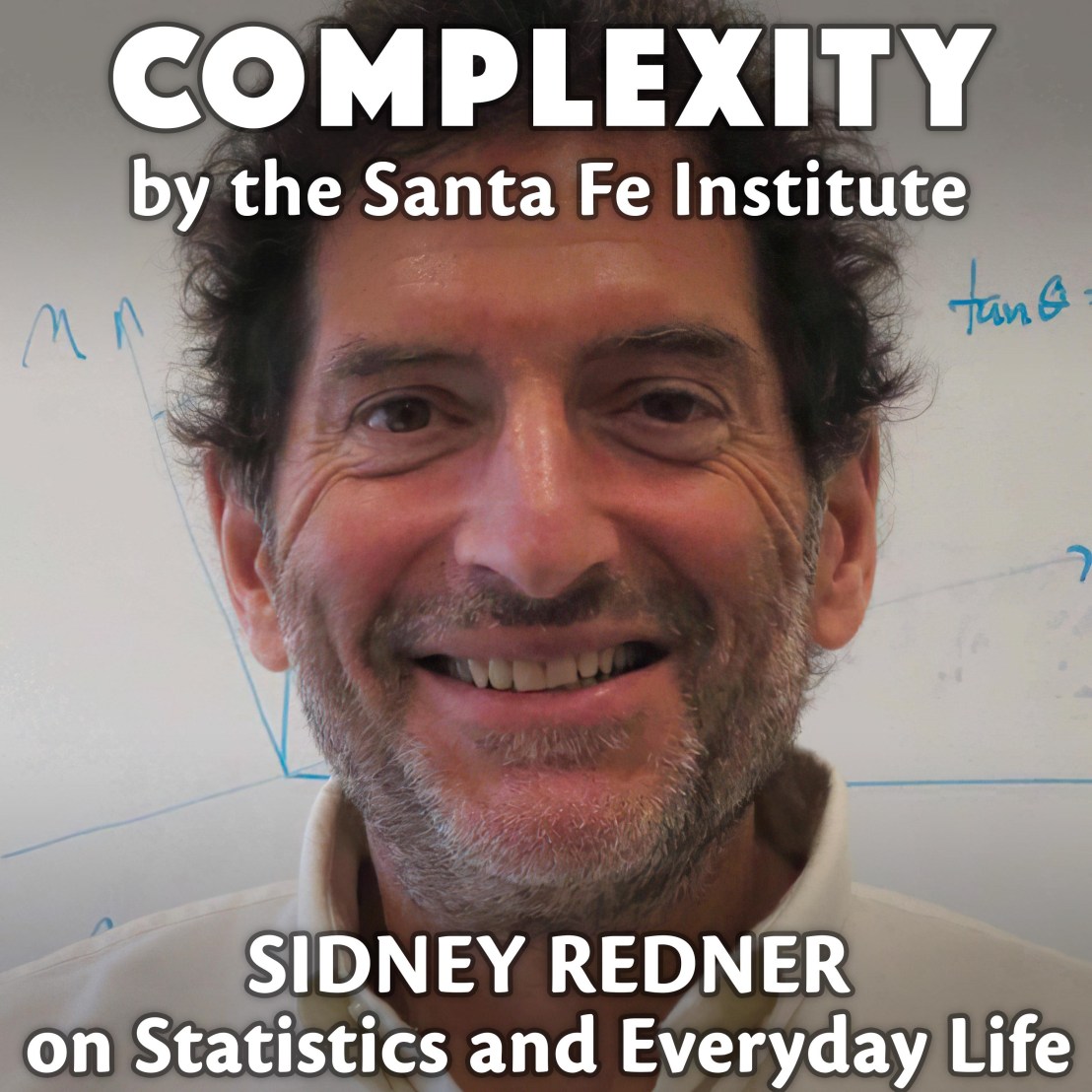
In this episode, we speak to SFI Resident Professor Sidney Redner, author of A Guide to First-Passage Processes, about how he finds inspiration for his complex systems research in the everyday — and how he uses math and physics to explore hot hands, heat waves, parking lots, and more…
Renaud is an associate professor at the Mathematical Institute of Oxford University, investigating processes taking place on large networks.
In the episode, we talk about his story in science, the joy and value of exploring without a particular purpose, doing a PhD without publishing any papers, … and how reading classical texts by Boltzmann and others early on has shaped the work Renaud does even to this day.
When we get to the paper, we talk about Renaud’s recent work “Variance and covariance of distributions on graphs” (1) with co-authors Karel Devriendt and Samuel Martin-Gutierrez.
Our Episode 4 guest, Leidy Klotz, is a Professor at the University of Virginia. He studies the science of design: how we transform things from how they are – to how we want them to be. Leidy wants to apply his work outside of academia. He wants address climate change and systemic inequality, Leidy also works directly with organizations including the World Bank.
This episode’s guest is Dirk Brockmann. Dirk is a physicist and complex systems researcher. He’s a professor at the Department of Biology, Humboldt University of Berlin and the Robert Koch Institute, Berlin. Berfore returning to his native Germany, he was a professor at Northwestern University.