
Revealing the mechanism and function underlying pairwise temporal coupling in collective motion

Guy Amichay, Liang Li, Máté Nagy & Iain D. Couzin 

Nature Communications volume 15, Article number: 4356 (2024)

Coordinated motion in animal groups has predominantly been studied with a focus on spatial interactions, such as how individuals position and orient themselves relative to one another. Temporal aspects have, by contrast, received much less attention. Here, by studying pairwise interactions in juvenile zebrafish (Danio rerio)—including using immersive volumetric virtual reality (VR) with which we can directly test models of social interactions in situ—we reveal that there exists a rhythmic out-of-phase (i.e., an alternating) temporal coordination dynamic. We find that reciprocal (bi-directional) feedback is both necessary and sufficient to explain this emergent coupling. Beyond a mechanistic understanding, we find, both from VR experiments and analysis of freely swimming pairs, that temporal coordination considerably improves spatial responsiveness, such as to changes in the direction of motion of a partner. Our findings highlight the synergistic role of spatial and temporal coupling in facilitating effective communication between individuals on the move.

Read the full article at: www.nature.com
Infodynamics, Information Entropy and the Second Law of Thermodynamics

Klaus Jaffe

Information and Energy are related. The Second Law of Thermodynamics applies to changes in energy and heat, but it does not apply to information dynamics. Advances in Infodynamics have made it clear that Total Information contains Useful Information and Noise, both of which may be gained or lost in irreversible processes. Increases in Free Energy of open systems require more Useful Information, reducing or increasing Thermodynamic Entropy. Empirical data show that the more Free Energy is created, the more Useful Information is required; and the more Useful Information is produced the more Free Energy is spent. The Energy – Information relationship underlies all processes where novel structures, forms and systems emerge. Although science cannot predict the structure of information that will produce Free Energy, engineers have been successful in finding Useful Information that increases Free Energy. Here I explore the fate of information in irreversible processes and its relation with the Second Law of Thermodynamics.

Read the full article at: www.qeios.com

Thermodynamics of Computations with Absolute Irreversibility, Unidirectional Transitions, and Stochastic Computation Times

Gonzalo Manzano, Gülce Kardeş, Édgar Roldán, and David H. Wolpert
Phys. Rev. X 14, 021026

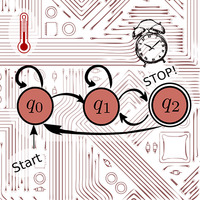
Developing a thermodynamic theory of computation is a challenging task at the interface of nonequilibrium thermodynamics and computer science. In particular, this task requires dealing with difficulties such as stochastic halting times, unidirectional (possibly deterministic) transitions, and restricted initial conditions, features common in real-world computers. Here, we present a framework which tackles all such difficulties by extending the martingale theory of nonequilibrium thermodynamics to generic nonstationary Markovian processes, including those with broken detailed balance and/or absolute irreversibility. We derive several universal fluctuation relations and second-law-like inequalities that provide both lower and upper bounds on the intrinsic dissipation (mismatch cost) associated with any periodic process—in particular, the periodic processes underlying all current digital computation. Crucially, these bounds apply even if the process has stochastic stopping times, as it does in many computational machines. We illustrate our results with exhaustive numerical simulations of deterministic finite automata processing bit strings, one of the fundamental models of computation from theoretical computer science. We also provide universal equalities and inequalities for the acceptance probability of words of a given length by a deterministic finite automaton in terms of thermodynamic quantities, and outline connections between computer science and stochastic resetting. Our results, while motivated from the computational context, are applicable far more broadly.

Read the full article at: link.aps.org

Challenges and opportunities for digital twins in precision medicine: a complex systems perspective

Manlio De Domenico, Luca Allegri, Guido Caldarelli, Valeria d’Andrea, Barbara Di Camillo, Luis M. Rocha, Jordan Rozum, Riccardo Sbarbati, Francesco Zambelli

The adoption of digital twins (DTs) in precision medicine is increasingly viable, propelled by extensive data collection and advancements in artificial intelligence (AI), alongside traditional biomedical methodologies. However, the reliance on black-box predictive models, which utilize large datasets, presents limitations that could impede the broader application of DTs in clinical settings. We argue that hypothesis-driven generative models, particularly multiscale modeling, are essential for boosting the clinical accuracy and relevance of DTs, thereby making a significant impact on healthcare innovation. This paper explores the transformative potential of DTs in healthcare, emphasizing their capability to simulate complex, interdependent biological processes across multiple scales. By integrating generative models with extensive datasets, we propose a scenario-based modeling approach that enables the exploration of diverse therapeutic strategies, thus supporting dynamic clinical decision-making. This method not only leverages advancements in data science and big data for improving disease treatment and prevention but also incorporates insights from complex systems and network science, quantitative biology, and digital medicine, promising substantial advancements in patient care.

Read the full article at: arxiv.org

Is it getting harder to make a hit? Evidence from 65 years of US music chart history

Marta Ewa Lech, Sune Lehmann, Jonas L. Juul

Since the creation of the Billboard Hot 100 music chart in 1958, the chart has been a window into the music consumption of Americans. Which songs succeed on the chart is decided by consumption volumes, which can be affected by consumer music taste, and other factors such as advertisement budgets, airplay time, the specifics of ranking algorithms, and more. Since its introduction, the chart has documented music consumerism through eras of globalization, economic growth, and the emergence of new technologies for music listening. In recent years, musicians and other hitmakers have voiced their worry that the music world is changing: Many claim that it is getting harder to make a hit but until now, the claims have not been backed using chart data. Here we show that the dynamics of the Billboard Hot 100 chart have changed significantly since the chart’s founding in 1958, and in particular in the past 15 years. Whereas most songs spend less time on the chart now than songs did in the past, we show that top-1 songs have tripled their chart lifetime since the 1960s, the highest-ranked songs maintain their positions for far longer than previously, and the lowest-ranked songs are replaced more frequently than ever. At the same time, who occupies the chart has also changed over the years: In recent years, fewer new artists make it into the chart and more positions are occupied by established hit makers. Finally, investigating how song chart trajectories have changed over time, we show that historical song trajectories cluster into clear trajectory archetypes characteristic of the time period they were part of. The results are interesting in the context of collective attention: Whereas recent studies have documented that other cultural products such as books, news, and movies fade in popularity quicker in recent years, music hits seem to last longer now than in the past.

Read the full article at: arxiv.org