
Adapting to disruptions: Managing supply chain resilience through product rerouting

AMBRA AMICO, LUCA VERGINER, GIONA CASIRAGHI, GIACOMO VACCARIO, AND FRANK SCHWEITZER
SCIENCE ADVANCES
17 Jan 2024
Vol 10, Issue 3

Supply chain disruptions may cause shortages of essential goods, affecting millions of individuals. We propose a perspective to address this problem via reroute flexibility. This is the ability to substitute and reroute products along existing pathways, hence without requiring the creation of new connections. To showcase the potential of this approach, we examine the US opioid distribution system. We reconstruct over 40 billion distribution routes and quantify the effectiveness of reroute flexibility in mitigating shortages. We demonstrate that flexibility (i) reduces the severity of shortages and (ii) delays the time until they become critical. Moreover, our findings reveal that while increased flexibility alleviates shortages, it comes at the cost of increased complexity: We demonstrate that reroute flexibility increases alternative path usage and slows down the distribution system. Our method enhances decision-makers’ ability to manage the resilience of supply chains.

Read the full article at: www.science.org
How Is Flocking Like Computing?

Birds flock. Locusts swarm. Fish school. In these chaotic assemblies, order somehow emerges. Collective behaviors differ in their details from one species to another, but they largely adhere to principles of collective motion that physicists have worked out over centuries. Now, using technologies that only recently became available, researchers have been able to study these patterns of collective animal behavior more closely than ever before. These new insights are unlocking some of the secret fitness advantages of living as part of a group rather than as an individual. The improved understanding of swarming pests such as locusts could also help to protect global food security.

In this episode, co-host Steven Strogatz interviews the evolutionary ecologist Iain Couzin about  how and why animals exhibit collective behaviors, and the secret advantages that arise from them.

Listen at: play.prx.org

Collective intelligence: A unifying concept for integrating biology across scales and substrates

Patrick McMillen & Michael Levin 

Communications Biology volume 7, Article number: 378 (2024)

A defining feature of biology is the use of a multiscale architecture, ranging from molecular networks to cells, tissues, organs, whole bodies, and swarms. Crucially however, biology is not only nested structurally, but also functionally: each level is able to solve problems in distinct problem spaces, such as physiological, morphological, and behavioral state space. Percolating adaptive functionality from one level of competent subunits to a higher functional level of organization requires collective dynamics: multiple components must work together to achieve specific outcomes. Here we overview a number of biological examples at different scales which highlight the ability of cellular material to make decisions that implement cooperation toward specific homeodynamic endpoints, and implement collective intelligence by solving problems at the cell, tissue, and whole-organism levels. We explore the hypothesis that collective intelligence is not only the province of groups of animals, and that an important symmetry exists between the behavioral science of swarms and the competencies of cells and other biological systems at different scales. We then briefly outline the implications of this approach, and the possible impact of tools from the field of diverse intelligence for regenerative medicine and synthetic bioengineering.

Read the full article at: www.nature.com

What Is Artificial Life Today, and Where Should It Go?

Alan Dorin, Susan Stepney

Artificial Life (2024) 30 (1): 1–15.

The field called Artificial Life (ALife) coalesced following a workshop organized by Chris Langton in September 1987 (Langton, 1988a). That meeting drew together work that had been largely carried out from the 1950s through to the 1980s. A few years later, Langton became the founding editor of this journal, Artificial Life, which started its life with Volume 1, Issue 1_2 in the (northern) winter of 1993/1994.1 This current issue therefore begins the 30th volume and 30th year of Artificial Life. We think this is a milestone worth celebrating!
In the proceedings of that first workshop, Langton famously defined ALife as the study of “life as it could be,” of “possible life,” in contrast to biology’s study of “life as we know it to be” (on Earth). His stated aim was to derive “a truly general theoretical biology capable of making universal statements about life wherever it may be found and whatever it may be made of ” (Langton, 1988b, p. xvi).

Read the full article at: direct.mit.edu

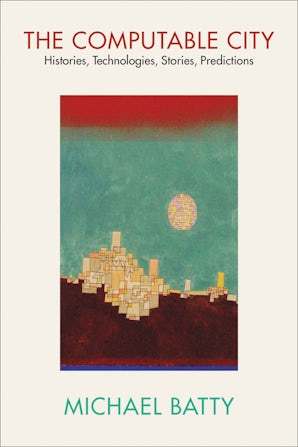
The Computable City Histories, Technologies, Stories, Predictions. By Michael Batty

How computers simulate cities and how they are also being embedded in cities, changing our behavior and the way in which cities evolve.

At every stage in the history of computers and communications, it is safe to say we have been unable to predict what happens next. When computers first appeared nearly seventy-five years ago, primitive computer models were used to help understand and plan cities, but as computers became faster, smaller, more powerful, and ever more ubiquitous, cities themselves began to embrace them. As a result, the smart city emerged. In The Computable City, Michael Batty investigates the circularity of this peculiar evolution: how computers and communications changed the very nature of our city models, which, in turn, are used to simulate systems composed of those same computers.

Batty first charts the origins of computers and examines how our computational urban models have developed and how they have been enriched by computer graphics. He then explores the sequence of digital revolutions and how they are converging, focusing on continual changes in new technologies, as well as the twenty-first-century surge in social media, platform economies, and the planning of the smart city. He concludes by revisiting the digital transformation as it continues to confound us, with the understanding that the city, now a high-frequency twenty-four-hour version of itself, changes our understanding of what is possible.

More at: mitpress.mit.edu