
Evolving self-organisation workshop @ GECCO 2026

We are thrilled to be returning to GECCO for a second edition of the Evolving Self-organisation workshop and are now accepting submissions! 

Submission deadline: March 27
Where: GECCO 2026 is a hybrid conference, with its physical venue located in San José, Costa Rica.
When: the conference dates are July 13-17, workshops traditionally happen during the first two days with exact date announced later

The organizing committee
——————————————————————-
Alex Mordvintsev (Google Research, Zurich)
Eleni Nisioti (IT University of Copenhagen)
Eyvind Niklasson (Google Research, Zurich)
Ettore Randazzo (Google Research, Zurich)

Mayalen Etcheverry (Google Research, Zurich)
Marcello Barylli (IT University of Copenhagen)
Milton Montero (IT University of Copenhagen)
Sebastian RIsi (IT University of Copenhagen)
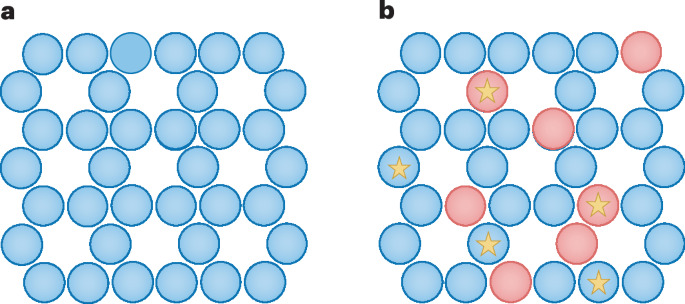
Bacterial sensors poised at criticality | Nature Physics

Junhua Yuan 
Nature Physics (2026)

Spontaneous switching between active and inactive states in bacterial chemosensory arrays is shown to operate near a critical point. Through biologically controlled disorder, cells balance high signal gain with fast response.

Read the full article at: www.nature.com

Optimizing economic complexity

Viktor Stojkoski, César A. Hidalgo

Research Policy Volume 55, Issue 4, May 2026, 105454

Efforts to apply economic complexity to identify diversification opportunities often rely on diagrams comparing the relatedness and complexity of products, technologies, or industries. Yet, the use of these diagrams, is not based on empirical or theoretical evidence supporting some notion of optimality. Here, we introduce an optimization-based framework that identifies diversification opportunities by minimizing a cost function capturing the constraints imposed by an economy’s pattern of specialization. We show that the resulting portfolios often differ from those implied by relatedness–complexity diagrams, providing a target-oriented optimization layer to the economic complexity toolkit.

Read the full article at: www.sciencedirect.com

A Disproof of Large Language Model Consciousness: The Necessity of Continual Learning for Consciousness

Erik Hoel
Scientific theories of consciousness should be falsifiable and non-trivial. Recent research has given us formal tools to analyze these requirements of falsifiability and non-triviality for theories of consciousness. Surprisingly, many contemporary theories of consciousness fail to pass this bar, including theories based on causal structure but also (as I demonstrate) theories based on function. Herein, I show these requirements of falsifiability and non-triviality especially constrain the potential consciousness of contemporary Large Language Models (LLMs) because of their proximity to systems that are equivalent to LLMs in terms of input/output function; yet, for these functionally equivalent systems, there cannot be any falsifiable and non-trivial theory of consciousness that judges them conscious. This forms the basis of a disproof of contemporary LLM consciousness. I then show a positive result, which is that theories of consciousness based on (or requiring) continual learning do satisfy the stringent formal constraints for a theory of consciousness in humans. Intriguingly, this work supports a hypothesis: If continual learning is linked to consciousness in humans, the current limitations of LLMs (which do not continually learn) are intimately tied to their lack of consciousness.

Read the full article at: arxiv.org

Critical phase transition in bee movement dynamics can be modeled using a two-dimensional cellular automaton

Ivan Shpurov and Tom Froese Phys. Rev. E 113, 024405

The collective behavior of numerous animal species, including insects, exhibits scale-free behavior indicative of the critical (second-order) phase transition. Previous research uncovered such phenomena in the behavior of honeybees, most notably the long-range correlations in space and time. Furthermore, it was demonstrated that the bee activity in the hive manifests the hallmarks of the jamming process. We follow up by presenting a discrete model of the system that faithfully replicates some of the key features found in the data, such as the divergence of correlation length and scale-free distribution of jammed clusters. The dependence of the correlation length on the control parameter, density, is demonstrated for both the real data and the model. We conclude with a brief discussion on the contribution of the insights provided by the model to our understanding of the insects’ collective behavior.

Read the full article at: link.aps.org