

An exercise in pure mathematics has led to a wide-ranging theory of how the world comes together.
Read the full article at: www.quantamagazine.org
Networking the complexity community since 1999
An exercise in pure mathematics has led to a wide-ranging theory of how the world comes together.
Read the full article at: www.quantamagazine.org
Michael Levin
Front. Psychol
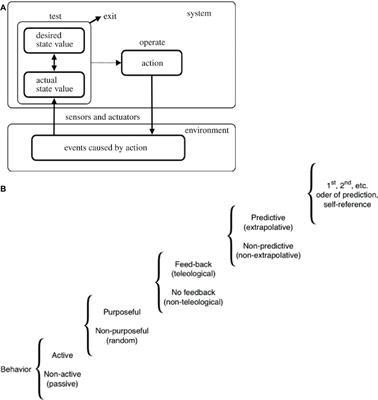
All epistemic agents physically consist of parts that must somehow comprise an integrated cognitive self. Biological individuals consist of subunits (organs, cells, and molecular networks) that are themselves complex and competent in their own native contexts. How do coherent biological Individuals result from the activity of smaller sub-agents? To understand the evolution and function of metazoan creatures’ bodies and minds, it is essential to conceptually explore the origin of multicellularity and the scaling of the basal cognition of individual cells into a coherent larger organism. In this article, I synthesize ideas in cognitive science, evolutionary biology, and developmental physiology toward a hypothesis about the origin of Individuality: “Scale-Free Cognition.” I propose a fundamental definition of an Individual based on the ability to pursue goals at an appropriate level of scale and organization and suggest a formalism for defining and comparing the cognitive capacities of highly diverse types of agents. Any Self is demarcated by a computational surface – the spatio-temporal boundary of events that it can measure, model, and try to affect. This surface sets a functional boundary – a cognitive “light cone” which defines the scale and limits of its cognition. I hypothesize that higher level goal-directed activity and agency, resulting in larger cognitive boundaries, evolve from the primal homeostatic drive of living things to reduce stress – the difference between current conditions and life-optimal conditions. The mechanisms of developmental bioelectricity – the ability of all cells to form electrical networks that process information – suggest a plausible set of gradual evolutionary steps that naturally lead from physiological homeostasis in single cells to memory, prediction, and ultimately complex cognitive agents, via scale-up of the basic drive of infotaxis. Recent data on the molecular mechanisms of pre-neural bioelectricity suggest a model of how increasingly sophisticated cognitive functions emerge smoothly from cell-cell communication used to guide embryogenesis and regeneration. This set of hypotheses provides a novel perspective on numerous phenomena, such as cancer, and makes several unique, testable predictions for interdisciplinary research that have implications not only for evolutionary developmental biology but also for biomedicine and perhaps artificial intelligence and exobiology.
Read the full article at: www.frontiersin.org

We are looking up to a very exciting Conference.
There are 20 world-class famous plenary/invited speakers.
There are over 325 accepted presentations, in oral, lightning, and poster presentations.
Over 55 countries are represented, more than any previous CCS meeting.
A round table discussion on COVID-19 is currently being planned with well-known participants.
Representatives from Journals of the European Physical Society and Complexity
will present information to all prospective authors.
On Friday December 4, a very exciting session is planned for young researchers,
with tutorials, didactic presentations, contests, puzzles, etc. etc All registered participants
in CCS2020 may attend !
More at: ccs2020.web.auth.gr
Aurea Anguera, Juan A. Lara, David Lizcano, María-Aurora Martínez, Juan Pazos & F. David de la Peña
Foundations of Science volume 25, pages1203–1225(2020)
Turing was an exceptional mathematician with a peculiar and fascinating personality and yet he remains largely unknown. In fact, he might be considered the father of the von Neumann architecture computer and the pioneer of Artificial Intelligence. And all thanks to his machines; both those that Church called “Turing machines” and the a-, c-, o-, unorganized- and p-machines, which gave rise to evolutionary computations and genetic programming as well as connectionism and learning. This paper looks at all of these and at why he is such an often overlooked and misunderstood figure.
Read the full article at: link.springer.com
S. Wolfram, “A Class of Models with the Potential to Represent Fundamental Physics,” Complex Systems, 29(2), 2020 pp. 107–536.
https://doi.org/10.25088/ComplexSystems.29.2.107
A class of models intended to be as minimal and structureless as possible is introduced. Even in cases with simple rules, rich and complex behavior is found to emerge, and striking correspondences to some important core known features of fundamental physics are seen, suggesting the possibility that the models may provide a new approach to finding a fundamental theory of physics.
 Complexity Digest