

Going without sleep for too long kills animals but scientists haven’t known why. Newly published work suggests that the answer lies in an unexpected part of the body.
Source: www.quantamagazine.org
Networking the complexity community since 1999
Going without sleep for too long kills animals but scientists haven’t known why. Newly published work suggests that the answer lies in an unexpected part of the body.
Source: www.quantamagazine.org
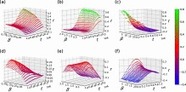
Bin Zhou, Xin Lu, Petter Holme
Social Networks
Volume 63, October 2020, Pages 47-55
• A universal rise-and-fall pattern for assortativity is found in empirical networks
• The bidirectional selection model can re-construct the evolution of assortativity
• Heterogeneity of social status may drive the network evolution towards self-optimization
• The social status gap plays an important role for the evolution of network assortativity
Source: www.sciencedirect.com
Lorenzo Zino ; Alessandro Rizzo ; Maurizio Porfiri
IEEE Control Systems Letters 4(4)
In this letter, we propose an epidemic model over temporal networks that explicitly encapsulates two different control actions. We develop our model within the theoretical framework of activity driven networks (ADNs), which have emerged as a valuable tool to capture the complexity of dynamical processes on networks, coevolving at a comparable time scale to the temporal network formation. Specifically, we complement a susceptible–infected–susceptible epidemic model with features that are typical of nonpharmaceutical interventions in public health policies: i) actions to promote awareness, which induce people to adopt self-protective behaviors, and ii) confinement policies to reduce the social activity of infected individuals. In the thermodynamic limit of large-scale populations, we use a mean-field approach to analytically derive the epidemic threshold, which offers viable insight to devise containment actions at the early stages of the outbreak. Through the proposed model, it is possible to devise an optimal epidemic control policy as the combination of the two strategies, arising from the solution of an optimization problem. Finally, the analytical computation of the epidemic prevalence in endemic diseases on homogeneous ADNs is used to optimally calibrate control actions toward mitigating an endemic disease. Simulations are provided to support our theoretical results.
Source: ieeexplore.ieee.org
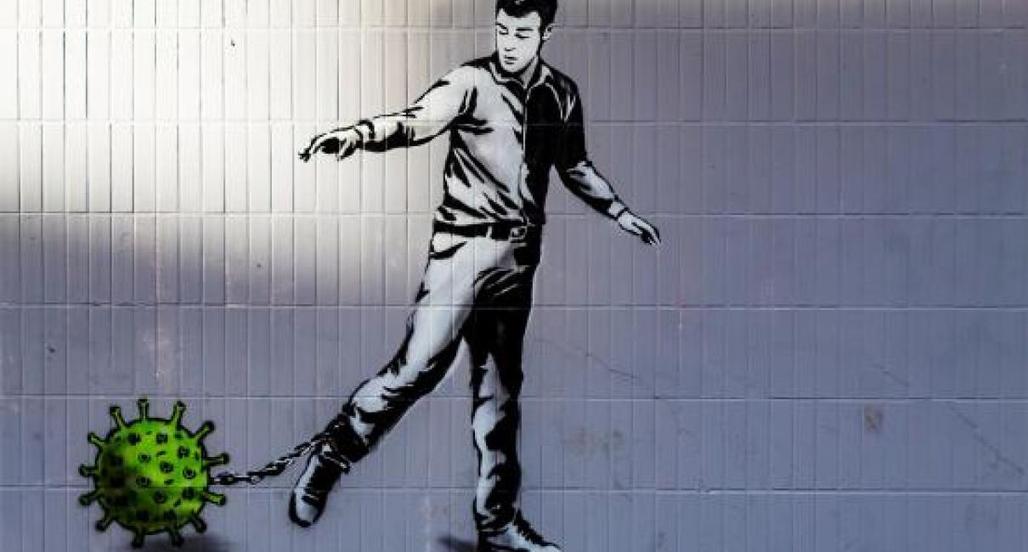
During the transition from the year 2019 to the year 2020, the world was introduced to a new virus that commenced affecting its cities and the people residing in them.
March 11th 2020 marked the day that the WHO declared the world is coping with a pandemic.
Covid-19, the virus causing this pandemic, has spread extensively from Wuhan, China to cities like New York, Madrid, Moscow and Bergamo.
Cities are complex systems[1], and the entrance of an uninvited virus adds to their unpredictable, dynamic nature.
Some cities were put under lockdown, restricting the movement and economic activities of their citizens, while others did not wish interfering with the natural flow of urban life, imposing minimal limitations.
While cities around the world are adapting to the life alongside Covid-19, this unusual situation creates a fertile ground for contemplation about urban living during a pandemic and its aftermath.
TAU City Center invites students across the globe to share their thoughts and impressions on how their city has been affected by and coped with Covid-19.
This Project aims to display different perspectives reagrding urban living during the Covid-19 pandemic.
Source: en-urban.tau.ac.il

Close monitoring of the COVID-19 pandemic provides a blow by blow account of a spatio-temporal process percolating over complex (social)-networks. Efforts to contain the spread of the disease were and remain, for better or worse, explicitly informed by a rich tradition of mathematical models of such processes. This tradition was further enriched in the past couple of decades with the emergence of globally networked virtual societies, and the deployment of fine grained networks of sensors, both enabling the gathering of highly resolved data on the structure of complex networks, and flows over them.
Our online-conference is an occasion for expert reviews of this tradition, then presentations of work-in-progress on the gathering of epidemiological data (technical and ethical challenges), and its modeling (from the coarse grained compartmental, to the fine grained agent based models), with the urgency of COVID-19 mitigation in the air.
Taking place as it does at a cusp in a global pandemic, the meeting is for us at CAMS a timely intervention in a collaboration with the National Center for Remote Sensing (NCRS, CNRS-L) the principle aim of which is to harness big data analytics and complexity theory at the service of national and regional priorities. It draws on local expertise in concerned disciplines (in this case: physics, biology, epidemiology and sociology), and contributions by experts at leading international laboratories in data analytics, and complexity science (e.g. Multiscale and Quantum Physics, Aalto University, Finland; The Bartlett Center for Advanced Spatial Analysis, UCL, London; Center of Complexity Sciences (C3), UNAM, Mexico; The Alan Turing Institute, London; ICTP, Trieste, Italy; etc.).
Source: www.aub.edu.lb
 Complexity Digest