Matrix-Weighted Networks for Modeling Multidimensional Dynamics: Theoretical Foundations and Applications to Network Coherence

Yu Tian, Sadamori Kojaku, Hiroki Sayama, and Renaud Lambiotte

Phys. Rev. Lett. 134, 237401

Networks are powerful tools for modeling interactions in complex systems. While traditional networks use scalar edge weights, many real-world systems involve multidimensional interactions. For example, in social networks, individuals often have multiple interconnected opinions that can affect different opinions of other individuals, which can be better characterized by matrices. We propose a general framework for modeling such multidimensional interacting dynamics: matrix-weighted networks (MWNs). We present the mathematical foundations of MWNs and examine consensus dynamics and random walks within this context. Our results reveal that the coherence of MWNs gives rise to nontrivial steady states that generalize the notions of communities and structural balance in traditional networks.

Read the full article at: link.aps.org
Nitrogen-fixing organelle in a marine alga

TYLER H. COALE, et al.

SCIENCE 11 Apr 2024 Vol 384, Issue 6692 pp. 217-222

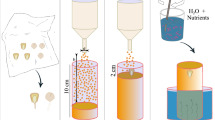
Symbiotic interactions were key to the evolution of chloroplast and mitochondria organelles, which mediate carbon and energy metabolism in eukaryotes. Biological nitrogen fixation, the reduction of abundant atmospheric nitrogen gas (N2) to biologically available ammonia, is a key metabolic process performed exclusively by prokaryotes. Candidatus Atelocyanobacterium thalassa, or UCYN-A, is a metabolically streamlined N2-fixing cyanobacterium previously reported to be an endosymbiont of a marine unicellular alga. Here we show that UCYN-A has been tightly integrated into algal cell architecture and organellar division and that it imports proteins encoded by the algal genome. These are characteristics of organelles and show that UCYN-A has evolved beyond endosymbiosis and functions as an early evolutionary stage N2-fixing organelle, or “nitroplast.”

Read the full article at: www.science.org

Large Language Models and Emergence: A Complex Systems Perspective

David C. Krakauer, John W. Krakauer, Melanie Mitchell

Emergence is a concept in complexity science that describes how many-body systems manifest novel higher-level properties, properties that can be described by replacing high-dimensional mechanisms with lower-dimensional effective variables and theories. This is captured by the idea “more is different”. Intelligence is a consummate emergent property manifesting increasingly efficient — cheaper and faster — uses of emergent capabilities to solve problems. This is captured by the idea “less is more”. In this paper, we first examine claims that Large Language Models exhibit emergent capabilities, reviewing several approaches to quantifying emergence, and secondly ask whether LLMs possess emergent intelligence.

Read the full article at: arxiv.org

A continental scale analysis reveals widespread root bimodality

Mingzhen Lu, Sili Wang, Avni Malhotra, Shersingh Joseph Tumber-Dávila, Samantha Weintraub-Leff, M. Luke McCormack, Xingchen Tony Wang & Robert B. Jackson
Nature Communications volume 16, Article number: 5281 (2025)

An improved understanding of root vertical distribution is crucial for assessing plant-soil-atmosphere interactions and their influence on the land carbon sink. Here, we analyze a continental-scale dataset of fine roots reaching 2 meters depth, spanning from Alaskan tundra to Puerto Rican forests. Contrary to the expectation that fine root abundance decays exponentially with depth, we found root bimodality at ~20% of 44 sites, with secondary biomass peaks often below 1 m. Root bimodality was more likely in areas with low total fine root biomass and was more frequent in shrublands than grasslands. Notably, secondary peaks coincided with high soil nitrogen content at depth. Our analyses suggest that deep soil nutrients tend to be underexploited, while root bimodality offers plants a mechanism to tap into deep soil resources. Our findings add to the growing recognition that deep soil dynamics are systematically overlooked, and calls for more research attention to this deep frontier in the face of global environmental change.

Read the full article at: www.nature.com

Compendium of Urban Complexity, edited by Diego Rybski

This book brings together key findings, insights, and theories at the intersection of two disciplines – city science and complex systems. It features a curated collection of chapters contributed by emerging scholars conducting cutting-edge research in complexity science, interdisciplinary physics, and quantitative geography. The compendium is tailored to a thematically diverse audience, spanning quantitative fields such as statistical and mathematical physics, as well as socially-focused domains such as geography and urban planning. By integrating novel methods and insights from physics, economics, and geography, this book aims at an interdisciplinary spectrum of graduate students and academic researchers studying cities as complex systems.

More at: link.springer.com