Report: The future of urban science: integrating the social and natural sciences 

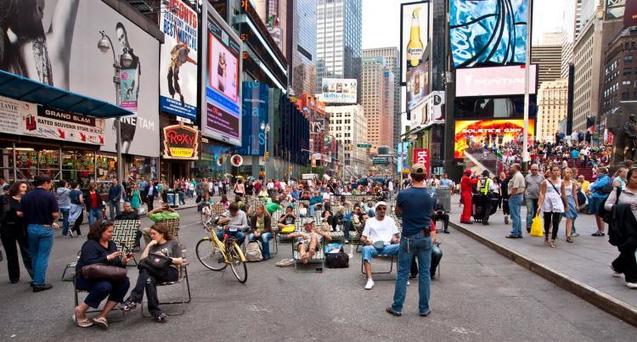
Urban science seeks to understand the fundamental processes that drive, shape and sustain cities and urbanization. It is a multi/transdisciplinary approach involving concepts, methods and research from the social, natural, engineering and computational sciences, along with the humanities. This report is intended to convey the current “state of the art” in urban science while also clearly indicating how urban science builds upon and complements (but does not replace) prior work on cities and urbanization in many other disciplines. The report does not aim at a fully comprehensive synopsis of work done under the rubric of “urban science” but it does aim to convey what makes urban science different from discipline-based examinations of cities and urbanization. It also highlights novel insights generated by the inherently multidisciplinary inquiry that urban science exemplifies."

Source: www.colorado.edu
Tenth International Conference on Complex Systems

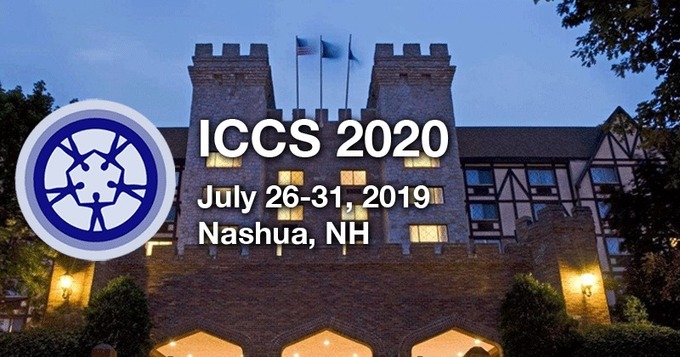
The International Conference on Complex Systems is a unique interdisciplinary forum that unifies and bridges the traditional domains of science and a multitude of real world systems. Participants will contribute and be exposed to mind expanding concepts and methods from across the diverse field of complex systems science. The conference will be held July 26-31, 2020, in Nashua, NH, USA.

Source: necsi.edu

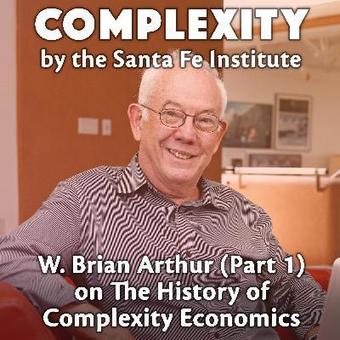
W. Brian Arthur (Part 1) on The History of Complexity Economics

From its beginnings as a discipline nearly 150 years ago, economics rested on assumptions that don’t hold up when studied in the present day. The notion that our economic systems are in equilibrium, that they’re made of actors making simple rational and self-interested decisions with perfect knowledge of society— these ideas prove about as useful in the Information Age as Newton’s laws of motion are to quantum physicists. A novel paradigm for economics, borrowing insights from ecology and evolutionary biology, started to emerge at SFI in the late 1980s — one that treats our markets and technologies as systems out of balance, serving metabolic forces, made of agents with imperfect information and acting on fundamental uncertainty. This new complexity economics uses new tools and data sets to shed light on puzzles standard economics couldn’t answer — like why the economy grows, how sudden and cascading crashes happen, why some companies and cities lock in permanent competitive advantages, and how technology evolves. And complexity economics offers insights back to biology, providing a new lens through which to understand the vastly intricate exchanges on which human life depends.
This week’s guest is W. Brian Arthur, External Professor at the Santa Fe Institute, Fellow at the Center for Advanced Study in the Behavioral Sciences at Stanford, and Visiting Researcher at Xerox PARC. In this first part of a two-episode conversation, we discuss the heady early days when complex systems science took on economics, and how biology provided a new paradigm for understanding our financial and technological systems. Tune in next week for part two…

Source: castbox.fm

Postdoctoral Fellows in The Center for Social and Biomedical Complexity Indiana University Bloomington, Luddy School of Informatics, Computing, and Engineering

The Center for Social and Biomedical Complexity (CSBC: https://csbc.sice.indiana.edu) at Indiana University Bloomington is accepting applications for one or more full-time non-tenure track postdoctoral fellows to conduct interdisciplinary research in Complex Networks and Systems applied to various social, ecological, biological, medicine and health problems. The expected start date for the appointments is February 2020. Candidates interested in conducting research in urban community-environment systems, or network science methods to analyze and visualize information relevant for epilepsy and other chronic diseases are encouraged to apply. The appointments are full-time for 12 months, with potential to be extended an additional year subject to funding and satisfactory performance. We offer a competitive salary with generous benefits. The postdocs will join a dynamic and interdisciplinary team that includes systems scientists, biologists, computer scientists, and social scientists. The postdocs will work with Prof. Luis M Rocha (https://informatics.indiana.edu/rocha/) and Prof. Johan Bollen (https://informatics.indiana.edu/jbollen/).

Source: chroniclevitae.com

ALIFE 2020

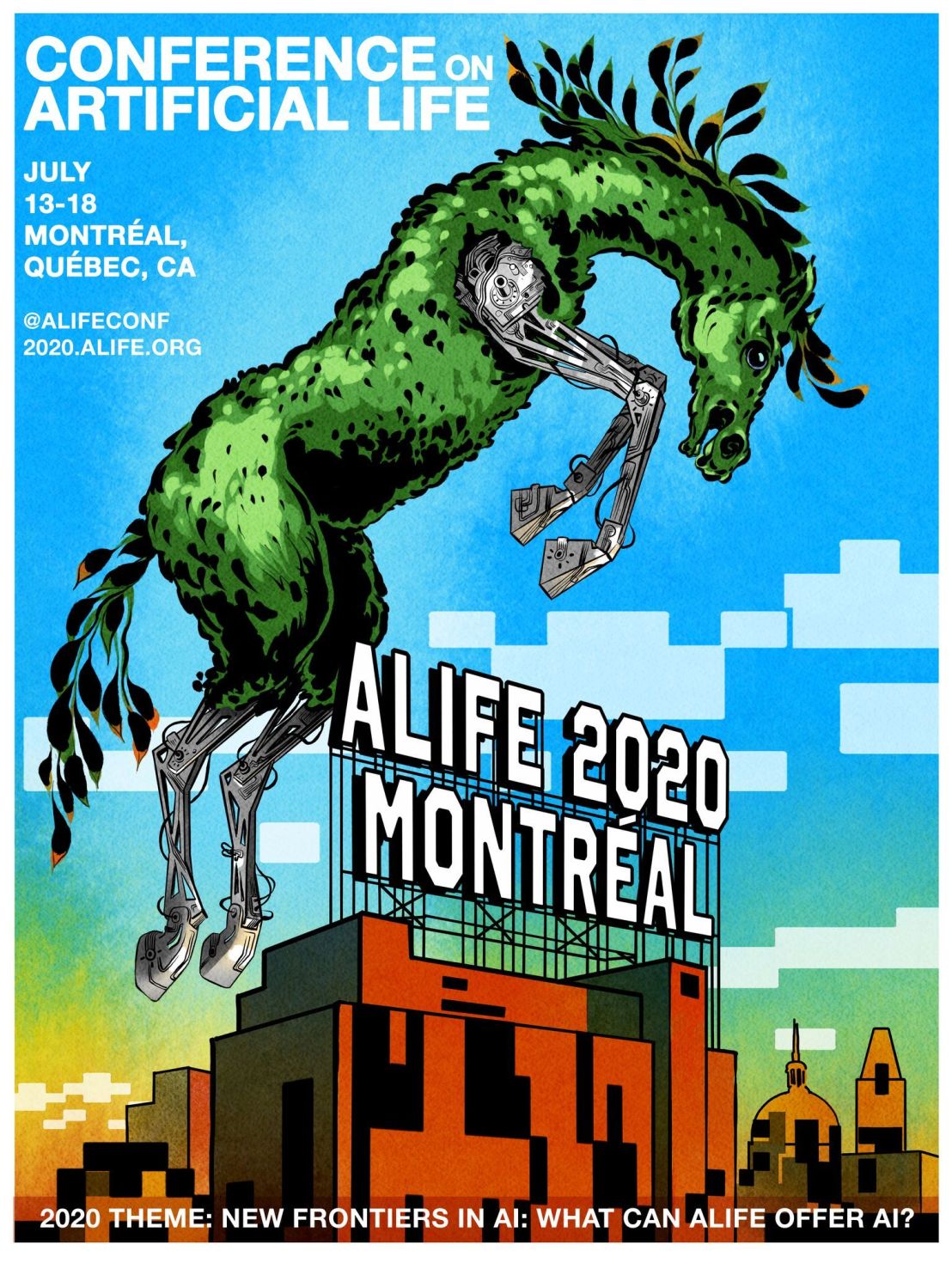
ALife is the flagship conference of the International Society for Artificial Life, which aims to bring together leading researchers and practitioners working on problems related to simulating and synthesizing complex phenomena in computation, biology, artificial intelligence, robotics, philosophy, and cognitive science, just to name a few. The ALife conference has a long history of encouraging multi-disciplinary collaboration across research, business, arts, and design and we look forward to upholding this long-standing tradition at the ALife 2020 conference. The conference theme for ALife 2020 is New Frontiers in AI: What can ALife offer AI?

Details 

  • Dates – July 13-18, 2020
  • Location – Centre Mont-Royal, Montréal, Québec, Canada
  • Hosts – University of Vermont, Vermont Complex Systems Center 
  • Twitter –  @ALifeConf

Source: www.vermontcomplexsystems.org