Mapping the coevolution, leadership and financing of research on viral vectors, RNAi, CRSPR/Cas9 and other genomic editing technologies

David Fajardo Ortiz, Annie Shattuck, Stefan Hornbostel


In the present investigation, we set out to determine and compare the evolution of the research on viral vectors, RNAi and genomic editing platforms as well as determine the profile of the main research institutions and funding agencies. A search of papers on viral vectors RNAi, CRISPR/Cas, TALENs, ZFNs and meganucleases was carried out in the Web of Science. A citation network of 16,746 papers was constructed. An analysis of network clustering combined with text mining was performed. In the case of viral vectors a long term process of incremental innovation in which the clusters of papers are organized around specific improvements of clinical relevance was identified. The most influential investigations on viral vectors were conducted in the United States and the European Union where the main funders were government agencies. The trajectory of RNAi research included clusters related to the study of RNAi as a biological phenomenon and its use in functional genomics, biomedicine and pest control. A British philanthropic organization and a US pharmaceutical company played a key role in the development of basic RNAi research and clinical application respectively, in addition to government agencies and academic institutions. In the case of CRISPR/Cas research, basic science discoveries led to the development of technical improvements, and these two in turn provided the information required for the development of biomedical, agricultural, livestock and industrial applications. The trajectory of CRISPR/Cas research exhibits a geopolitical division of the investigation efforts between the US, as the main producer of basic research and technical improvements, and China increasingly leading the applied research. A set of philanthropic foundations played a key role in specific stages of the CRISPR/Cas research. Our results reflect a change in the model in the financing of science and the emergence of China as a scientific superpower, with implications for the trajectory of development for applications of genomic technologies.

Source: www.biorxiv.org
Quantifying the prevalence of assortative mating in a human population

Klaus Jaffe


For the first time, empirical evidence allowed to construct the frequency distribution of an index related to the degree of genetic relatedness between the parents of about 0.5 million humans living in the UK. The results show that a large proportion of the population is not the product of parents choosing a mate randomly. Assortative mating leading to offspring, that occurs between genetic related individuals, is very common. High degrees of genetic relatedness, i.e. extreme inbreeding, is rare. The evidence shows that assortative mating is highly prevalent in this large population sample. This novel empirical result suggests that assuming random mating, as widely done in population genetic studies, is not an appropriate approximation to reality.

Source: www.biorxiv.org

Guided Self-Organisation 2020 Edinburgh, 8 – 10 June, 2020

In general, Guided Self-Organisation attempts to reconcile two seemingly opposing forces: one is guiding a self-organising system into a better structured shape and/or functionality, while the other is diversifying the options in an entropic exploration within the available search space. At first glance, these two alternatives may even appear irreconcilable in principle, given an apparent contradiction between the concepts of guidance (implying control) and self-organisation (implying autonomy). However, the resolution of this paradox capitalises on the distinction between the concepts of “control” and “constraint”: rather than trying to precisely control a transition towards the desirable outcomes, one puts in place some constraints on the system dynamics to mediate behaviors and interactions.

Source: blogs.ed.ac.uk

AUTOMATA2020

AUTOMATA2020 in Stockholm, Sweden, August 10-12, 2020 Conference website: ​ https://automata2020.weebly.com/ Submission deadline: March 30, 2020

Topics:  cellular automata,  dynamical system

Source: automata2020.weebly.com

The unmapped chemical complexity of our diet

Albert-László Barabási, Giulia Menichetti & Joseph Loscalzo 
Nature Food (2019)


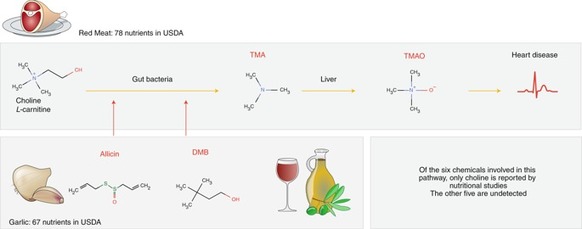
Our understanding of how diet affects health is limited to 150 key nutritional components that are tracked and catalogued by the United States Department of Agriculture and other national databases. Although this knowledge has been transformative for health sciences, helping unveil the role of calories, sugar, fat, vitamins and other nutritional factors in the emergence of common diseases, these nutritional components represent only a small fraction of the more than 26,000 distinct, definable biochemicals present in our food—many of which have documented effects on health but remain unquantified in any systematic fashion across different individual foods. Using new advances such as machine learning, a high-resolution library of these biochemicals could enable the systematic study of the full biochemical spectrum of our diets, opening new avenues for understanding the composition of what we eat, and how it affects health and disease.

Source: www.nature.com