Brains and Where Else? Mapping Theories of Consciousness to Unconventional Embodiments

Nicolas Rouleau and Michael Levin

It is commonly assumed that a useful theory of consciousness (ToC) will, among other things, explain why consciousness is associated with brains. However, the findings of evolutionary biology, developmental bioelectricity, and synthetic bioengineering are revealing the ancient pre-neural roots of many mechanisms and algorithms occurring in brains – the implication of which is that minds may have preceded brains. Most of the work in the emerging field of diverse intelligence emphasizes externally observable problem-solving competencies in unconventional media, such as cells, tissues, and life-technology chimeras. Here, we inquire about the implications of these developments for theories that make a claim about what is necessary and/or sufficient for consciousness. Specifically, we analyze popular current ToCs to ask: what features of the theory specifically pick out brains as a privileged substrate of inner perspective, or, do the features emphasized by the theory occur elsewhere. We find that the operations and functional principles described or predicted by most ToCs are remarkably similar, that these similarities are obscured by reference to particular neural substrates, and that the focus on brains is more driven by convention and limitations of imagination than by any specific content of existing ToCs. Encouragingly, several contemporary theorists have made explicit efforts to apply their theories to synthetic systems in light of the recent wave of technological developments in artificial intelligence (AI) and organoid bioengineering. We suggest that the science of consciousness should be significantly open to minds in unconventional embodiments.

Read the full article at: osf.io

Applications open for Complexity Global School 2025 | Santa Fe Institute

Applications for the third Complexity Global School (CGS) are now open. Like last year, the school will be hosted at Universidad de los Andes (Uniandes), in Bogotá, Colombia, but for the first time, applicants from all countries are eligible to apply. Roughly 60 students will be selected for the school, which will run July 28 – August 8, 2025. Supported by the Omidyar Network and the Ford Foundation, the school is free for all admitted students — tuition, room, board, and a travel stipend are included. Applications are due by March 2, 2025.

Apply at: www.santafe.edu

Complexity72h: training the next generation of researchers in complex systems

Alberto Antonioni & Eugenio Valdano 

Communications Physics volume 8, Article number: 51 (2025)

Traditional academic training of early-career researchers is often conditional to the funding, structure and managerial style of the research group. With the workshop Complexity72h (www.complexity72h.com), we present an original format where early-stage researchers—from Master students to early-stage group leaders—can experience the whole scientific process, testing and acquiring writing, collaborative and leading skills in just 72 h.

Read the full article at: www.nature.com

Calls for the 2025 CSS Emerging Researcher, Junior, and Senior Scientific Awards

The Complex Systems Society announces the tenth edition of the CSS Scientific Awards. 

The Emerging Researcher Award recognizes promising researchers in Complex Systems within 3 years of their PhD defense.

The Junior Scientific Award is aimed at recognizing excellent scientific record of young researchers within 10 years of their PhD defense.

The Senior Scientific Award will recognize outstanding contributions of Complex Systems scholars at any stage of their careers.

Deadline: April 30th, 2025.

See https://cxdig.wordpress.com/community/awards for the list of previous awardees.

More at: cssociety.org

Maximizing Free Energy Gain

Kolchinsky, A.; Marvian, I.; Gokler, C.; Liu, Z.-W.; Shor, P.; Shtanko, O.; Thompson, K.; Wolpert, D.; Lloyd, S.

Entropy 2025, 27, 91

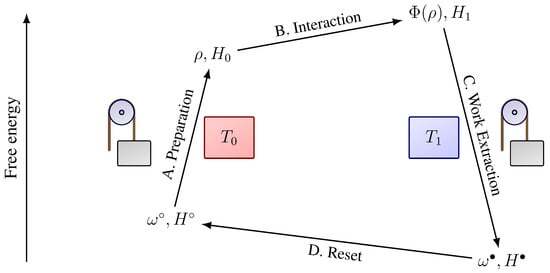
Maximizing the amount of work harvested from an environment is important for a wide variety of biological and technological processes, from energy-harvesting processes such as photosynthesis to energy storage systems such as fuels and batteries. Here, we consider the maximization of free energy—and by extension, the maximum extractable work—that can be gained by a classical or quantum system that undergoes driving by its environment. We consider how the free energy gain depends on the initial state of the system while also accounting for the cost of preparing the system. We provide simple necessary and sufficient conditions for increasing the gain of free energy by varying the initial state. We also derive simple formulae that relate the free energy gained using the optimal initial state rather than another suboptimal initial state. Finally, we demonstrate that the problem of finding the optimal initial state may have two distinct regimes, one easy and one difficult, depending on the temperatures used for preparation and work extraction. We illustrate our results on a simple model of an information engine.

Read the full article at: www.mdpi.com