
Predicting System Dynamics of Universal Growth Patterns in Complex Systems

Leila Hedayatifar, Alfredo J. Morales, Dominic E. Saadi, Rachel A. Rigg, Olha Buchel, Amir Akhavan, Egemen Sert, Aabir Abubaker Kar, Mehrzad Sasanpour, Irving R. Epstein, Yaneer Bar-Yam

Predicting dynamic behaviors is one of the goals of science in general as well as essential to many specific applications of human knowledge to real world systems. Here we introduce an analytic approach using the sigmoid growth curve to model the dynamics of individual entities within complex systems. Despite the challenges posed by nonlinearity and unpredictability in system behaviors, we demonstrate the applicability of the sigmoid curve to capture the acceleration and deceleration of growth, predicting an entitys ultimate state well in advance of reaching it. We show that our analysis can be applied to diverse systems where entities exhibit nonlinear growth using case studies of (1) customer purchasing and (2) U.S. legislation adoption. This showcases the ability to forecast months to years ahead of time, providing valuable insights for business leaders and policymakers. Moreover, our characterization of individual component dynamics offers a framework to reveal the aggregate behavior of the entire system. We introduce a classification of entities based upon similar lifepaths. This study contributes to the understanding of complex system behaviors, offering a practical tool for prediction and system behavior insight that can inform strategic decision making in multiple domains.

Read the full article at: arxiv.org
Conformity to continuous and discrete ordered traits

Elisa Heinrich Mora, Kaleda K. Denton, Michael E. Palmer, and Marcus W. Feldman

PNAS 122 (3) e2417078122

Conformist and anticonformist biases in acquiring cultural variants have been documented in humans and several nonhuman species. We introduce a framework for quantifying these biases when cultural traits are ordered, with greater and lesser values, and either continuous (e.g., level of a behavior) or discrete (e.g., number of displays of a behavior). Unlike previous models, we do not measure a cultural variant’s popularity by its distance to the population mean, but rather by its distance to other variants. We find that conformity can produce a variety of population distributions that need not center around the initial population’s mean variant. Anticonformity may lead to highly polarized or uniformly distributed populations, depending on its strength and on individuals’ precision when copying others.

Read the full article at: www.pnas.org

The disparities and development trajectories of nations in achieving the sustainable development goals

Fengmei Ma, Heming Wang, Asaf Tzachor, César A. Hidalgo, Heinz Schandl, Yue Zhang, Jingling Zhang, Wei-Qiang Chen, Yanzhi Zhao, Yong-Guan Zhu & Bojie Fu
Nature Communications volume 16, Article number: 1107 (2025)

The Sustainable Development Goals (SDGs) provide a comprehensive framework for societal progress and planetary health. However, it remains unclear whether universal patterns exist in how nations pursue these goals and whether key development areas are being overlooked. Here, we apply the product space methodology, widely used in development economics, to construct an ‘SDG space of nations’. The SDG space models the relative performance and specialization patterns of 166 countries across 96 SDG indicators from 2000 to 2022. Our SDG space reveals a polarized global landscape, characterized by distinct groups of nations, each specializing in specific development indicators. Furthermore, we find that as countries improve their overall SDG scores, they tend to modify their sustainable development trajectories, pursuing different development objectives. Additionally, we identify orphaned SDG indicators — areas where certain country groups remain under-specialized. These patterns, and the SDG space more broadly, provide a high-resolution tool to understand and evaluate the progress and disparities of countries towards achieving the SDGs.

Read the full article at: www.nature.com

Cross Roads #50: “The Many Faces of Emergence” Dr Fernando Rosas

https://www.youtube.com/live/bgB8e3Goa2o

Emergence is one of the most fascinating and challenging aspects of complex systems, being also a controversial topic featuring long-standing debates and disagreements. In this talk I’ll introduce a pragmatic and pluralistic stance towards emergence that focusing on facilitating practical methods to establish falsifiable hypotheses and procedures to verify them. This approach will be illustrated by exploring two distinct but complementary operationalisations of emergence: (i) self-contained levels of description and (ii) synergistic interactions between constituents. The talk will review some particle examples, and highlight open questions and directions of future work.

Watch at: www.youtube.com

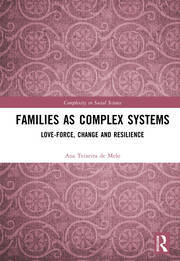
Families as Complex Systems: Love-Force, Change and Resilience, By Ana Teixeira de Melo

This book presents an innovative framework for conceptualising families as complex systems and for understanding and supporting positive change, adaptation and resilience. The development of this framework was based on a qualitative and abductive research process targeting change and resilience processes in multi-challenged families.

The theoretical novelty of this book is mostly expressed in the notion of Love-Force: a relational force emerging from the coupling processes between individuals with potential transformative effects on them, their interactions and environments. This book introduces a new vocabulary for understanding the complexity of families as complex systems and their change and resilience processes. Love-Force is presented as a supreme expression of the complexity of families and human bonds. It elaborates on the complexity of the family bonds, on the relation of Love-Force to change and resilience and its contributions to the conceptualisation of the Potential for Family Change.

Raising important theoretical and methodological challenges and questions, it presents a guide for future interdisciplinary research in the domains of complexity and family sciences and advances in practice. As such, it will be of interest to anyone interested in the complexity of human relations and to complexity scientists as much as family theorists, researchers and practitioners.

More at: www.routledge.com