
Systematic comparison of gender inequality in scientific rankings across disciplines

Ana Maria Jaramillo, Mariana Macedo, Marcos Oliveira, Fariba Karimi, Ronaldo Menezes

The participation of women in academia has increased in the last few decades across many fields (e.g., Computer Science, History, Medicine). However, this increase in the participation of women has not been the same at all career stages. Here, we study how gender participation within different fields is related to gender representation in top-ranking positions in productivity (number of papers), research impact (number of citations), and co-authorship networks (degree of connectivity). We analyzed over 80 million papers published from 1975 to 2020 in 19 academic fields. Our findings reveal that women remain a minority in all 19 fields, with physics, geology, and mathematics having the lowest percentage of papers authored by women at 14% and psychology having the largest percentage at 39%. Women are significantly underrepresented in top-ranking positions (top 10% or higher) across all fields and metrics (productivity, citations, and degree), indicating that it remains challenging for early researchers (especially women) to reach top-ranking positions, as our results reveal the rankings to be rigid over time. Finally, we show that in most fields, women and men with comparable productivity levels and career age tend to attain different levels of citations, where women tend to benefit more from co-authorships, while men tend to benefit more from productivity, especially in pSTEMs. Our findings highlight that while the participation of women has risen in some fields, they remain under-represented in top-ranking positions. Greater gender participation at entry levels often helps representation, but stronger interventions are still needed to achieve long-lasting careers for women and their participation in top-ranking positions.

Read the full article at: arxiv.org
Thoughts and thinkers: On the complementarity between objects and processes

Chris Fields, Michael Levin

Physics of Life Reviews

• An information-theoretic approach to biology renders “objects” and “processes” interchangable at every scale.
• Morphogenesis is a process of memory construction at every scale.
• Life depends on lateral information flows between its component lineages at every scale.
• Viewing living systems as multi-scale competency architectures forefronts communication via scale-appropriate interfaces, as opposed to manipulation of components, as a strategy for both therapuetic intervention and bioengineering.

Read the full article at: www.sciencedirect.com

New trends in statistical physics of complex systems: theoretical and experimental approaches

Giorgio Kaniadakis, Tiziana Di Matteo, Antonio Maria Scarfone & Giampiero Gervino

The European Physical Journal B Volume 97, article number 203, (2024)

This issue contains peer-reviewed papers based on selected contributions presented at the International Conference on Statistical Physics (SigmaPhi) held in Chania-Crete (Greece) from July 10th to July 14th, 2023 (http://sigmaphisrv.polito.it/). The challenge facing statistical physics today is expanding beyond conventional conceptions of physics, bringing together multiple research streams that were thought to be separate and independent for the majority of the 20th century. In this topical issue, we present a collection of papers that demonstrate the current applications of statistical physics in a variety of different fields, including networks, biophysics, statistical mechanics, kinetic theory, and cosmology.

Read the full article at: link.springer.com

The Physics of Life: Exploring Information as a Distinctive Feature of Living Systems

Stuart Bartlett, Andrew W. Eckford, Matthew Egbert, Manasvi Lingam, Artemy Kolchinsky, Adam Frank, Gourab Ghoshal

This paper explores the idea that information is an essential and distinctive feature of living systems. Unlike non-living systems, living systems actively acquire, process, and use information about their environments to respond to changing conditions, sustain themselves, and achieve other intrinsic goals. We discuss relevant theoretical frameworks such as “semantic information” and “fitness value of information”. We also highlight the broader implications of our perspective for fields such as origins-of-life research and astrobiology. In particular, we touch on the transition to information-driven systems as a key step in abiogenesis, informational constraints as determinants of planetary habitability, and informational biosignatures for detecting life beyond Earth. We briefly discuss experimental platforms which offer opportunities to investigate these theoretical concepts in controlled environments. By integrating theoretical and experimental approaches, this perspective advances our understanding of life’s informational dynamics and its universal principles across diverse scientific domains.

Read the full article at: arxiv.org

Prevalence of processed foods in major US grocery stores

Babak Ravandi, Gordana Ispirova, Michael Sebek, Peter Mehler, Albert-László Barabási & Giulia Menichetti
Nature Food (2025)

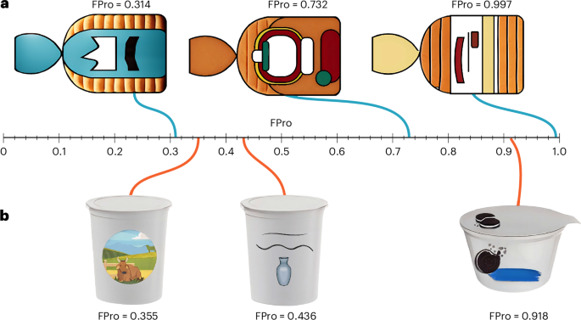
The offering of grocery stores is a strong driver of consumer decisions. While highly processed foods such as packaged products, processed meat and sweetened soft drinks have been increasingly associated with unhealthy diets, information on the degree of processing characterizing an item in a store is not straightforward to obtain, limiting the ability of individuals to make informed choices. GroceryDB, a database with over 50,000 food items sold by Walmart, Target and Whole Foods, shows the degree of processing of food items and potential alternatives in the surrounding food environment. The extensive data gathered on ingredient lists and nutrition facts enables a large-scale analysis of ingredient patterns and degrees of processing, categorized by store, food category and price range. Furthermore, it allows the quantification of the individual contribution of over 1,000 ingredients to ultra-processing. GroceryDB makes this information accessible, guiding consumers toward less processed food choices.

Read the full article at: www.nature.com