
A Synergistic Perspective on Multivariate Computation and Causality in Complex Systems

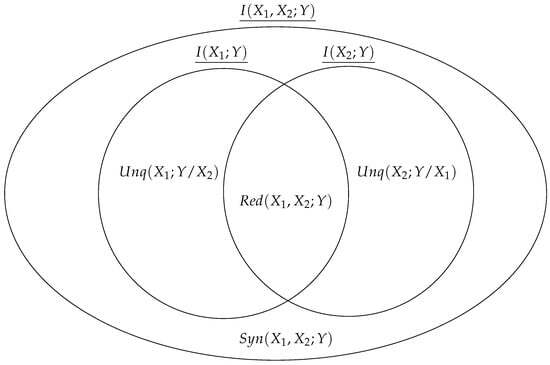
What does it mean for a complex system to “compute” or perform “computations”? Intuitively, we can understand complex “computation” as occurring when a system’s state is a function of multiple inputs (potentially including its own past state). Here, we discuss how computational processes in complex systems can be generally studied using the concept of statistical synergy, which is information about an output that can only be learned when the joint state of all inputs is known. Building on prior work, we show that this approach naturally leads to a link between multivariate information theory and topics in causal inference, specifically, the phenomenon of causal colliders. We begin by showing how Berkson’s paradox implies a higher-order, synergistic interaction between multidimensional inputs and outputs. We then discuss how causal structure learning can refine and orient analyses of synergies in empirical data, and when empirical synergies meaningfully reflect computation versus when they may be spurious. We end by proposing that this conceptual link between synergy, causal colliders, and computation can serve as a foundation on which to build a mathematically rich general theory of computation in complex systems.

Thomas F. Varley
Entropy 2024, 26(10), 883

Read the full article at: www.mdpi.com

Antifragility of stochastic transport on networks with damage

L. K. Eraso-Hernandez and A. P. Riascos

Phys. Rev. E 110, 044309

A system is called antifragile when damage acts as a constructive element improving the performance of a global function. In this paper, we analyze the emergence of antifragility in the movement of random walkers on networks with modular structures or communities. The random walker hops considering the capacity of transport of each link, whereas the links are susceptible to random damage that accumulates over time. We show that in networks with communities and high modularity, the localization of damage in specific groups of nodes leads to a global antifragile response of the system improving the capacity of stochastic transport to more easily reach the nodes of a network. Our findings give evidence of the mechanisms behind antifragile response in complex systems and pave the way for their quantitative exploration in different fields.

Read the full article at: link.aps.org

Rapid Computation of the Assembly Index of Molecular Graphs

Ian Seet, Keith Y. Patarroyo, Gage Siebert, Sara I. Walker, Leroy Cronin

Determining the assembly index of a molecule, which aims to find the least number of steps required to make its molecular graph by recursively using previously made structures, is a novel problem seeking to quantify the minimum number of constraints required to build a given molecular graph which has wide applications from biosignature detection to cheminformatics including drug discovery. In this article, we consider this problem from an algorithmic perspective and propose an exact algorithm to efficiently find assembly indexes of large molecules including some natural products. To achieve this, we start by identifying the largest possible duplicate sub-graphs during the sub-graph enumeration process and subsequently implement a dynamic programming strategy with a branch and bound heuristic to exploit already used duplicates and reject impossible states in the enumeration. To do so efficiently, we introduce the assembly state data-structure as an array of edge-lists that keeps track of the graph fragmentation, by keeping the last fragmented sub-graph as its first element. By a precise manipulation of this data-structure we can efficiently perform each fragmentation step and reconstruct an exact minimal pathway construction for the molecular graph. These techniques are shown to compute assembly indices of many large molecules with speed and memory efficiency. Finally, we demonstrate the strength of our approach with different benchmarks, including calculating assembly indices of hundreds of thousands molecules from the COCONUT natural product database.

Read the full article at: arxiv.org

COMPLEX CONTAGION IN SOCIAL SYSTEMS WITH DISTRUST

JEAN-FRANÇOIS DE KEMMETER, LUCA GALLO, FABRIZIO BONCORAGLIO, VITO LATORA, and TIMOTEO CARLETTI

Advances in Complex Systems Vol. 27, No. 04n05, 2440001 (2024)

Social systems are characterized by the presence of group interactions and by the existence of both trust and distrust relations. Although there is a wide literature on signed social networks, where positive signs associated to the links indicate trust, friendship, agreement, while negative signs represent distrust, antagonism, and disagreement, very little is known about the effect that signed interactions can have on the spreading of social behaviors when, not only pairwise, but also higher-order interactions are taken into account. In this paper, we introduce a model of complex contagion on signed simplicial complexes, and we investigate the role played by trust and distrust on the dynamics of a social contagion process, where exposure to multiple sources is needed for the contagion to occur. The presence of higher-order signed structures in our model naturally induces new infection and recovery mechanisms, thus increasing the richness of the contagion dynamics. Through numerical simulations and analytical results in the mean-field approximation, we show how distrust determines the way the system moves from a state where no individuals adopt the social behavior, to a state where a finite fraction of the population actively spreads it. Interestingly, we observe that the fraction of spreading individuals displays a non-monotonic dependence with respect to the average number of connections between individuals. We then investigate how social balance affects social contagion, finding that balanced triads have an ambivalent impact on the spreading process, either promoting or impeding contagion based on the relative abundance of fully trusted relations. Our results shed light on the nontrivial effect of trust on the spreading of social behaviors in systems with group interactions, paving the way to further investigations of spreading phenomena in structured populations.

Read the full article at: www.worldscientific.com

Quantifying the use and potential benefits of artificial intelligence in scientific research

Jian Gao & Dashun Wang 

Nature Human Behaviour (2024)

The rapid advancement of artificial intelligence (AI) is poised to reshape almost every line of work. Despite enormous efforts devoted to understanding AI’s economic impacts, we lack a systematic understanding of the benefits to scientific research associated with the use of AI. Here we develop a measurement framework to estimate the direct use of AI and associated benefits in science. We find that the use and benefits of AI appear widespread throughout the sciences, growing especially rapidly since 2015. However, there is a substantial gap between AI education and its application in research, highlighting a misalignment between AI expertise supply and demand. Our analysis also reveals demographic disparities, with disciplines with higher proportions of women or Black scientists reaping fewer benefits from AI, potentially exacerbating existing inequalities in science. These findings have implications for the equity and sustainability of the research enterprise, especially as the integration of AI with science continues to deepen.

Read the full article at: www.nature.com