
Month: October 2016

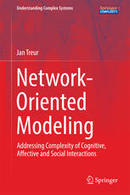
Network-Oriented Modeling – Jan Treur

This book presents a new approach that can be applied to complex, integrated individual and social human processes. It provides an alternative means of addressing complexity, better suited for its purpose than and effectively complementing traditional strategies involving isolation and separation assumptions.
Network-oriented modeling allows high-level cognitive, affective and social models in the form of (cyclic) graphs to be constructed, which can be automatically transformed into executable simulation models. The modeling format used makes it easy to take into account theories and findings about complex cognitive and social processes, which often involve dynamics based on interrelating cycles. Accordingly, it makes it possible to address complex phenomena such as the integration of emotions within cognitive processes of all kinds, of internal simulations of the mental processes of others, and of social phenomena such as shared understandings and collective actions. A variety of sample models – including those for ownership of actions, fear and dreaming, the integration of emotions in joint decision-making based on empathic understanding, and evolving social networks – illustrate the potential of the approach. Dedicated software is available to support building models in a conceptual or graphical manner, transforming them into an executable format and performing simulation experiments. The majority of the material presented has been used and positively evaluated by undergraduate and graduate students and researchers in the cognitive, social and AI domains.
Given its detailed coverage, the book is ideally suited as an introduction for graduate and undergraduate students in many different multidisciplinary fields involving cognitive, affective, social, biological, and neuroscience domains.


Network-Oriented Modeling
Addressing Complexity of Cognitive, Affective and Social Interactions
Jan Treur

Source: link.springer.com
The 2016 Nobel Prize in Physics

The Royal Swedish Academy of Sciences has decided to award the Nobel Prize in Physics 2016 with one half to David J. Thouless
University of Washington, Seattle, WA, USA and the other half to
F. Duncan M. Haldane Princeton University, NJ, USA and J. Michael Kosterlitz Brown University, Providence, RI, USA ”for theoretical discoveries of topological phase transitions and topological phases of matter”


They revealed the secrets of exotic matter
This year’s Laureates opened the door on an unknown world where matter can assume strange states. They have used advanced mathematical methods to study unusual phases, or states, of matter, such as superconductors, superfluids or thin magnetic films. Thanks to their pioneering work, the hunt is now on for new and exotic phases of matter. Many people are hopeful of future applications in both materials science and electronics.

Source: www.nobelprize.org

(Not Quite) Live Report from CCS 2016 in Amsterdam, the Netherlands

Center for Collective Dynamics of Complex Systems (CoCo) Seminar Series
September 21, 2016
From the 2016 Conference on Complex Systems (CCS 2016)
Amsterdam, the Netherlands
Special guests: Prof. Carlos Gershenson (UNAM, Mexico) and Prof. Seth Bullock (U. Bristol, UK)

Source: vimeo.com

International Conference on Computational Social Science

The 3rd Annual International Conference on Computational Social Science (IC2S2 2017) is an interdisciplinary event designed to engage a broad community of researchers – academics, industry experts, open data activists, government agency workers, and think tank analysts – dedicated to advancing social science knowledge through computational methods. IC2S2 2017 affords the opportunity to meet and discuss works in which social systems and dynamics are investigated in a quantitative way through large datasets that are either mined from various sources (e.g. social media, communication systems), or created via controlled experiments or computational modeling.
After successful events in Helsinki 2015 and Evanston, IL 2016, the 3rd IC2S2 will take place in Cologne, Germany on July 10-13.

Source: ic2s2.org

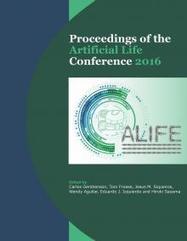
Proceedings of the Artificial Life Conference 2016

The ALife conferences are the major meeting of the artificial life research community since 1987. For its 15th edition in 2016, it was held in Latin America for the first time, in the Mayan Riviera, Mexico, from July 4 -8. The special them of the conference: How can the synthetic study of living systems contribute to societies: scientifically, technically, and culturally? The goal of the conference theme is to better understand societies with the purpose of using this understanding for a more efficient management and development of social systems.


Proceedings of the Artificial Life Conference 2016

Edited by Carlos Gershenson, Tom Froese, Jesus M. Siqueiros, Wendy Aguilar, Eduardo J. Izquierdo and Hiroki Sayama

Source: mitpress.mit.edu