Month: October 2016

Heroes and Villains in Complex Socio-technical Systems

The history of efforts to reduce ‘human errors’ across workplaces and industries suggests that people (or their weaknesses) are seen as a problem to control [1, 3, 15, 16]. However, some have proposed that humans can be heroes as they can adapt and compensate for weaknesses within a system and direct it away from potential catastrophes [15]. But the existence of heroes would suggest that villains (i.e. humans who cause a disaster) exist as well [16], and that it might well be the outcome that determines which human becomes which. The purpose of this chapter is to examine if complex socio-technical systems would allow for the existence of heroes and villains, as outcomes in such systems are usually thought to be the product of interactions rather than a single factor [17]. The chapter will first examine if the properties of complex systems as suggested by Dekker et al. [18] would allow for heroes and villains to exist. These include: (a) synthesis and holism, (b) emergence, (c) foreseeability of probabilities, not certainties, (d) time-irreversibility and, (e) perpetual incompleteness and uncertainty of knowledge, before concluding with a discussion of the implications of the (non) existence of heroes and villains in complex systems for the way we conduct investigations when something goes wrong inside of those systems.

Source: link.springer.com
How we’re harnessing nature’s hidden superpowers

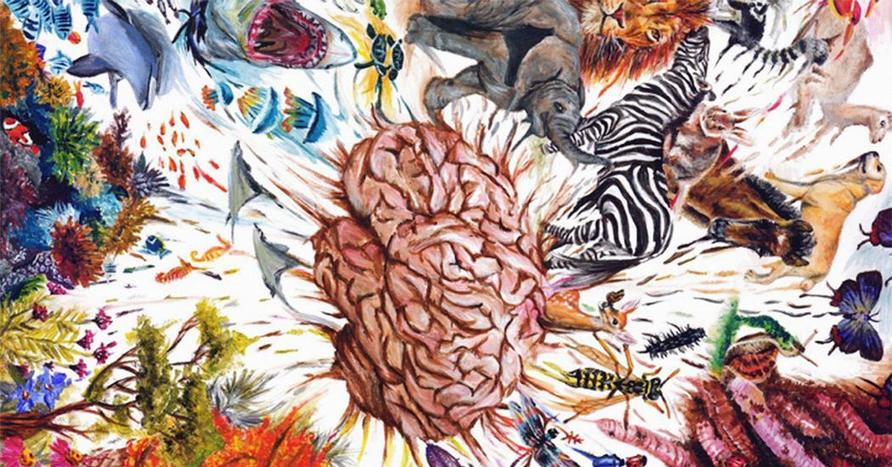
What do you get when you combine the strongest materials from the plant world with the most elastic ones from the insect kingdom? Super-performing materials that might transform … everything. Nanobiotechnologist Oded Shoseyov walks us through examples of amazing materials found throughout nature, in everything from cat fleas to sequoia trees, and shows the creative ways his team is harnessing them in everything from sports shoes to medical implants.

Source: www.ted.com

OSoMe: the IUNI observatory on social media

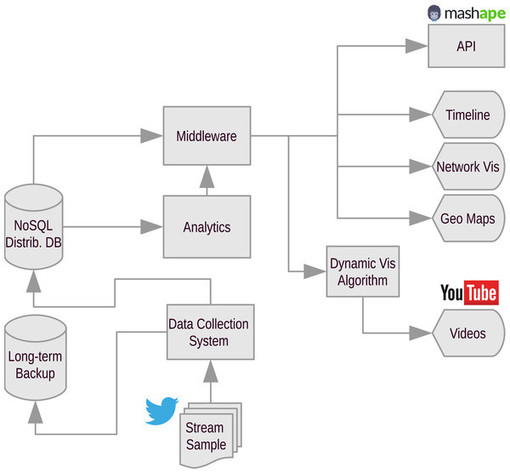
The study of social phenomena is becoming increasingly reliant on big data from online social networks. Broad access to social media data, however, requires software development skills that not all researchers possess. Here we present the IUNI Observatory on Social Media, an open analytics platform designed to facilitate computational social science. The system leverages a historical, ongoing collection of over 70 billion public messages from Twitter. We illustrate a number of interactive open-source tools to retrieve, visualize, and analyze derived data from this collection. The Observatory, now available at osome.iuni.iu.edu, is the result of a large, six-year collaborative effort coordinated by the Indiana University Network Science Institute.

Source: peerj.com

A world created from ideas, as immaterial resources are limitless

We put high hopes on analyzing big data, but we failed as we haven´t found solutions to the essential problems of our society. Questions like: What is the superior way of organisation of our society in the future or what’s the role of democratic principles in the future? – need to be asked and solved. In the past globalisation, optimization, administration, regulation have served us well and brought us to the level where we are but apparently as the economic situation shows now, we are in a stagnation and all those principles have reached their limits. We need new success principles. ‘I think those success principles are co-creation, co-evolution, collective intelligence, self-organization and self-regulation.’ – says Prof. Dr. Dirk Helbing, Computational Social Science, Department of Humanities, Social and Political Sciences, ETH/Zurich

Source: www.taskfarm.com