Month: July 2017

The Money Formula: Dodgy Finance, Pseudo Science, and How Mathematicians Took Over the Markets

The Money Formula takes you inside the engine room of the global economy to explore the little-understood world of quantitative finance, and show how the future of our economy rests on the backs of this all-but-impenetrable industry. Written not from a post-crisis perspective – but from a preventative point of view – this book traces the development of financial derivatives from bonds to credit default swaps, and shows how mathematical formulas went beyond pricing to expand their use to the point where they dwarfed the real economy. You’ll learn how the deadly allure of their ice-cold beauty has misled generations of economists and investors, and how continued reliance on these formulas can either assist future economic development, or send the global economy into the financial equivalent of a cardiac arrest.

Rather than rehash tales of post-crisis fallout, this book focuses on preventing the next one. Even amidst global recovery, the financial system still has the potential to seize up at any moment. The Money Formula explores the how and why of financial disaster, what must happen to prevent the next one.

Source: www.amazon.com
Popular: The Power of Likability in a Status-Obsessed World

No matter how old you are, there’s a good chance that the word “popular” immediately transports you back to your teenage years. Most of us can easily recall the adolescent social cliques, the high school pecking order, and which of our peers stood out as the most or the least popular teens we knew. Even as adults we all still remember exactly where we stood in the high school social hierarchy, and the powerful emotions associated with our status persist decades later. This may be for good reason.

Popular examines why popularity plays such a key role in our development and, ultimately, how it still influences our happiness and success today. In many ways—some even beyond our conscious awareness—those old dynamics of our youth continue to play out in every business meeting, every social gathering, in our personal relationships, and even how we raise our children. Our popularity even affects our DNA, our health, and our mortality in fascinating ways we never previously realized. More than childhood intelligence, family background, or prior psychological issues, research indicates that it’s how popular we were in our early years that predicts how successful and how happy we grow up to be.

But it’s not always the conventionally popular people who fare the best, for the simple reason that there is more than one type of popularity—and many of us still long for the wrong one. As children, we strive to be likable, which can offer real benefits not only on the playground but throughout our lives. In adolescence, though, a new form of popularity emerges, and we suddenly begin to care about status, power, influence, and notoriety—research indicates that this type of popularity hurts us more than we realize.
Popular relies on the latest research in psychology and neuroscience to help us make the wisest choices for ourselves and for our children, so we may all pursue more meaningful, satisfying, and rewarding relationships.

Source: www.amazon.com

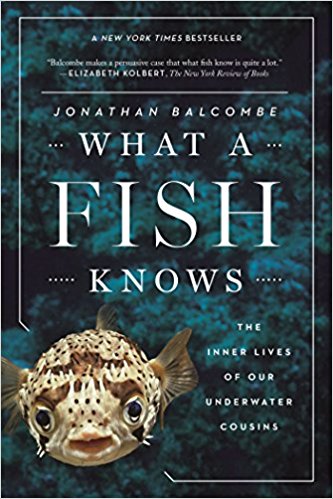
What a Fish Knows: The Inner Lives of Our Underwater Cousins

There are more than thirty thousand species of fish―more than mammals, birds, reptiles, and amphibians combined. But for all their breathtaking diversity and beauty, we rarely consider how fish think, feel, and behave. In What a Fish Knows, the ethologist Jonathan Balcombe takes us under the sea and to the other side of the aquarium glass to reveal what fishes can do, how they do it, and why. Introducing the latest revelations in animal behavior and biology, Balcombe upends our assumptions about fish, exposing them not as unfeeling, dead-eyed creatures but as sentient, aware, social―even Machiavellian. They conduct elaborate courtship rituals and develop lifelong bonds with shoal-mates. They also plan, hunt cooperatively, use tools, punish wrongdoers, curry favor, and deceive one another. Fish possess sophisticated senses that rival our own. The reef-dwelling damselfish identifies its brethren by face patterns visible only in ultraviolet light, and some species communicate among themselves in murky waters using electric signals. Highlighting these breakthrough discoveries and others from his own encounters with fish, Balcombe inspires a more enlightened appraisal of marine life.

An illuminating journey into the world of underwater science, What a Fish Knows will forever change your view of our aquatic cousins.

Source: www.amazon.com

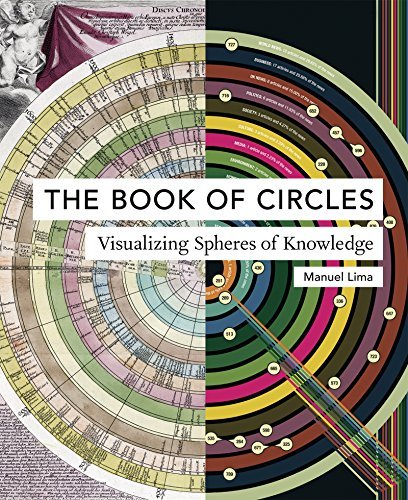
The Book of Circles: Visualizing Spheres of Knowledge (by Manuel Lima)

In this follow-up to his hugely popular The Book of Trees and Visual Complexity, Manuel Lima takes us on a lively tour through millennia of circular information design. Three hundred detailed and colorful illustrations from around the world cover an encyclopedic array of subjects–architecture, urban planning, fine art, design, fashion, technology, religion, cartography, biology, astronomy, and physics, all based on the circle, the universal symbol of unity, perfection, movement, and infinity. 

 
The Book of Circles juxtaposes clay trading tokens used by the ancient Sumerians with the iconic logos of twentieth-century corporations, a chart organizing seven hundred Nintendo offerings with a Victorian board game based on the travels of Nellie Bly, and a visual analysis of Stanley Kubrick’s film The Shining with early celestial charts that placed the earth at the center of the universe, among a wealth of other elegant and intriguing methods for displaying information.

Lima provides an authoritative history of the circle as well as a unique taxonomy of twenty-one varieties of circle diagrams, rounding out this visual feast for infographics enthusiasts.

Source: www.amazon.com

[1706.05043] The thermodynamic efficiency of computations made in cells across the range of life

Biological organisms must perform computation as they grow, reproduce, and evolve. Moreover, ever since Landauer’s bound was proposed it has been known that all computation has some thermodynamic cost — and that the same computation can be achieved with greater or smaller thermodynamic cost depending on how it is implemented. Accordingly an important issue concerning the evolution of life is assessing the thermodynamic efficiency of the computations performed by organisms. This issue is interesting both from the perspective of how close life has come to maximally efficient computation (presumably under the pressure of natural selection), and from the practical perspective of what efficiencies we might hope that engineered biological computers might achieve, especially in comparison with current computational systems. Here we show that the computational efficiency of translation, defined as free energy expended per amino acid operation, outperforms the best supercomputers by several orders of magnitude, and is only about an order of magnitude worse than the Landauer bound. However this efficiency depends strongly on the size and architecture of the cell in question. In particular, we show that the {\it useful} efficiency of an amino acid operation, defined as the bulk energy per amino acid polymerization, decreases for increasing bacterial size and converges to the polymerization cost of the ribosome. This cost of the largest bacteria does not change in cells as we progress through the major evolutionary shifts to both single and multicellular eukaryotes. However, the rates of total computation per unit mass are nonmonotonic in bacteria with increasing cell size, and also change across different biological architectures including the shift from unicellular to multicellular eukaryotes.


The thermodynamic efficiency of computations made in cells across the range of life
Christopher P. Kempes, David Wolpert, Zachary Cohen, Juan Pérez-Mercader

Source: arxiv.org