
Author: cxdig

Debates on the nature of artificial general intelligence

MELANIE MITCHELL

SCIENCE

21 Mar 2024
Vol 383, Issue 6689

Given the pervasiveness of AGI talk in business, government, and the media, one could not be blamed for assuming that the meaning of the term is established and agreed upon. However, the opposite is true: What AGI means, or whether it means anything coherent at all, is hotly debated in the AI community. And the meaning and likely consequences of AGI have become more than just an academic dispute over an arcane term. The world’s biggest tech companies and entire governments are making important decisions on the basis of what they think AGI will entail. But a deep dive into speculations about AGI reveals that many AI practitioners have starkly different views on the nature of intelligence than do those who study human and animal cognition—differences that matter for understanding the present and predicting the likely future of machine intelligence.

Read the full article at: www.science.org
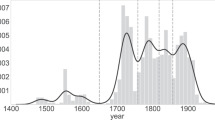
Song lyrics have become simpler and more repetitive over the last five decades

Emilia Parada-Cabaleiro, Maximilian Mayerl, Stefan Brandl, Marcin Skowron, Markus Schedl, Elisabeth Lex & Eva Zangerle 
Scientific Reports volume 14, Article number: 5531 (2024)

Music is ubiquitous in our everyday lives, and lyrics play an integral role when we listen to music. The complex relationships between lyrical content, its temporal evolution over the last decades, and genre-specific variations, however, are yet to be fully understood. In this work, we investigate the dynamics of English lyrics of Western, popular music over five decades and five genres, using a wide set of lyrics descriptors, including lyrical complexity, structure, emotion, and popularity. We find that pop music lyrics have become simpler and easier to comprehend over time: not only does the lexical complexity of lyrics decrease (for instance, captured by vocabulary richness or readability of lyrics), but we also observe that the structural complexity (for instance, the repetitiveness of lyrics) has decreased. In addition, we confirm previous analyses showing that the emotion described by lyrics has become more negative and that lyrics have become more personal over the last five decades. Finally, a comparison of lyrics view counts and listening counts shows that when it comes to the listeners’ interest in lyrics, for instance, rock fans mostly enjoy lyrics from older songs; country fans are more interested in new songs’ lyrics.

Read the full article at: www.nature.com

The universal probabilistic reward based on the difference of payoff realizes the evolution of cooperation

Tetsushi Ohdaira

Chaos, Solitons & Fractals
Volume 182, May 2024, 114754

• The universal probabilistic reward based on the difference of payoff is proposed.
• The greater payoff difference leads to the higher rewarding probability.
• This new reward mechanism effectively enhances the evolution of cooperation.

Read the full article at: www.sciencedirect.com

Motivations for Artificial Intelligence, for Deep Learning, for ALife: Mortality and Existential Risk

Inman Harvey

Artificial Life (2024) 30 (1): 48–64.

We survey the general trajectory of artificial intelligence (AI) over the last century, in the context of influences from Artificial Life. With a broad brush, we can divide technical approaches to solving AI problems into two camps: GOFAIstic (or computationally inspired) or cybernetic (or ALife inspired). The latter approach has enabled advances in deep learning and the astonishing AI advances we see today—bringing immense benefits but also societal risks. There is a similar divide, regrettably unrecognized, over the very way that such AI problems have been framed. To date, this has been overwhelmingly GOFAIstic, meaning that tools for humans to use have been developed; they have no agency or motivations of their own. We explore the implications of this for concerns about existential risk for humans of the “robots taking over.” The risks may be blamed exclusively on human users—the robots could not care less.

Read the full article at: direct.mit.edu

Information, Coding, and Biological Function: The Dynamics of Life

Julyan H. E. Cartwright, Jitka Čejková, Elena Fimmel, Simone Giannerini, Diego Luis Gonzalez, Greta Goracci, Clara Grácio, Jeanine Houwing-Duistermaat, Dragan Matić, Nataša Mišić, Frans A. A. Mulder, Oreste Piro

Artificial Life (2024) 30 (1): 16–27.

In the mid-20th century, two new scientific disciplines emerged forcefully: molecular biology and information-communication theory. At the beginning, cross-fertilization was so deep that the term genetic code was universally accepted for describing the meaning of triplets of mRNA (codons) as amino acids. However, today, such synergy has not taken advantage of the vertiginous advances in the two disciplines and presents more challenges than answers. These challenges not only are of great theoretical relevance but also represent unavoidable milestones for next-generation biology: from personalized genetic therapy and diagnosis to Artificial Life to the production of biologically active proteins. Moreover, the matter is intimately connected to a paradigm shift needed in theoretical biology, pioneered a long time ago, that requires combined contributions from disciplines well beyond the biological realm. The use of information as a conceptual metaphor needs to be turned into quantitative and predictive models that can be tested empirically and integrated in a unified view. Successfully achieving these tasks requires a wide multidisciplinary approach, including Artificial Life researchers, to address such an endeavour.

Read the full article at: direct.mit.edu