
Author: cxdig

An Oncospace for Human Cancers

Aguadé-Gorgorió, G.; Costa, J.; Solé, R. An Oncospace for Human Cancers. Preprints 2022, 2022110211

Human cancers comprise an heterogeneous array of diseases with different progression patterns and responses to therapy. However, they all develop within a host context that constraints their natural history. As it occurs with the diversity of organisms, one can conjecture that there is order in the cancer multiverse. Is there a way to capture the broad range of tumor types within a space of the possible? Here we define the oncospace, a coordinate system that integrates the ecological, evolutionary and developmental components of cancer complexity. The spatial position of a tumor results from its departure from the healthy tissue along these three axes, and progression trajectories inform about the components driving malignancy across cancer subtypes. We postulate that the oncospace topology encodes new information regarding tumorigenic pathways, subtype prognosis and therapeutic opportunities: treatment design could benefit from considering how to nudge tumors towards empty evolutionary deserts in the oncospace.

Read the full article at: www.preprints.org
Less Can Be More: Pruning Street Networks for Sustainable City Making

Javier Argota Sánchez-Vaquerizo, Dirk Helbing

Current trends in urban planning aim at the reduction of space for private vehicles to promote alternative mobility, more diverse activities on streets, and reduced pollution for healthier cities. In our study, we evaluate a number of “what-if scenarios” of “city pruning” regarding traffic restrictions for Barcelona by means of realistic, agent-based computer simulations in order to identify their impact on travel performance and the environment. Comparing existing plans designed by the City of Barcelona with variants of those, we find positive counterintuitive effects related to “Braess’ Paradox”, which result in the reduction of emissions (-8% of main pollutants) and traffic congestion (-14% of travel time) solely by closing some streets to motor vehicles. These findings indicate a further potential to improve the quality of life in cities using positive counterintuitive effects of street repurposing and it is an opportunity for participatory and sustainable city-making beyond the ongoing public debate.

Read the full article at: www.researchgate.net

Editorial to the Inaugural Issue of Collective Intelligence

Jessica Flack, Panos Ipeirotis, Thomas W Malone, Geoff Mulgan, Scott E Page

Collective behavior is a universal property of biological, social, and many engineered systems. However, the study of collective intelligence—roughly, the production of adaptive, wise, or clever structures and behaviors by groups—remains nascent. Despite that, it is growing in various disciplines, from biology and psychology to computer science and economics, management, and political science to mathematics, complexity science, and neuroscience.
With the launch of Collective Intelligence, we aim to create a publication that transcends disciplines, methodologies, and traditional formats. We hope to help discover principles that can be useful to both basic and applied science and encourage the emergence of a unified discipline of study.

Read the full article at: journals.sagepub.com

Open Call – Conference Complex Systems (CCS 2024 and CCS 2025)

The Complex Systems Society (CSS) organizes every year a main conference (CCS) – the most important annual meeting for the complex systems research community.

The Complex Systems Society invites bids to host the edition for 2024 and 2025.

The conference is generally held in September/October of each year.

More at: cssociety.org

A physical wiring diagram for the human immune system

Jarrod Shilts, Yannik Severin, Francis Galaway, Nicole Müller-Sienerth, Zheng-Shan Chong, Sophie Pritchard, Sarah Teichmann, Roser Vento-Tormo, Berend Snijder & Gavin J. Wright 
Nature volume 608, pages397–404 (2022)

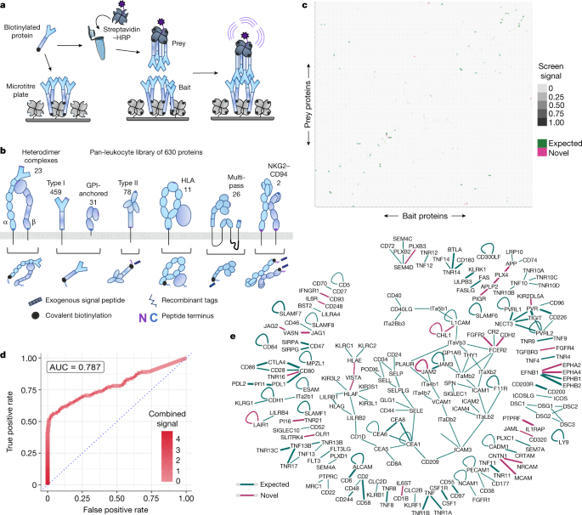
The human immune system is composed of a distributed network of cells circulating throughout the body, which must dynamically form physical associations and communicate using interactions between their cell-surface proteomes1. Despite their therapeutic potential2, our map of these surface interactions remains incomplete3,4. Here, using a high-throughput surface receptor screening method, we systematically mapped the direct protein interactions across a recombinant library that encompasses most of the surface proteins that are detectable on human leukocytes. We independently validated and determined the biophysical parameters of each novel interaction, resulting in a high-confidence and quantitative view of the receptor wiring that connects human immune cells. By integrating our interactome with expression data, we identified trends in the dynamics of immune interactions and constructed a reductionist mathematical model that predicts cellular connectivity from basic principles. We also developed an interactive multi-tissue single-cell atlas that infers immune interactions throughout the body, revealing potential functional contexts for new interactions and hubs in multicellular networks. Finally, we combined targeted protein stimulation of human leukocytes with multiplex high-content microscopy to link our receptor interactions to functional roles, in terms of both modulating immune responses and maintaining normal patterns of intercellular associations. Together, our work provides a systematic perspective on the intercellular wiring of the human immune system that extends from systems-level principles of immune cell connectivity down to mechanistic characterization of individual receptors, which could offer opportunities for therapeutic intervention.

Read the full article at: www.nature.com