
Author: cxdig

Graph Metrics for Network Robustness—A Survey

Milena Oehlers and Benjamin Fabian

Mathematics 2021, 9(8), 895

Research on the robustness of networks, and in particular the Internet, has gained critical importance in recent decades because more and more individuals, societies and firms rely on this global network infrastructure for communication, knowledge transfer, business processes and e-commerce. In particular, modeling the structure of the Internet has inspired several novel graph metrics for assessing important topological robustness features of large complex networks. This survey provides a comparative overview of these metrics, presents their strengths and limitations for analyzing the robustness of the Internet topology, and outlines a conceptual tool set in order to facilitate their future adoption by Internet research and practice but also other areas of network science.

Read the full article at: www.mdpi.com
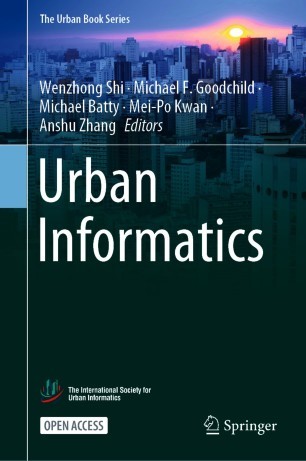
Urban Informatics

Urban informatics is an interdisciplinary approach to understanding, managing, and designing the city using systematic theories and methods based on new information technologies. Integrating urban science, geomatics, and informatics, urban informatics is a particularly timely way of fusing many interdisciplinary perspectives in studying city systems. This edited book aims to meet the urgent need for works that systematically introduce the principles and technologies of urban informatics. The book gathers over 40 world-leading research teams from a wide range of disciplines, who provide comprehensive reviews of the state of the art and the latest research achievements in their various areas of urban informatics. The book is organized into six parts, respectively covering the conceptual and theoretical basis of urban informatics, urban systems and applications, urban sensing, urban big data infrastructure, urban computing, and prospects for the future of urban informatics. 

Open Access Book at: link.springer.com

Computational Epidemiology at the time of COVID-19 by Alessandro Vespignani


//

Colloquium Virtual Complexity at C3-UNAM
Universities for Science Consortium

“Computational Epidemiology at the time of COVID-19”
Alessandro Vespignani
Network Science Institute at Northeastern University

Abstract:
The data science revolution is finally enabling the development of large-scale data-driven models that provide real- or near-real-time forecasts and risk analysis for infectious disease threats. These models also provide rationales and quantitative analysis to support policy-making decisions and intervention plans. At the same time, the non-incremental advance of the field presents a broad range of challenges: algorithmic (multiscale constitutive equations, scalability, parallelization), real-time integration of novel digital data streams (social networks, participatory platform, human mobility etc.). I will review and discuss recent results and challenges in the area, and focus on ongoing work aimed at responding to the COVID-19 pandemic.

Short Bio:
Alessandro Vespignani is the Director of the Network Science Institute and Sternberg Family Distinguished University Professor at Northeastern University. He is a professor with interdisciplinary appointments in the College of Computer and Information Science, College of Science, and the Bouvé College of Health Sciences. Dr. Vespignani’s work focuses on statistical and numerical simulation methods to model spreading phenomena, including the realistic and data-driven computational modeling of biological, social, and technological systems. For several years his work has focused on the spreading of infectious diseases, working closely with the CDC and the WHO.

Watch at: www.youtube.com