Author: cxdig

The Nobel Prize in Chemistry 2020

Emmanuelle Charpentier and Jennifer A. Doudna have discovered one of gene technology’s sharpest tools: the CRISPR/Cas9 genetic scissors. Using these, researchers can change the DNA of animals, plants and microorganisms with extremely high precision. This technology has had a revolutionary impact on the life sciences, is contributing to new cancer therapies and may make the dream of curing inherited diseases come true.

Source: www.nobelprize.org

An Overview on Optimal Flocking

Logan E. Beaver, Andreas A. Malikopoulos


The study of robotic flocking has received considerable attention in the past twenty years. As we begin to deploy flocking control algorithms on physical multi-agent and swarm systems, there is an increasing necessity for rigorous promises on safety and performance. In this paper, we present an overview the literature focusing on optimization approaches to achieve flocking behavior that provide strong safety guarantees. We separate the literature into cluster and line flocking, and categorize cluster flocking with respect to the system objective, which may be realized by a reactive, or planning, control algorithm. We also present several approaches aimed at minimizing flocking communication and computational requirements in real systems via neighbor filtering and event-driven planning. We conclude the overview with our perspective on the outlook and future research direction of optimal flocking algorithms.

Source: arxiv.org

The Nobel Prize in Physics 2020

Three Laureates share this year’s Nobel Prize in Physics for their discoveries about one of the most exotic phenomena in the universe, the black hole. Roger Penrose showed that the general theory of relativity leads to the formation of black holes. Reinhard Genzel and Andrea Ghez discovered that an invisible and extremely heavy object governs the orbits of stars at the centre of our galaxy. A supermassive black hole is the only currently known explanation.

Source: www.nobelprize.org

The Nobel Prize in Physiology or Medicine 2020

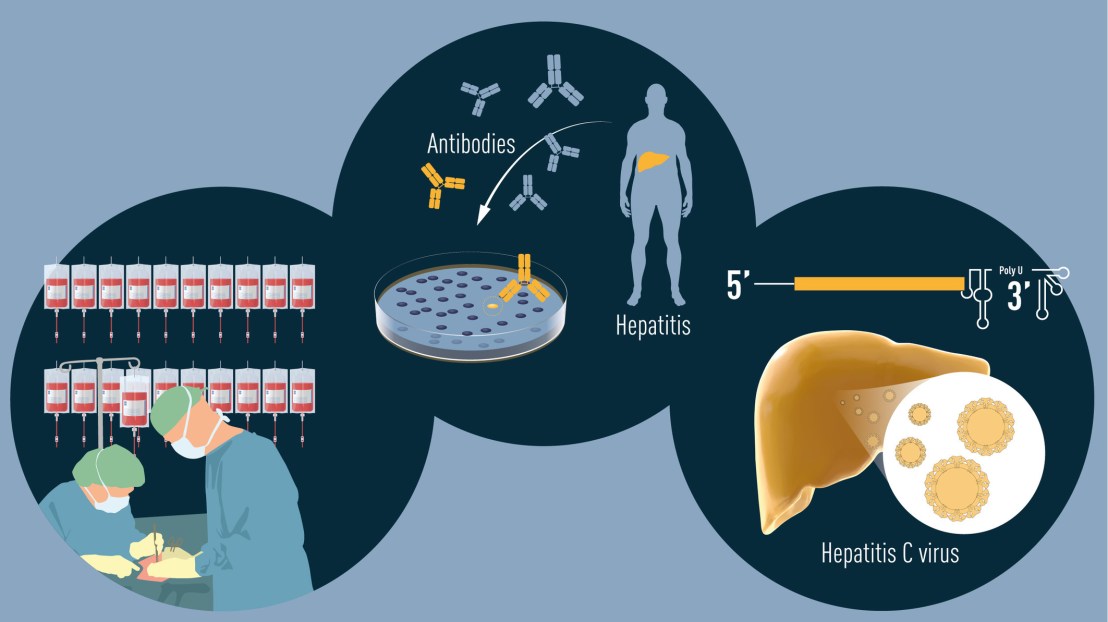
This year’s Nobel Prize is awarded to three scientists who have made a decisive contribution to the fight against blood-borne hepatitis, a major global health problem that causes cirrhosis and liver cancer in people around the world.

Harvey J. Alter, Michael Houghton and Charles M. Rice made seminal discoveries that led to the identification of a novel virus, Hepatitis C virus. Prior to their work, the discovery of the Hepatitis A and B viruses had been critical steps forward, but the majority of blood-borne hepatitis cases remained unexplained. The discovery of Hepatitis C virus revealed the cause of the remaining cases of chronic hepatitis and made possible blood tests and new medicines that have saved millions of lives.

Source: www.nobelprize.org

The cost of coordination can exceed the benefit of collaboration in performing complex tasks

Vince J. Straub, Milena Tsvetkova, Taha Yasseri


Collective decision-making is ubiquitous when observing the behavior of intelligent agents, including humans. However, there are inconsistencies in our theoretical understanding of whether there is a collective advantage from interacting with group members of varying levels of competence in solving problems of varying complexity. Moreover, most existing experiments have relied on highly stylized tasks, reducing the generality of their results. The present study narrows the gap between experimental control and realistic settings, reporting the results from an analysis of collective problem-solving in the context of a real-world citizen science task environment in which individuals with manipulated differences in task-relevant training collaborated on the Wildcam Gorongosa task, hosted by The Zooniverse. We find that dyads gradually improve in performance but do not experience a collective benefit compared to individuals in most situations; rather, the cost of team coordination to efficiency and speed is consistently larger than the leverage of having a partner, even if they are expertly trained. It is only in terms of accuracy in the most complex tasks that having an additional expert significantly improves performance upon that of non-experts. Our findings have important theoretical and applied implications for collective problem-solving: to improve efficiency, one could prioritize providing task-relevant training and relying on trained experts working alone over interaction and to improve accuracy, one could target the expertise of selectively trained individuals.

Source: arxiv.org