Author: cxdig

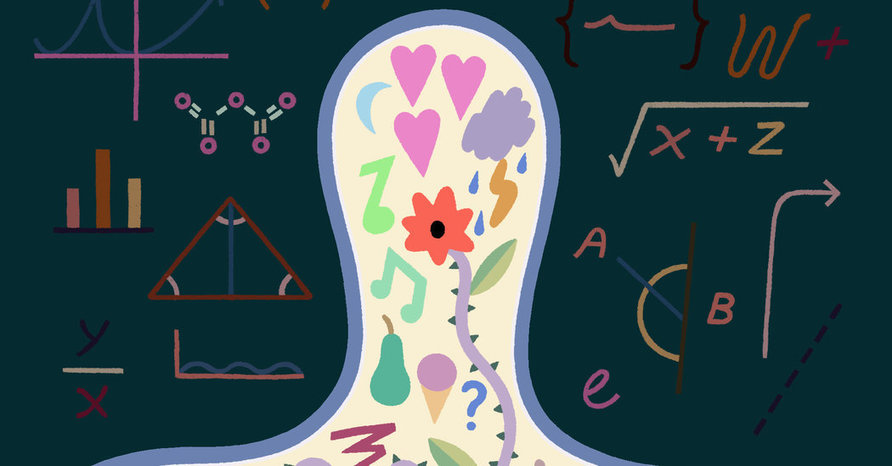
We Shouldn’t be Scared by ‘Superintelligent A.I.’

Intelligent machines catastrophically misinterpreting human desires is a frequent trope in science fiction, perhaps used most memorably in Isaac Asimov’s stories of robots that misconstrue the famous “three laws of robotics.” The idea of artificial intelligence going awry resonates with human fears about technology. But current discussions of superhuman A.I. are plagued by flawed intuitions about the nature of intelligence.

Source: www.nytimes.com

Reward and punishment in climate change dilemmas

Mitigating climate change effects involves strategic decisions by individuals that may choose to limit their emissions at a cost. Everyone shares the ensuing benefits and thereby individuals can free ride on the effort of others, which may lead to the tragedy of the commons. For this reason, climate action can be conveniently formulated in terms of Public Goods Dilemmas often assuming that a minimum collective effort is required to ensure any benefit, and that decision-making may be contingent on the risk associated with future losses. Here we investigate the impact of reward and punishment in this type of collective endeavors — coined as collective-risk dilemmas — by means of a dynamic, evolutionary approach. We show that rewards (positive incentives) are essential to initiate cooperation, mostly when the perception of risk is low. On the other hand, we find that sanctions (negative incentives) are instrumental to maintain cooperation. Altogether, our results are gratifying, given the a-priori limitations of effectively implementing sanctions in international agreements. Finally, we show that whenever collective action is most challenging to succeed, the best results are obtained when both rewards and sanctions are synergistically combined into a single policy.


Reward and punishment in climate change dilemmas
António R. Góis, Fernando P. Santos, Jorge M. Pacheco & Francisco C. Santos 
Scientific Reports volume 9, Article number: 16193 (2019)

Source: www.nature.com

César Hidalgo on Information in Societies, Economies, and the Universe

Maxwell’s Demon is a famous thought experiment in which a mischievous imp uses knowledge of the velocities of gas molecules in a box to decrease the entropy of the gas, which could then be used to do useful work such as pushing a piston. This is a classic example of converting information (what the gas molecules are doing) into work. But of course that kind of phenomenon is much more widespread — it happens any time a company or organization hires someone in order to take advantage of their know-how. César Hidalgo has become an expert in this relationship between information and work, both at the level of physics and how it bubbles up into economies and societies. Looking at the world through the lens of information brings new insights into how we learn things, how economies are structured, and how novel uses of data will transform how we live.

Source: www.preposterousuniverse.com

On Markov blankets and hierarchical self-organisation

Biological self-organisation can be regarded as a process of spontaneous pattern formation; namely, the emergence of structures that distinguish themselves from their environment. This process can occur at nested spatial scales: from the microscopic (e.g., the emergence of cells) to the macroscopic (e.g. the emergence of organisms). In this paper, we pursue the idea that Markov blankets – that separate the internal states of a structure from external states – can self-assemble at successively higher levels of organisation. Using simulations, based on the principle of variational free energy minimisation, we show that hierarchical self-organisation emerges when the microscopic elements of an ensemble have prior (e.g., genetic) beliefs that they participate in a macroscopic Markov blanket: i.e., they can only influence – or be influenced by – a subset of other elements. Furthermore, the emergent structures look very much like those found in nature (e.g., cells or organelles), when influences are mediated by short range signalling. These simulations are offered as a proof of concept that hierarchical self-organisation of Markov blankets (into Markov blankets) can explain the self-evidencing, autopoietic behaviour of biological systems.


On Markov blankets and hierarchical self-organisation
Ensor Rafael Palacios, Adeel Razi, Thomas Parr, Michael Kirchhoff, Karl Friston

Journal of Theoretical Biology

Source: www.sciencedirect.com

Generalizing RNA velocity to transient cell states through dynamical modeling

The introduction of RNA velocity in single cells has opened up new ways of studying cellular differentiation. The originally proposed framework obtains velocities as the deviation of the observed ratio of spliced and unspliced mRNA from an inferred steady state. Errors in velocity estimates arise if the central assumptions of a common splicing rate and the observation of the full splicing dynamics with steady-state mRNA levels are violated. With scVelo (https://scvelo.org), we address these restrictions by solving the full transcriptional dynamics of splicing kinetics using a likelihood-based dynamical model. This generalizes RNA velocity to a wide variety of systems comprising transient cell states, which are common in development and in response to perturbations. We infer gene-specific rates of transcription, splicing and degradation, and recover the latent time of the underlying cellular processes. This latent time represents the cell’s internal clock and is based only on its transcriptional dynamics. Moreover, scVelo allows us to identify regimes of regulatory changes such as stages of cell fate commitment and, therein, systematically detects putative driver genes. We demonstrate that scVelo enables disentangling heterogeneous subpopulation kinetics with unprecedented resolution in hippocampal dentate gyrus neurogenesis and pancreatic endocrinogenesis. We anticipate that scVelo will greatly facilitate the study of lineage decisions, gene regulation, and pathway activity identification.


Generalizing RNA velocity to transient cell states through dynamical modeling
Volker Bergen, Marius Lange, Stefan Peidli, F. Alexander Wolf, Fabian J. Theis

Source: www.biorxiv.org