Author: cxdig

From classical to modern opinion dynamics

In this age of Facebook, Instagram and Twitter, there is rapidly growing interest in understanding network-enabled opinion dynamics in large groups of autonomous agents. The phenomena of opinion polarization, the spread of propaganda and fake news, and the manipulation of sentiment are of interest to large numbers of organizations and people, some of whom are resource rich. Whether it is the more nefarious players such as foreign governments that are attempting to sway elections or large corporations that are trying to bend sentiment — often quite surreptitiously, or it is more open and above board, like researchers that want to spread the news of some finding or some business interest that wants to make a large group of people aware of genuinely helpful innovations that they are marketing, what is at stake is often significant. In this paper we review many of the classical, and some of the new, social interaction models aimed at understanding opinion dynamics. While the first papers studying opinion dynamics appeared over 60 years ago, there is still a great deal of room for innovation and exploration. We believe that the political climate and the extraordinary (even unprecedented) events in the sphere of politics in the last few years will inspire new interest and new ideas. It is our aim to help those interested researchers understand what has already been explored in a significant portion of the field of opinion dynamics. We believe that in doing this, it will become clear that there is still much to be done.


From classical to modern opinion dynamics

Hossein Noorazar, Kevin R. Vixie, Arghavan Talebanpour, Yunfeng Hu

Source: arxiv.org
Neutral and niche forces as drivers of species selection

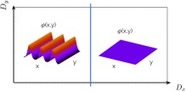
The evolutionary and ecological processes behind the origin of species are among the most fundamental problems in biology. In fact, many theoretical hypothesis on different type of speciation have been proposed. In particular, models of sympatric speciation leading to the formation of new species without geographical isolation, are based on the niche hypothesis: the diversification of the population is induced by the competition for a limited set of available resources. Interestingly, neutral models of evolution have shown that stochastic forces are sufficient to generate coexistence of different species. In this work, we put forward this dichotomy within the context of species formation, studying how neutral and niche forces contribute to sympatric speciation in a model ecosystem. In particular, we study the evolution of a population of individuals with asexual reproduction whose inherited characters or phenotypes are specified by both niche-based and neutral traits. We analyze the stationary state of the dynamics, and study the distribution of individuals in the whole phenotypic space. We show, both numerically and analytically, that there is a non-trivial coupling between neutral and niche forces induced by stochastic effects in the evolution of the population allowing the formation of clusters, that is, species in the phenotypic space. Remarkably, our framework can be generalized also to sexual reproduction or other type of population dynamics.

Source: www.sciencedirect.com

Advantage of Being Multicomponent and Spatial: Multipartite Viruses Colonize Structured Populations with Lower Thresholds

Multipartite viruses have a genome divided into different disconnected viral particles. A majority of multipartite viruses infect plants; very few target animals. To understand why, we use a simple, network-based susceptible-latent-infectious-recovered model. We show both analytically and numerically that, provided that the average degree of the contact network exceeds a critical value, even in the absence of an explicit microscopic advantage, multipartite viruses have a lower threshold to colonizing network-structured populations compared to a well-mixed population. We further corroborate this finding on two-dimensional lattice networks, which better represent the typical contact structures of plants.


Advantage of Being Multicomponent and Spatial: Multipartite Viruses Colonize Structured Populations with Lower Thresholds

Yi-Jiao Zhang, Zhi-Xi Wu, Petter Holme, and Kai-Cheng Yang
Phys. Rev. Lett. 123, 138101

Source: link.aps.org

Topological portraits of multiscale coordination dynamics

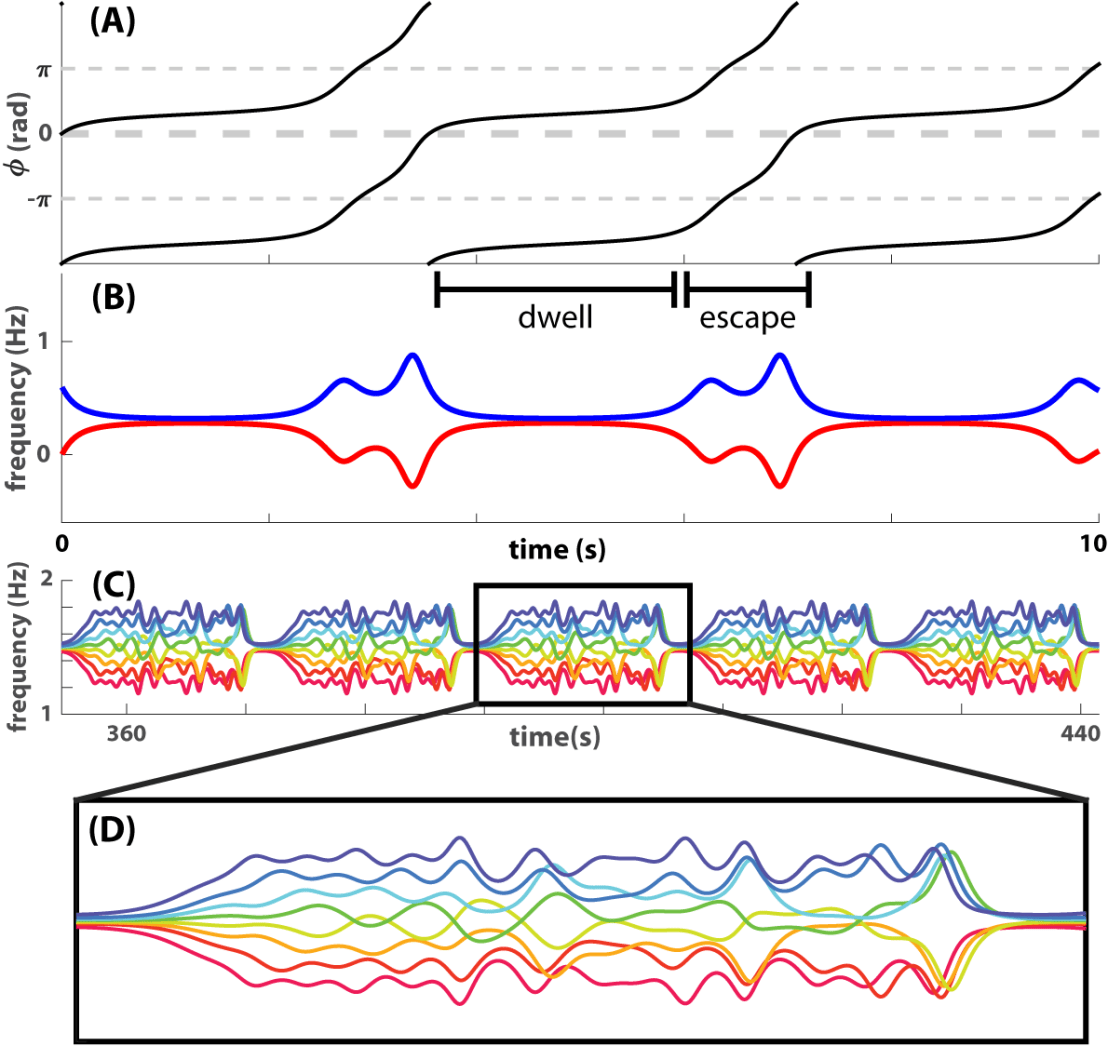
Living systems exhibit complex yet organized behavior on multiple spatiotemporal scales. To investigate the nature of multiscale coordination in living systems, one needs a meaningful and systematic way to quantify the complex dynamics, a challenge in both theoretical and empirical realms. The present work shows how integrating approaches from computational algebraic topology and dynamical systems may help us meet this challenge. In particular, we focus on the application of multiscale topological analysis to coordinated rhythmic processes. First, theoretical arguments are introduced as to why certain topological features and their scale-dependency are highly relevant to understanding complex collective dynamics. Second, we propose a method to capture such dynamically relevant topological information using persistent homology, which allows us to effectively construct a multiscale topological portrait of rhythmic coordination. Finally, the method is put to test in detecting transitions in real data from an experiment of rhythmic coordination in ensembles of interacting humans. The recurrence plots of topological portraits highlight collective transitions in coordination patterns that were elusive to more traditional methods. This sensitivity to collective transitions would be lost if the behavioral dynamics of individuals were treated as separate degrees of freedom instead of constituents of the topology that they collectively forge. Such multiscale topological portraits highlight collective aspects of coordination patterns that are irreducible to properties of individual parts. The present work demonstrates how the analysis of multiscale coordination dynamics can benefit from topological methods, thereby paving the way for further systematic quantification of complex, high-dimensional dynamics in living systems.


Topological portraits of multiscale coordination dynamics

Mengsen Zhang, William D. Kalies, J. A. Scott Kelso, Emmanuelle Tognoli

Source: arxiv.org

Tenure Track position in Complexity – University of Amsterdam

The UvA’s Faculty of Science is launching a major recruitment campaign called ‘Connecting Science’ in the areas of Physics, Chemistry, Mathematics, and Computer Science. Our ambition is to attract top talent from all over the world to a large number of newly created faculty positions in a wide range of exciting scientific directions. We offer a stimulating environment and excellent conditions for research, tightly connected to challenging educational programmes. We are looking for ambitious and motivated scientists to connect different scientific disciplines. Our goal is to have a maximal impact on science and society.

Source: www.uva.nl