
Author: cxdig

Expanding the Active Inference Landscape: More Intrinsic Motivations in the Perception-Action Loop

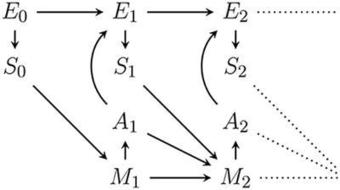
Active inference is an ambitious theory that treats perception, inference, and action selection of autonomous agents under the heading of a single principle. It suggests biologically plausible explanations for many cognitive phenomena, including consciousness. In active inference, action selection is driven by an objective function that evaluates possible future actions with respect to current, inferred beliefs about the world. Active inference at its core is independent from extrinsic rewards, resulting in a high level of robustness across e.g., different environments or agent morphologies. In the literature, paradigms that share this independence have been summarized under the notion of intrinsic motivations. In general and in contrast to active inference, these models of motivation come without a commitment to particular inference and action selection mechanisms. In this article, we study if the inference and action selection machinery of active inference can also be used by alternatives to the originally included intrinsic motivation. The perception-action loop explicitly relates inference and action selection to the environment and agent memory, and is consequently used as foundation for our analysis. We reconstruct the active inference approach, locate the original formulation within, and show how alternative intrinsic motivations can be used while keeping many of the original features intact. Furthermore, we illustrate the connection to universal reinforcement learning by means of our formalism. Active inference research may profit from comparisons of the dynamics induced by alternative intrinsic motivations. Research on intrinsic motivations may profit from an additional way to implement intrinsically motivated agents that also share the biological plausibility of active inference.


Expanding the Active Inference Landscape: More Intrinsic Motivations in the Perception-Action Loop

Martin Biehl, Christian Guckelsberger, Christoph Salge, Simón C. Smith and Daniel Polani

Front. Neurorobot., 30 August 2018 | https://doi.org/10.3389/fnbot.2018.00045

Source: www.frontiersin.org

Social transmission in networks: global efficiency peaks with intermediate levels of modularity

In myriad biological systems, multiple lines of evidence indicate that modularity, wherein parts of a network are organized into modules such as subgroups in animal networks, may affect social transmission processes. In animal societies, there is increased interest in understanding variation in the effects of modularity on transmission as it may provide important insight into a given network’s performance, in addition to the evolutionary consequences the structure of the network may have for individual fitness. Yet, to our knowledge, the degree to which network efficiency is modularity dependent has not yet been investigated in great detail in behavioral and evolutionary ecology. Here, we investigated to what degree network efficiency, as a proxy for social transmission, is modularity dependent. We created 2798 networks varying in group size and density, and tested whether network structure (density, Newman’s modularity, eigenvector centralization) and group size shape network efficiency. We also used published data from 41 primate social networks to test whether the predictions generated in our simulations were supported by empirical observations. Our results show a non-linear relationship between modularity and global efficiency, with the latter peaking at intermediate values of modularity in both theoretical and empirical networks. This phenomenon may have relevance for observed variation in social structure and its link with network performance. Our results may thus provide a basis from which to discuss the evolution of complex systems such as animal societies.


Social transmission in networks: global efficiency peaks with intermediate levels of modularity

Valéria Romano, Mengyu Shen, Jérôme Pansanel, Andrew J. J. MacIntosh

Behavioral Ecology and Sociobiology
September 2018, 72:154

Source: link.springer.com

The first global trading network

Little is known about the structural patterns and dynamics of the first global trading market (FGTM), which emerged during the sixteenth century as a result of the Iberian expansion, let alone how it compares to today’s global financial markets. Here we build a representative network of the FGTM using information contained in 8725 (handwritten) Bills of Exchange from that time—which were (human) interpreted and digitalized into an online database. We show that the resulting temporal network exhibits a hierarchical, highly clustered and disassortative structure, with a power-law dependence on the connectivity that remains remarkably robust throughout the entire period investigated. Temporal analysis shows that, despite major turnovers in the number and nature of the links—suggesting fast adaptation in response to the geopolitical and financial turmoil experienced at the time—the overall characteristics of the FGTM remain robust and virtually unchanged. The methodology developed here demonstrates the possibility of building and analysing complex trading and finance networks originating from pre-statistical eras, enabling us to highlight the striking similarities between the structural patterns of financial networks separated by centuries in time.


Structural and temporal patterns of the first global trading market
Ana Sofia Ribeiro, Flávio L. Pinheiro, Francisco C. Santos, Amélia Polónia, Jorge M. Pacheco

Royal Society Open Science
Published 22 August 2018.DOI: 10.1098/rsos.180577

Source: rsos.royalsocietypublishing.org

Towards Digital Enlightenment – Essays on the Dark and Light Sides of the Digital Revolution, Dirk Helbing (Ed.)

A new collection of essays by the author of the successful volume Thinking Ahead – Essays on Big Data, Digital Revolution, and Participatory Market Society
Examines the dangers of a world in which algorithms and social bots aim to control both the societal dynamics and individual behaviors.
Introduces novel approaches on how to redefine collective trust and build platforms to support core societal values

Towards Digital Enlightenment
Essays on the Dark and Light Sides of the Digital Revolution
Editors: Helbing, Dirk (Ed.)

Source: www.springer.com

Large-scale estimation of parking requirements for autonomous mobility on demand systems

Cities everywhere are anticipating new mobility technologies to help solve issues with congestion and pollution while providing afforable, accessible, reliable and convenient transportation for growing populations. The adoption of self-driving vehicles is projected to happen soon and help with achieving these goals, especially if part of a shared mobility on demand service. Potential benefits of such a system include a reduction of the number of vehicles and freeing up parking spaces, while challenges still include managing the traffic volume. Previous research focused on estimating fleet size in different scenarios. In this work, we focus on estimating minimum fleet size, parking needs and total travel distance for an autonomous mobility on demand solution serving all trips made in private vehicles in Singapore, generated from a comprehensive simulation of the city’s mobility. We specifically focus on parking demand as currently a significant amount of space has to be designated as parking in cities, which is poised to become obsolate if people switch from private vehicles to shared ones which are utilized much more efficiently. We show that over 85% reduction in the number of vehicles and parking spaces can be achieved while serving all trips made currently in private vehicles. We further show that potential increased traffic volume can be mitigated with the incorporation of ride-sharing, while offering even higher savings, up to 92% in both fleet size and parking needs.


Large-scale estimation of parking requirements for autonomous mobility on demand systems
Daniel Kondor, Paolo Santi, Kakali Basak, Xiaohu Zhang, Carlo Ratti

Source: arxiv.org