Author: cxdig

Resilience analytics: coverage and robustness in multi-modal transportation networks

A multi-modal transportation system of a city can be modeled as a multiplex network with different layers corresponding to different transportation modes. These layers include, but are not limited to, bus network, metro network, and road network. Formally, a multiplex network is a multilayer graph in which the same set of nodes are connected by different types of relationships. Intra-layer relationships denote the road segments connecting stations of the same transportation mode, whereas inter-layer relationships represent connections between different transportation modes within the same station. Given a multi-modal transportation system of a city, we are interested in assessing its quality or efficiency by estimating the coverage i.e., a portion of the city that can be covered by a random walker who navigates through it within a given time budget, or steps. We are also interested in the robustness of the whole transportation system which denotes the degree to which the system is able to withstand a random or targeted failure affecting one or more parts of it. Previous approaches proposed a mathematical framework to numerically compute the coverage in multiplex networks. However solutions are usually based on eigenvalue decomposition, known to be time consuming and hard to obtain in the case of large systems. In this work, we propose MUME, an efficient algorithm for Multi-modal Urban Mobility Estimation, that takes advantage of the special structure of the supra-Laplacian matrix of the transportation multiplex, to compute the coverage of the system. We conduct a comprehensive series of experiments to demonstrate the effectiveness and efficiency of MUME on both synthetic and real transportation networks of various cities such as Paris, London, New York and Chicago. A future goal is to use this experience to make projections for a fast growing city like Doha.


Resilience analytics: coverage and robustness in multi-modal transportation networks

Abdelkader Baggag, Sofiane Abbar, Tahar Zanouda and Jaideep Srivastava
EPJ Data Science 2018 7:14
https://doi.org/10.1140/epjds/s13688-018-0139-7

Source: epjdatascience.springeropen.com
Complex Systems for the Most Vulnerable, Satellite @CCS18

In recent years, research efforts addressing the needs of the most vulnerable populations — from those with low incomes to children, women and other minorities — have started to draw the attention of the scientific community. Notable examples in this space are the Data for Development and Data For Refugees challenges, organized by Orange and TurkTelecom respectively. However, the gap between the academic world and the organizations that could use the proposed methods and insights for their programmatic purposes is still wide. This satellite workshop, organized by UNICEF’s Office of Innovation, aims at focusing the attention of the Complex System scientific community on the pressing issues that affect the most vulnerable. In addition, this will be a venue to showcase the most relevant theoretical and operational work in complex systems research — where the challenges of the most vulnerable are a core component.


Conference on Complex Systems CCS2018 Satellite Meeting
"Complex Systems for the Most Vulnerable"
Thessaloniki, 27 September 2018

Source: cs4v18.weebly.com

Niche emergence as an autocatalytic process in the evolution of ecosystems

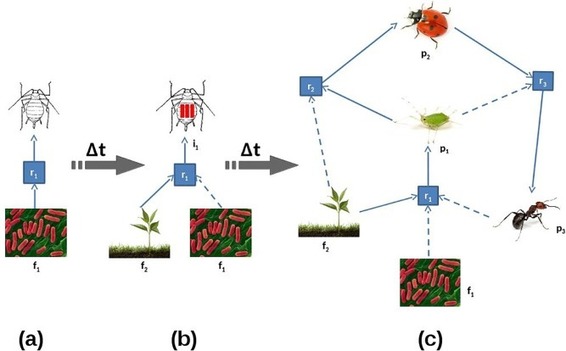
The utilisation of the ecospace and the change in diversity through time has been suggested to be due to the effect of niche partitioning, as a global long-term pattern in the fossil record. However, niche partitioning, as a way to coexist, could be a limited means to share the environmental resources and condition during evolutionary time. In fact, a physical limit impedes a high partitioning without a high restriction of the niche’s variables. Here, we propose that niche emergence, rather than niche partitioning, is what mostly drives ecological diversity. In particular, we view ecosystems in terms of autocatalytic sets: catalytically closed and self-sustaining reaction (or interaction) networks. We provide some examples of such ecological autocatalytic networks, how this can give rise to an expanding process of niche emergence (both in time and space), and how these networks have evolved over time (so-called evoRAFs). Furthermore, we use the autocatalytic set formalism to show that it can be expected to observe a power-law in the size distribution of extinction events in ecosystems. In short, we elaborate on our earlier argument that new species create new niches, and that biodiversity is therefore an autocatalytic process.


Niche emergence as an autocatalytic process in the evolution of ecosystems

Roberto Cazzolla Gatti, Brian Fath, Wim Hordijk, Stuart Kauffman, Robert Ulanowicz

Journal of Theoretical Biology

Source: www.sciencedirect.com

The Book of Why: The New Science of Cause and Effect (Judea Pearl & Dana Mackenzie)

A Turing Award-winning computer scientist and statistician shows how understanding causality has revolutionized science and will revolutionize artificial intelligence
 
"Correlation is not causation." This mantra, chanted by scientists for more than a century, has led to a virtual prohibition on causal talk. Today, that taboo is dead. The causal revolution, instigated by Judea Pearl and his colleagues, has cut through a century of confusion and established causality–the study of cause and effect–on a firm scientific basis. His work explains how we can know easy things, like whether it was rain or a sprinkler that made a sidewalk wet; and how to answer hard questions, like whether a drug cured an illness. Pearl’s work enables us to know not just whether one thing causes another: it lets us explore the world that is and the worlds that could have been. It shows us the essence of human thought and key to artificial intelligence. Anyone who wants to understand either needs The Book of Why.

Source: www.amazon.com