Author: cxdig

Scale-free networks are rare

A central claim in modern network science is that real-world networks are typically “scale free,” meaning that the fraction of nodes with degree k follows a power law, decaying like k^−α, often with 2<α<3. However, empirical evidence for this belief derives from a relatively small number of real-world networks. We test the universality of scale-free structure by applying state-of-the-art statistical tools to a large corpus of nearly 1000 network data sets drawn from social, biological, technological, and informational sources. We fit the power-law model to each degree distribution, test its statistical plausibility, and compare it via a likelihood ratio test to alternative, non-scale-free models, e.g., the log-normal. Across domains, we find that scale-free networks are rare, with only 4% exhibiting the strongest-possible evidence of scale-free structure and 52% exhibiting the weakest-possible evidence. Furthermore, evidence of scale-free structure is not uniformly distributed across sources: social networks are at best weakly scale free, while a handful of technological and biological networks can be called strongly scale free. These results undermine the universality of scale-free networks and reveal that real-world networks exhibit a rich structural diversity that will likely require new ideas and mechanisms to explain.


Scale-free networks are rare
Anna D. Broido, Aaron Clauset

Source: arxiv.org

See Also:

Twitter discussion, including Aaron Clauset, Laszlo Barabasi, Alex Vespignani, Duncan Watts, Stefano Zapperi, Petter Holme, Gabor Vattay, et al.

https://twitter.com/manlius84/timelines/952248309720211458 

Blog post by Petter Holme
https://petterhol.me/2018/01/12/me-and-power-laws/ 

Digital epidemiology: what is it, and where is it going?

Digital Epidemiology is a new field that has been growing rapidly in the past few years, fueled by the increasing availability of data and computing power, as well as by breakthroughs in data analytics methods. In this short piece, I provide an outlook of where I see the field heading, and offer a broad and a narrow definition of the term.


Digital epidemiology: what is it, and where is it going?
Marcel Salathé

Life Sciences, Society and Policy
December 2018, 14:1

Source: link.springer.com

Quantitative historical analysis uncovers a single dimension of complexity that structures global variation in human social organization

Do human societies from around the world exhibit similarities in the way that they are structured and show commonalities in the ways that they have evolved? To address these long-standing questions, we constructed a database of historical and archaeological information from 30 regions around the world over the last 10,000 years. Our analyses revealed that characteristics, such as social scale, economy, features of governance, and information systems, show strong evolutionary relationships with each other and that complexity of a society across different world regions can be meaningfully measured using a single principal component of variation. Our findings highlight the power of the sciences and humanities working together to rigorously test hypotheses about general rules that may have shaped human history.


Quantitative historical analysis uncovers a single dimension of complexity that structures global variation in human social organization
Peter Turchin, Thomas E. Currie, Harvey Whitehouse, Pieter François, Kevin Feeney, Daniel Mullins, Daniel Hoyer, Christina Collins, Stephanie Grohmann, Patrick Savage, Gavin Mendel-Gleason, Edward Turner, Agathe Dupeyron, Enrico Cioni, Jenny Reddish, Jill Levine, Greine Jordan, Eva Brandl, Alice Williams, Rudolf Cesaretti, Marta Krueger, Alessandro Ceccarelli, Joe Figliulo-Rosswurm, Po-Ju Tuan, Peter Peregrine, Arkadiusz Marciniak, Johannes Preiser-Kapeller, Nikolay Kradin, Andrey Korotayev, Alessio Palmisano, David Baker, Julye Bidmead, Peter Bol, David Christian, Connie Cook, Alan Covey, Gary Feinman, Árni Daníel Júlíusson, Axel Kristinsson, John Miksic, Ruth Mostern, Cameron Petrie, Peter Rudiak-Gould, Barend ter Haar, Vesna Wallace, Victor Mair, Liye Xie, John Baines, Elizabeth Bridges, Joseph Manning, Bruce Lockhart, Amy Bogaard and Charles Spencer
PNAS 2017; published ahead of print December 21, 2017, https://doi.org/10.1073/pnas.1708800115

Source: www.pnas.org

The role of gender in social network organization

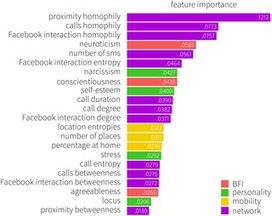
The digital traces we leave behind when engaging with the modern world offer an interesting lens through which we study behavioral patterns as expression of gender. Although gender differentiation has been observed in a number of settings, the majority of studies focus on a single data stream in isolation. Here we use a dataset of high resolution data collected using mobile phones, as well as detailed questionnaires, to study gender differences in a large cohort. We consider mobility behavior and individual personality traits among a group of more than 800 university students. We also investigate interactions among them expressed via person-to-person contacts, interactions on online social networks, and telecommunication. Thus, we are able to study the differences between male and female behavior captured through a multitude of channels for a single cohort. We find that while the two genders are similar in a number of aspects, there are robust deviations that include multiple facets of social interactions, suggesting the existence of inherent behavioral differences. Finally, we quantify how aspects of an individual’s characteristics and social behavior reveals their gender by posing it as a classification problem. We ask: How well can we distinguish between male and female study participants based on behavior alone? Which behavioral features are most predictive?


Psylla I, Sapiezynski P, Mones E, Lehmann S (2017) The role of gender in social network organization. PLoS ONE 12(12): e0189873. https://doi.org/10.1371/journal.pone.0189873

Source: journals.plos.org

Bursty Human Dynamics

This book provides a comprehensive overview on emergent bursty patterns in the dynamics of human behaviour. It presents common and alternative understanding of the investigated phenomena, and points out open questions worthy of further investigations.
The book is structured as follows. In the introduction the authors discuss the motivation of the field, describe bursty phenomena in case of human behaviour, and relate it to other disciplines. The second chapter addresses the measures commonly used to characterise heterogeneous signals, bursty human dynamics, temporal paths, and correlated behaviour. These definitions are first introduced to set the basis for the discussion of the third chapter about the observations of bursty human patterns in the dynamics of individuals, dyadic interactions, and collective behaviour. The subsequent fourth chapter discusses the models of bursty human dynamics. Various mechanisms have been proposed about the source of the heterogeneities in human dynamics, which leads to the introduction of conceptually different modelling approaches. The authors address all of these perspectives objectively, highlight their strengths and shortcomings, and mention possible extensions to them. The fifth chapter addresses the effect of individual heterogeneous behaviour on collective dynamics. This question in particular has been investigated in various systems including spreading phenomena, random walks, and opinion formation dynamics. Here the main issues are whether burstiness speeds up or slows down the co-evolving processes, and how burstiness modifies time-dependent paths in the system that determine the spreading patterns of any kind of information or influence. Finally in the sixth chapter the authors end the review with a discussion and future perspectives.
It is an ideal book for researchers and students who wish to enter the field of bursty human dynamics or want to expand their knowledge on such phenomena.

Source: www.springer.com