This textbook is built around the central proposition that systems theory is an attempt to construct an “exact and scientific metaphysics” (an ESM).
Read the full article at: link.springer.com
Networking the complexity community since 1999
Category: Books

This textbook is built around the central proposition that systems theory is an attempt to construct an “exact and scientific metaphysics” (an ESM).
Read the full article at: link.springer.com

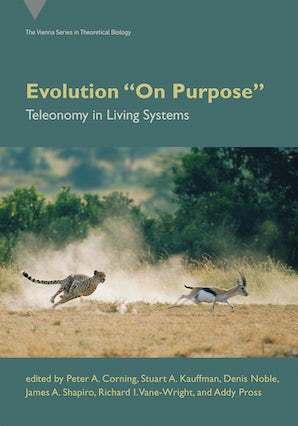
Read the full book at: direct.mit.edu

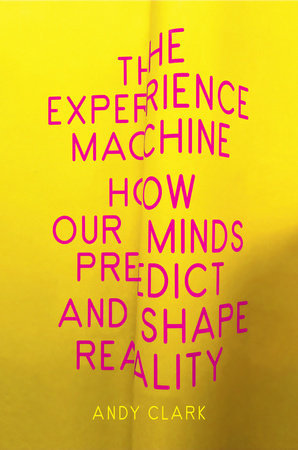
For as long as we’ve studied human cognition, we’ve believed that our senses give us direct access to the world. What we see is what’s really there—or so the thinking goes. But new discoveries in neuroscience and psychology have turned this assumption on its head. What if rather than perceiving reality passively, your mind actively predicts it?
Widely acclaimed philosopher and cognitive scientist Andy Clark unpacks this provocative new theory that the brain is a powerful, dynamic prediction engine, mediating our experience of both body and world. From the most mundane experiences to the most sublime, reality as we know it is the complex synthesis of sensory information and expectation. Exploring its fascinating mechanics and remarkable implications for our lives, mental health, and society, Clark nimbly illustrates how the predictive brain sculpts all human experience. Chronic pain and mental illness are shown to involve subtle malfunctions of our unconscious predictions, pointing the way towards more effective, targeted treatments. Under renewed scrutiny, the very boundary between ourselves and the outside world dissolves, showing that we are as entangled with our environments as we are with our onboard memories, thoughts, and feelings. And perception itself is revealed to be something of a controlled hallucination.
Unveiling the extraordinary explanatory power of the predictive brain, The Experience Machine is a mesmerizing window onto one of the most significant developments in our understanding of the mind.
More at: www.penguinrandomhouse.com

The world is shaped by complexity. In this enlightening book, Nobel Prize winner Giorgio Parisi guides us through his unorthodox yet exhilarating work to show us how. It all starts with investigating the principles of physics by observing the sophisticated flight patterns of starlings. Studying the movements of these birds, he has realized, proves an illuminating way into understanding complex systems of all kinds – collections of everything from atoms to planets to other animals like ourselves.
Along the way, Parisi reflects on the lessons he’s taken from a life in pursuit of scientific truth: the importance of serendipity to the discovery of new ideas, the surprising kinship between physics and other fields of study and the value of science to a thriving society. In so doing, he removes the practice of science from the confines of the laboratory and into the real world. Complexity is all around us – from climate to finance to biology, it offers a unique way of finding order in chaos.
Part elegant scientific treatise, part thrilling intellectual journey, In a Flight of Starlings is an invitation to find wonder in the world around us.
More at: www.penguin.co.uk

As evidence of our global survival crisis continues to mount, the expression ‘too little, too late’ comes to mind. We all live in an interdependent world which has an increasingly shared fate. We are participants in an emerging global ‘superorganism’ that is dependent on close cooperation. Indeed, positive synergy (cooperative effects) has been the key to our evolutionary success as a species. However, our ultimate fate is now in jeopardy. Going forward, we must either create a more effective global society (with collective self-governance) or our species will very likely be convulsed by mass starvation, waves of desperate migrants, and lethal social conflict. The greatest threat we may face is each other, and a regression into tribalism and violent conflict. This Element has a more hopeful prescription for a new global social contract. It is based on the many examples of superorganisms – socially organized species – in the natural world, and in evolution.
More at: www.cambridge.org