Category: Books

In a Flight of Starlings, by Giorgio Parisi

The world is shaped by complexity. In this enlightening book, Nobel Prize winner Giorgio Parisi guides us through his unorthodox yet exhilarating work to show us how. It all starts with investigating the principles of physics by observing the sophisticated flight patterns of starlings. Studying the movements of these birds, he has realized, proves an illuminating way into understanding complex systems of all kinds – collections of everything from atoms to planets to other animals like ourselves.

Along the way, Parisi reflects on the lessons he’s taken from a life in pursuit of scientific truth: the importance of serendipity to the discovery of new ideas, the surprising kinship between physics and other fields of study and the value of science to a thriving society. In so doing, he removes the practice of science from the confines of the laboratory and into the real world. Complexity is all around us – from climate to finance to biology, it offers a unique way of finding order in chaos.

Part elegant scientific treatise, part thrilling intellectual journey, In a Flight of Starlings is an invitation to find wonder in the world around us.

More at: www.penguin.co.uk

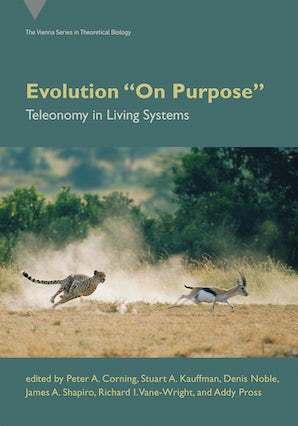
Superorganism: Toward a New Social Contract for Our Endangered Species by Peter A. Corning

As evidence of our global survival crisis continues to mount, the expression ‘too little, too late’ comes to mind. We all live in an interdependent world which has an increasingly shared fate. We are participants in an emerging global ‘superorganism’ that is dependent on close cooperation. Indeed, positive synergy (cooperative effects) has been the key to our evolutionary success as a species. However, our ultimate fate is now in jeopardy. Going forward, we must either create a more effective global society (with collective self-governance) or our species will very likely be convulsed by mass starvation, waves of desperate migrants, and lethal social conflict. The greatest threat we may face is each other, and a regression into tribalism and violent conflict. This Element has a more hopeful prescription for a new global social contract. It is based on the many examples of superorganisms – socially organized species – in the natural world, and in evolution.

More at: www.cambridge.org

Handbook on the Politics and Governance of Big Data and Artificial Intelligence

Edited by Andrej Zwitter and Oskar Gstrein
Drawing on the theoretical debates, practical applications, and sectoral approaches in the field, this ground-breaking Handbook unpacks the political and regulatory developments in AI and big data governance. Covering the political implications of big data and AI on international relations, as well as emerging initiatives for legal regulation, it provides an accessible overview of ongoing data science discourses in politics, law and governance.

Read the full article at: www.elgaronline.com

Organisms as Agents of Evolution

Philip C. Ball

Agency – the capacity to make goal-directed changes to one’s self and environment – seems to be a real and general characteristic of living organisms. Yet unlike other general features such as replication and metabolism, we lack widely accepted models or theories of what agency is and how it arises. Do modern biology and evolutionary theory need them? If so, what might they look like?

Read the full book at: www.templeton.org

Sleeping Beauties | Book by Andreas Wagner

Why do some of nature’s marvels have to wait millions of years for their time in the sun?

Life innovates constantly, producing perfectly adapted species – but there’s a catch.

Many animals and plants eke out seemingly unremarkable lives. Passive, constrained, modest, threatened. Then, in a blink of evolutionary time, they flourish spectacularly. Once we start to look, these ‘sleeping beauties’ crop up everywhere. But why?

Looking at the book of life, from apex predators to keystone crops, and informed by his own cutting-edge experiments, renowned scientist Andreas Wagner demonstrates that innovations can come frequently and cheaply to nature, well before they are needed. We have found prehistoric bacteria that harbour the remarkable ability to fight off 21st-century antibiotics. And human history fits the pattern too, as life-changing technologies are invented only to be forgotten, languishing in the shadows before they finally take off.

In probing the mysteries of these sleeping beauties, Wagner reveals a crucial part of nature’s rich and strange tapestry.

Read the full article at: www.simonandschuster.com