Category: Books

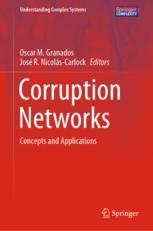
Handbook of Cities and Networks

Edited by Zachary P. Neal and Céline Rozenblat

This Handbook of Cities and Networks provides a cutting-edge overview of research on how economic, social and transportation networks affect processes both in and between cities. Exploring the ways in which cities connect and intertwine, it offers a varied set of collaborations, highlighting different theoretical, historical and methodological perspectives.

More at: www.e-elgar.com

ALIFE 2021: The 2021 Conference on Artificial Life

Jitka Čejková, Silvia Holler, Lisa Soros, Olaf Witkowski (Eds)

MIT Press

The theme of ALIFE 2021 conference is ”Robots: The century past and the century ahead”, because we celebrate the centenary of Čapek’s R.U.R. and the worldwide-used word “robot”, which comes from this play. The conference was originally scheduled to be held in Prague, the city where the play had its official world premiere in 1921. However, because of the covid-19 pandemic and its repercussions, ALIFE 2021 conference is virtual.

Read the full proceedings at: direct.mit.edu

The Ascent of Information: Books, Bits, Genes, Machines, and Life’s Unending Algorithm. Scharf, Caleb

One of the most peculiar and possibly unique features of humans is the vast amount of information we carry outside our biological selves. But in our rush to build the infrastructure for the 20 quintillion bits we create every day, we’ve failed to ask exactly why we’re expending ever-increasing amounts of energy, resources, and human effort to maintain all this data.

Drawing on deep ideas and frontier thinking in evolutionary biology, computer science, information theory, and astrobiology, Caleb Scharf argues that information is, in a very real sense, alive. All the data we create—all of our emails, tweets, selfies, A.I.-generated text and funny cat videos—amounts to an aggregate lifeform. It has goals and needs. It can control our behavior and influence our well-being. And it’s an organism that has evolved right alongside us.

This symbiotic relationship with information offers a startling new lens for looking at the world. Data isn’t just something we produce; it’s the reason we exist. This powerful idea has the potential to upend the way we think about our technology, our role as humans, and the fundamental nature of life.

The Ascent of Information offers a humbling vision of a universe built of and for information. Scharf explores how our relationship with data will affect our ongoing evolution as a species. Understanding this relationship will be crucial to preventing our data from becoming more of a burden than an asset, and to preserving the possibility of a human future.

More at: www.amazon.com

Theory and Practice of Contrast Integrating Science, Art and Philosophy

By Mariusz Stanowski

The book Theory and Practice of Contrast completes, corrects and integrates the foundations of science and humanities, which include: theory of art, philosophy (aesthetics, epistemology, ontology, axiology), cognitive science, theory of information, theory of complexity and physics. Through the integration of these distant disciplines, many unresolved issues in contemporary science have been clarified or better understood, among others: defining impact (contrast) and using this definition in different fields of knowledge; understanding what beauty/art is and what our aesthetic preferences depend on; deeper understanding of what complexity and information are in essence, and providing their general definitions. Complexity means integration, value and goodness – concepts that seem to be neglected today.

More at: www.routledge.com