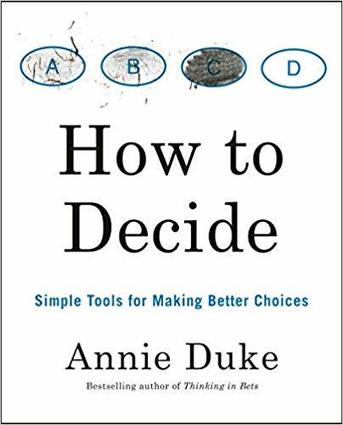
Through a blend of compelling exercises, illustrations, and stories, the bestselling author of Thinking in Bets will train you to combat your own biases, address your weaknesses, and help you become a better and more confident decision-maker.
What do you do when you’re faced with a big decision? If you’re like most people, you probably make a pro and con list, spend a lot of time obsessing about decisions that didn’t work out, get caught in analysis paralysis, endlessly seek other people’s opinions to find just that little bit of extra information that might make you sure, and finally go with your gut.
What if there was a better way to make quality decisions so you can think clearly, feel more confident, second-guess yourself less, and ultimately be more decisive and be more productive?
Making good decisions doesn’t have to be a series of endless guesswork. Rather, it’s a teachable skill that anyone can sharpen. In How to Decide, bestselling author Annie Duke and former professional poker player lays out a series of tools anyone can use to make better decisions. You’ll learn:
• To identify and dismantle hidden biases.
• To extract the highest quality feedback from those whose advice you seek.
• To more accurately identify the influence of luck in the outcome of your decisions.
• When to decide fast, when to decide slow, and when to decide in advance.
• To make decisions that more effectively help you to realize your goals and live your values.
Through practical exercises and engaging thought experiments, this book helps you analyze key decisions you’ve made in the past and troubleshoot those you’re making in the future. Whether you’re picking investments, evaluating a job offer, or trying to figure out your romantic life, this book is the key to happier outcomes and fewer regrets.
Source: www.amazon.com