

Ending lockdowns alone won’t restore confidence or growth. Only when the novel coronavirus is under control will economic growth resume.
Source: www.mckinsey.com
Networking the complexity community since 1999
Category: Papers
Ending lockdowns alone won’t restore confidence or growth. Only when the novel coronavirus is under control will economic growth resume.
Source: www.mckinsey.com

Kazutoshi Sasahara, Wen Chen, Hao Peng, Giovanni Luca Ciampaglia, Alessandro Flammini & Filippo Menczer
Journal of Computational Social Science (2020)
While social media make it easy to connect with and access information from anyone, they also facilitate basic influence and unfriending mechanisms that may lead to segregated and polarized clusters known as “echo chambers.” Here we study the conditions in which such echo chambers emerge by introducing a simple model of information sharing in online social networks with the two ingredients of influence and unfriending. Users can change both their opinions and social connections based on the information to which they are exposed through sharing. The model dynamics show that even with minimal amounts of influence and unfriending, the social network rapidly devolves into segregated, homogeneous communities. These predictions are consistent with empirical data from Twitter. Although our findings suggest that echo chambers are somewhat inevitable given the mechanisms at play in online social media, they also provide insights into possible mitigation strategies.
Source: link.springer.com
Some countries slammed their doors. It worked — until they let outsiders back in.
Source: www.nytimes.com
David Leclère, Michael Obersteiner, […]Lucy Young
Nature (2020)
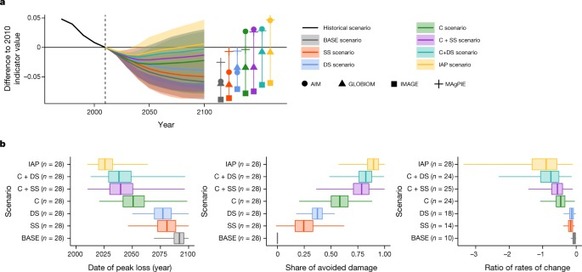
Increased efforts are required to prevent further losses to terrestrial biodiversity and the ecosystem services that it provides. Ambitious targets have been proposed, such as reversing the declining trends in biodiversity; however, just feeding the growing human population will make this a challenge. Here we use an ensemble of land-use and biodiversity models to assess whether—and how—humanity can reverse the declines in terrestrial biodiversity caused by habitat conversion, which is a major threat to biodiversity. We show that immediate efforts, consistent with the broader sustainability agenda but of unprecedented ambition and coordination, could enable the provision of food for the growing human population while reversing the global terrestrial biodiversity trends caused by habitat conversion. If we decide to increase the extent of land under conservation management, restore degraded land and generalize landscape-level conservation planning, biodiversity trends from habitat conversion could become positive by the mid-twenty-first century on average across models (confidence interval, 2042–2061), but this was not the case for all models. Food prices could increase and, on average across models, almost half (confidence interval, 34–50%) of the future biodiversity losses could not be avoided. However, additionally tackling the drivers of land-use change could avoid conflict with affordable food provision and reduces the environmental effects of the food-provision system. Through further sustainable intensification and trade, reduced food waste and more plant-based human diets, more than two thirds of future biodiversity losses are avoided and the biodiversity trends from habitat conversion are reversed by 2050 for almost all of the models. Although limiting further loss will remain challenging in several biodiversity-rich regions, and other threats—such as climate change—must be addressed to truly reverse the declines in biodiversity, our results show that ambitious conservation efforts and food system transformation are central to an effective post-2020 biodiversity strategy.
Source: www.nature.com
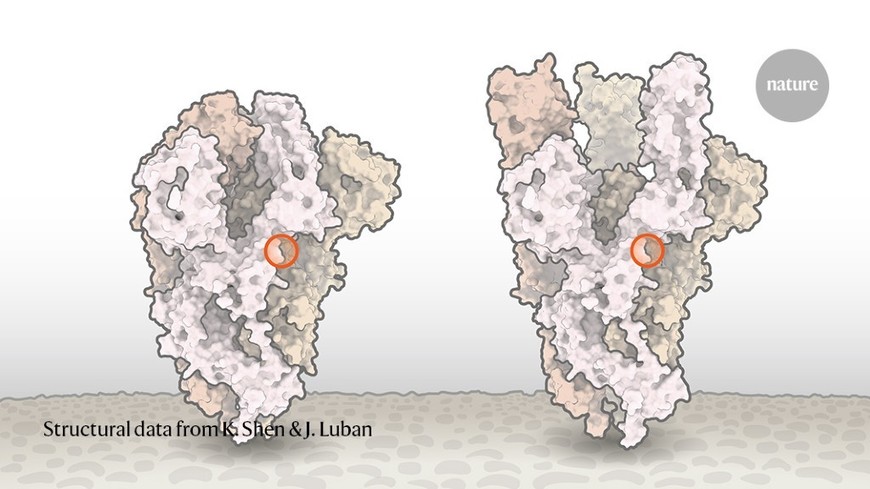
Different SARS-CoV-2 strains haven’t yet had a major impact on the course of the pandemic, but they might in future.
Source: www.nature.com

