Category: Papers

Networks beyond pairwise interactions: structure and dynamics

Federico Battiston, Giulia Cencetti, Iacopo Iacopini, Vito Latora, Maxime Lucas, Alice Patania, Jean-Gabriel Young, Giovanni Petri


The complexity of many biological, social and technological systems stems from the richness of the interactions among their units. Over the past decades, a great variety of complex systems has been successfully described as networks whose interacting pairs of nodes are connected by links. Yet, in face-to-face human communication, chemical reactions and ecological systems, interactions can occur in groups of three or more nodes and cannot be simply described just in terms of simple dyads. Until recently, little attention has been devoted to the higher-order architecture of real complex systems. However, a mounting body of evidence is showing that taking the higher-order structure of these systems into account can greatly enhance our modeling capacities and help us to understand and predict their emerging dynamical behaviors. Here, we present a complete overview of the emerging field of networks beyond pairwise interactions. We first discuss the methods to represent higher-order interactions and give a unified presentation of the different frameworks used to describe higher-order systems, highlighting the links between the existing concepts and representations. We review the measures designed to characterize the structure of these systems and the models proposed in the literature to generate synthetic structures, such as random and growing simplicial complexes, bipartite graphs and hypergraphs. We introduce and discuss the rapidly growing research on higher-order dynamical systems and on dynamical topology. We focus on novel emergent phenomena characterizing landmark dynamical processes, such as diffusion, spreading, synchronization and games, when extended beyond pairwise interactions. We elucidate the relations between higher-order topology and dynamical properties, and conclude with a summary of empirical applications, providing an outlook on current modeling and conceptual frontiers.

Source: arxiv.org

Universal evolution patterns of degree assortativity in social networks

Bin Zhou, Xin Lu, Petter Holme

Social Networks
Volume 63, October 2020, Pages 47-55


• A universal rise-and-fall pattern for assortativity is found in empirical networks
• The bidirectional selection model can re-construct the evolution of assortativity
• Heterogeneity of social status may drive the network evolution towards self-optimization
• The social status gap plays an important role for the evolution of network assortativity

Source: www.sciencedirect.com

On Assessing Control Actions for Epidemic Models on Temporal Networks

Lorenzo Zino ; Alessandro Rizzo ; Maurizio Porfiri

IEEE Control Systems Letters 4(4)


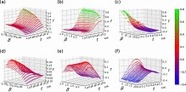
In this letter, we propose an epidemic model over temporal networks that explicitly encapsulates two different control actions. We develop our model within the theoretical framework of activity driven networks (ADNs), which have emerged as a valuable tool to capture the complexity of dynamical processes on networks, coevolving at a comparable time scale to the temporal network formation. Specifically, we complement a susceptible–infected–susceptible epidemic model with features that are typical of nonpharmaceutical interventions in public health policies: i) actions to promote awareness, which induce people to adopt self-protective behaviors, and ii) confinement policies to reduce the social activity of infected individuals. In the thermodynamic limit of large-scale populations, we use a mean-field approach to analytically derive the epidemic threshold, which offers viable insight to devise containment actions at the early stages of the outbreak. Through the proposed model, it is possible to devise an optimal epidemic control policy as the combination of the two strategies, arising from the solution of an optimization problem. Finally, the analytical computation of the epidemic prevalence in endemic diseases on homogeneous ADNs is used to optimally calibrate control actions toward mitigating an endemic disease. Simulations are provided to support our theoretical results.


Source: ieeexplore.ieee.org

Navigating the Landscape of Games

Shayegan Omidshafiei, Karl Tuyls, Wojciech M. Czarnecki, Francisco C. Santos, Mark Rowland, Jerome Connor, Daniel Hennes, Paul Muller, Julien Perolat, Bart De Vylder, Audrunas Gruslys, Remi Munos


Games are traditionally recognized as one of the key testbeds underlying progress in artificial intelligence (AI), aptly referred to as the "Drosophila of AI". Traditionally, researchers have focused on using games to build strong AI agents that, e.g., achieve human-level performance. This progress, however, also requires a classification of how ‘interesting’ a game is for an artificial agent. Tackling this latter question not only facilitates an understanding of the characteristics of learnt AI agents in games, but also helps to determine what game an AI should address next as part of its training. Here, we show how network measures applied to so-called response graphs of large-scale games enable the creation of a useful landscape of games, quantifying the relationships between games of widely varying sizes, characteristics, and complexities. We illustrate our findings in various domains, ranging from well-studied canonical games to significantly more complex empirical games capturing the performance of trained AI agents pitted against one another. Our results culminate in a demonstration of how one can leverage this information to automatically generate new and interesting games, including mixtures of empirical games synthesized from real world games.

Source: arxiv.org