Category: Papers

The information theory of individuality

David Krakauer, Nils Bertschinger, Eckehard Olbrich, Jessica C. Flack & Nihat Ay 
Theory in Biosciences volume 139, pages209–223(2020)


Despite the near universal assumption of individuality in biology, there is little agreement about what individuals are and few rigorous quantitative methods for their identification. Here, we propose that individuals are aggregates that preserve a measure of temporal integrity, i.e., “propagate” information from their past into their futures. We formalize this idea using information theory and graphical models. This mathematical formulation yields three principled and distinct forms of individuality—an organismal, a colonial, and a driven form—each of which varies in the degree of environmental dependence and inherited information. This approach can be thought of as a Gestalt approach to evolution where selection makes figure-ground (agent–environment) distinctions using suitable information-theoretic lenses. A benefit of the approach is that it expands the scope of allowable individuals to include adaptive aggregations in systems that are multi-scale, highly distributed, and do not necessarily have physical boundaries such as cell walls or clonal somatic tissue. Such individuals might be visible to selection but hard to detect by observers without suitable measurement principles. The information theory of individuality allows for the identification of individuals at all levels of organization from molecular to cultural and provides a basis for testing assumptions about the natural scales of a system and argues for the importance of uncertainty reduction through coarse-graining in adaptive systems.

Source: link.springer.com
Stocks and Cryptocurrencies: Anti-fragile or Robust?

Darío Alatorre, Carlos Gershenson, José L. Mateos


Antifragility was recently defined as a property of complex systems that benefit from disorder. However, its original formal definition is difficult to apply. Our approach has been to define and test a much simpler measure of antifragility for complex systems. In this work we use our antifragility measure to analyze real data from the stock market and cryptocurrency prices. Results vary between different antifragility interpretations and for each system. Our results suggest that the stock market favors robustness rather than antifragility, as in most cases the highest and lowest antifragility values are reached either by young agents or constant ones. There are no clear correlations between antifragility and different good-performance measures, while the best performers seem to fall within a robust threshold. In the case of cryptocurrencies, there is an apparent correlation between high price and high antifragility.

Source: arxiv.org

Complex Systems: A Communication Networks Perspective Towards 6G

Charalampos Sergiou ; Marios Lestas ; Pavlos Antoniou ; Christos Liaskos ; Andreas Pitsillides

IEEE Access ( Volume: 8 )


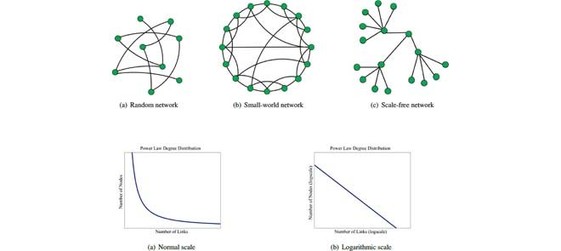
Over the last few years, the analysis and modeling of networks as well as the analysis and modeling of networked dynamical systems, has attracted considerable interdisciplinary interest, especially using the complex systems theory. These efforts are driven by the fact that systems, as diverse as genetic networks or the Internet can be effectively described as complex networks. Contrary, despite the unprecedented evolution of technology, basic issues and fundamental principles related to the structural and evolutionary properties of communication networks still remain largely unaddressed. The situation is even more complicated when we attempt to model the mobile communication networks and especially the 5th generation (5G) and eventually the forthcoming 6th generation (6G). In this work, we attempt to review basic models of complex networks from a communication networks perspective, focusing on their structural and evolutionary properties. Based on this review we aim to reveal the models of complex networks, that may apply when modeling the 5G and 6G mobile communication networks. Furthermore, we expect to encourage the collaboration between complex systems and networking theorists toward meeting the challenging demands of 5G networks and beyond.

Source: ieeexplore.ieee.org

The Coronavirus crisis: What will the post-pandemic city look like?

Michael Batty


Nothing, nothing whatsoever, could have prepared us for what has happened since the beginning of this year. I know that some researchers and public health professionals who have been modelling pandemics have argued that they were always aware of the risks but that no one has ever taken them seriously enough. Even Bill Gates (2015) has been preaching the dangers of a pandemic for years as reflected in his TED talk. But for over 100 years since the so-called Spanish flu at the end of the First World War, we have not really taken to heart the idea that everyone and everywhere might be infected by a disease that we were unable to control.

Source: spatialcomplexity.blogweb.casa.ucl.ac.uk

Mining Social Media Data for Biomedical Signals and Health-Related Behavior

Rion Brattig Correia, Ian B. Wood, Johan Bollen, and Luis M. Rocha

Annual Review of Biomedical Data Science Vol. 3


Social media data have been increasingly used to study biomedical and health-related phenomena. From cohort-level discussions of a condition to population-level analyses of sentiment, social media have provided scientists with unprecedented amounts of data to study human behavior associated with a variety of health conditions and medical treatments. Here we review recent work in mining social media for biomedical, epidemiological, and social phenomena information relevant to the multilevel complexity of human health. We pay particular attention to topics where social media data analysis has shown the most progress, including pharmacovigilance and sentiment analysis, especially for mental health. We also discuss a variety of innovative uses of social media data for health-related applications as well as important limitations of social media data access and use.

Source: www.annualreviews.org