
Category: Papers

Improving the Robustness of Online Social Networks: A Simulation Approach of Network Interventions

Giona Casiraghi and Frank Schweitzer

Front. Robot. AI, 28 April 2020


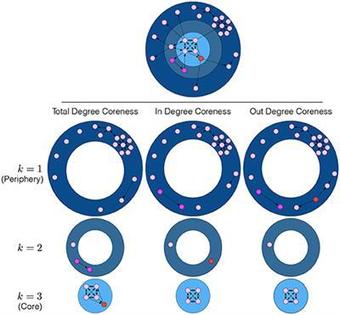
Online social networks (OSN) are prime examples of socio-technical systems in which individuals interact via a technical platform. OSN are very volatile because users enter and exit and frequently change their interactions. This makes the robustness of such systems difficult to measure and to control. To quantify robustness, we propose a coreness value obtained from the directed interaction network. We study the emergence of large drop-out cascades of users leaving the OSN by means of an agent-based model. For agents, we define a utility function that depends on their relative reputation and their costs for interactions. The decision of agents to leave the OSN depends on this utility. Our aim is to prevent drop-out cascades by influencing specific agents with low utility. We identify strategies to control agents in the core and the periphery of the OSN such that drop-out cascades are significantly reduced, and the robustness of the OSN is increased.

Source: www.frontiersin.org
Population flow drives spatio-temporal distribution of COVID-19 in China

Sudden, large-scale, and diffuse human migration can amplify localized outbreaks into widespread epidemics.1–4 Rapid and accurate tracking of aggregate population flows may therefore be epidemiologically informative. Here, we use mobile-phone-data-based counts of 11,478,484 people egressing or transiting through the prefecture of Wuhan between 1 January and 24 January 2020 as they moved to 296 prefectures throughout China. First, we document the efficacy of quarantine in ceasing movement. Second, we show that the distribution of population outflow from Wuhan accurately predicts the relative frequency and geographic distribution of COVID-19 infections through February 19, 2020, across all of China. Third, we develop a spatio-temporal “risk source” model that leverages population flow data (which operationalizes risk emanating from epidemic epicenters) to not only forecast confirmed cases, but also to identify high-transmission-risk locales at an early stage. Fourth, we use this risk source model to statistically derive the geographic spread of COVID-19 and the growth pattern based on the population outflow from Wuhan; the model yields a benchmark trend and an index for assessing COVID-19 community transmission risk over time for different locations. This approach can be used by policy-makers in any nation with available data to make rapid and accurate risk assessments and to plan allocation of limited resources ahead of ongoing outbreaks.


Jayson S. Jia, Xin Lu, Yun Yuan, Ge Xu, Jianmin Jia & Nicholas A. Christakis 
Nature (2020)

Source: www.nature.com

Controlling the Multifractal Generating Measures of Complex Networks

Ruochen Yang & Paul Bogdan
Scientific Reports volume 10, Article number: 5541 (2020)


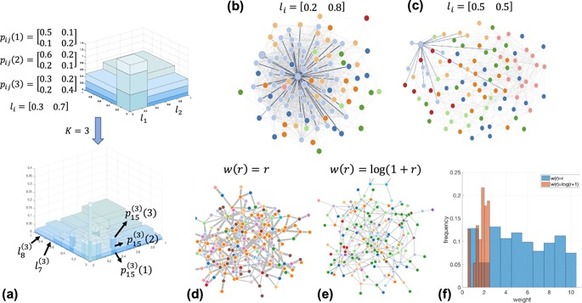
Mathematical modelling of real complex networks aims to characterize their architecture and decipher their underlying principles. Self-repeating patterns and multifractality exist in many real-world complex systems such as brain, genetic, geoscience, and social networks. To better comprehend the multifractal behavior in the real networks, we propose the weighted multifractal graph model to characterize the spatiotemporal complexity and heterogeneity encoded in the interaction weights. We provide analytical tools to verify the multifractal properties of the proposed model. By varying the parameters in the initial unit square, the model can reproduce a diverse range of multifractal spectrums with different degrees of symmetry, locations, support and shapes. We estimate and investigate the weighted multifractal graph model corresponding to two real-world complex systems, namely (i) the chromosome interactions of yeast cells in quiescence and in exponential growth, and (ii) the brain networks of cognitively healthy people and patients exhibiting late mild cognitive impairment leading to Alzheimer disease. The analysis of recovered models show that the proposed random graph model provides a novel way to understand the self-similar structure of complex networks and to discriminate different network structures. Additionally, by mapping real complex networks onto multifractal generating measures, it allows us to develop new network design and control strategies, such as the minimal control of multifractal measures of real systems under different functioning conditions or states.

Source: www.nature.com

An Agent-Based Model of Leader Emergence and Leadership Perception within a Collective

Shun Cao, Neil G. MacLaren, Yiding Cao, Yingjun Dong, Hiroki Sayama, Francis J. Yammarino, Shelley D. Dionne, Michael D. Mumford, Shane Connelly, Robert Martin, Colleen J. Standish, Tanner R. Newbold et al.

Complexity Volume 2020 | Article ID 6857891


Effective teamwork in an initially leaderless group requires a high level of collective leadership emerging from dynamic interactions among group members. Leader emergence is a crucial topic in collective leadership, yet it is challenging to investigate as the problem context is typically highly complex and dynamic. Here, we explore leadership emergence and leadership perception by means of computational simulations whose assumptions and parameters were informed by empirical research and human-subject experiments. Our agent-based model describes the process of group planning. Each agent is assigned with three key attributes: talkativeness, intelligence, and credibility. An agent can propose a suggestion to modify the group plan as a speaker or respond and evaluate others’ suggestions and leadership as a listener. Simulation results suggested that agents with high values of talkativeness, intelligence, and credibility tended to be perceived as leaders by their peers. Results also showed that talkativeness may be the most significant and instantaneous predictor for leader emergence of the three investigated attributes: talkativeness, intelligence, and credibility. In terms of group performance, smaller groups may outperform larger groups regarding their problem-solving ability in the beginning, but their performance tends to be of no significant difference in a long run. These results match the empirical literature and offer a mechanistic, operationalized description of the collective leadership processes.

Source: www.hindawi.com

Mobile phone data for informing public health actions across the COVID-19 pandemic life cycle

Nuria Oliver, Bruno Lepri, Harald Sterly, Renaud Lambiotte, Sébastien Delataille, Marco De Nadai, Emmanuel Letouzé, Albert Ali Salah, Richard Benjamins, Ciro Cattuto, Vittoria Colizza, Nicolas de Cordes, Samuel P. Fraiberger, Till Koebe, Sune Lehmann, Juan Murillo, Alex Pentland, Phuong N Pham, Frédéric Pivetta, Jari Saramäki, Samuel V. Scarpino, Michele Tizzoni, Stefaan Verhulst and Patrick Vinck

Science Advances 27 Apr 2020:
eabc0764


The coronavirus 2019-2020 pandemic (COVID-19) poses unprecedented challenges for governments and societies around the world (1). Non-pharmaceutical interventions (NPIs) have proven to be critical for delaying and containing the COVID-19 pandemic (2–6). This includes testing and tracing, bans on large gatherings, non-essential business and school and university closures, international and domestic mobility restrictions and physical isolation, and total lockdowns of regions and countries. Decision-making and evaluation or such interventions during all stages of the pandemic lifecycle require specific, reliable and timely data not only about infections, but also about human behavior, especially mobility and physical co-presence. We argue that mobile phone data, when used properly and carefully, represents a critical arsenal of tools for supporting public health actions across early, middle, and late-stage phases of the COVID-19 pandemic.

Source: advances.sciencemag.org