Category: Papers

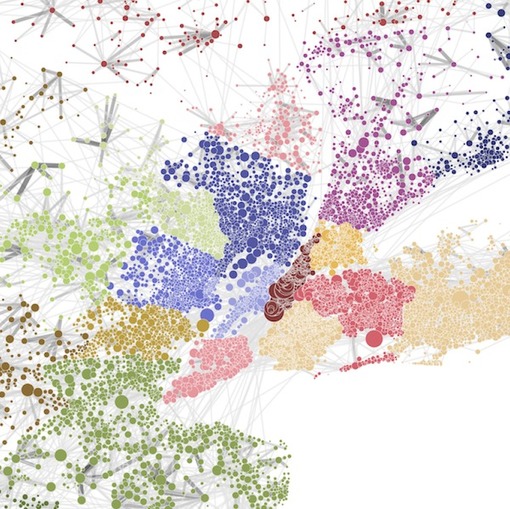
Assessing changes in commuting and individual mobility in major metropolitan areas in the United States during the COVID-19 outbreak

Brennan Klein, Timothy LaRock, Stefan McCabe, Leo Torres, Filippo Privitera, Brennan Lake, Moritz U. G. Kraemer, John S. Brownstein, David Lazer, Tina Eliassi-Rad, Samuel V. Scarpino, Matteo Chinazzi, and Alessandro Vespignani


On March 16, 2020, the United States government issued new guidelines promoting public health social social distancing interventions to reduce the spread of the COVID-19 epidemic in the country [1]. In addition, many state and local governments in the United States have enacted stay-at-home policies banning mass gatherings, enforcing school closures, and promoting smart working. So far, however, the extent to which these policies have resulted in reduced people’s mobility has not been quantified. By analyzing data from millions of (anonymized, aggregated, privacy-enhanced) devices, we estimate that by March 23 the policies have generally reduced by half the overall mobility in several major U.S. cities. In order to gauge the observed results we know events, we note that the commuting volume on Monday, March 16, approached those of a typical snow day or analogous day when public schools are partially closed (i.e. January 2). By Friday, March 20, we observe commuting numbers that resemble those measured on federal holidays (i.e. Martin Luther King Jr. Day in January or Presidents’ Day in February). Currently, we are unable to quantify the extent to which this reduced commuting volume is driven by people working from home or simply an increase in unemployment, though it is surely a mixture of both. Whether this reduction in mobility is enough to change the course of this pandemic is not yet known, but it does provide guidance for further measures that can be implemented at a national scale in the United States.


Source: www.networkscienceinstitute.org
Centralized and decentralized isolation strategies and their impact on the COVID-19 pandemic dynamics

Alexandru Topirceanu, Mihai Udrescu, Radu Marculescu


The infectious diseases are spreading due to human interactions enabled by various social networks. Therefore, when a new pathogen such as SARS-CoV-2 causes an outbreak, the non-pharmaceutical isolation strategies (e.g., social distancing) are the only possible response to disrupt its spreading. To this end, we introduce the new epidemic model (SICARS) and compare the centralized (C), decentralized (D), and combined (C+D) social distancing strategies, and analyze their efficiency to control the dynamics of COVID-19 on heterogeneous complex networks. Our analysis shows that the centralized social distancing is necessary to minimize the pandemic spreading. The decentralized strategy is insufficient when used alone, but offers the best results when combined with the centralized one. Indeed, the (C+D) is the most efficient isolation strategy at mitigating the network superspreaders and reducing the highest node degrees to less than 10% of their initial values. Our results also indicate that stronger social distancing, e.g., cutting 75% of social ties, can reduce the outbreak by 75% for the C isolation, by 33% for the D isolation, and by 87% for the (C+D) isolation strategy. Finally, we study the impact of proactive versus reactive isolation strategies, as well as their delayed enforcement. We find that the reactive response to the pandemic is less efficient, and delaying the adoption of isolation measures by over one month (since the outbreak onset in a region) can have alarming effects; thus, our study contributes to an understanding of the COVID-19 pandemic both in space and time. We believe our investigations have a high social relevance as they provide insights into understanding how different degrees of social distancing can reduce the peak infection ratio substantially; this can make the COVID-19 pandemic easier to understand and control over an extended period of time.

Source: arxiv.org

Complex Systems Collide, Markets Crash

At some point, systems flip from being complicated, which is a challenge to manage, to being complex. Complexity is more than a challenge because it opens the door to all kinds of unexpected crashes and events.

Their behavior cannot be reduced to their component parts. It’s as if they take on a life of their own.

Source: dailyreckoning.com

How the world’s collective attention is being paid to a pandemic: COVID-19 related 1-gram time series for 24 languages on Twitter

In confronting the global spread of the coronavirus disease COVID-19 pandemic we must have coordinated medical, operational, and political responses. In all efforts, data is crucial. Fundamentally, and in the possible absence of a vaccine for 12 to 18 months, we need universal, well-documented testing for both the presence of the disease as well as confirmed recovery through serological tests for antibodies, and we need to track major socioeconomic indices. But we also need auxiliary data of all kinds, including data related to how populations are talking about the unfolding pandemic through news and stories. To in part help on the social media side, we curate a set of 1000 day-scale time series of 1-grams across 24 languages on Twitter that are most `important’ for March 2020 with respect to March 2019. We determine importance through our allotaxonometric instrument, rank-turbulence divergence. We make some basic observations about some of the time series, including a comparison to numbers of confirmed deaths due to COVID-19 over time. We broadly observe across all languages a peak for the language-specific word for `virus’ in January followed by a decline through February and a recent surge through March. The world’s collective attention dropped away while the virus spread out from China. We host the time series on Gitlab, updating them on a daily basis while relevant. Our main intent is for other researchers to use these time series to enhance whatever analyses that may be of use during the pandemic as well as for retrospective investigations.

Source: arxiv.org