Category: Papers

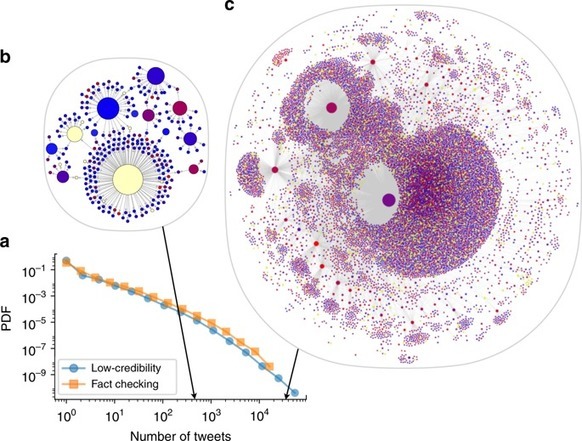
The spread of low-credibility content by social bots

Online misinformation is a threat to a well-informed electorate and undermines democracy. Here, the authors analyse the spread of articles on Twitter, find that bots play a major role in the spread of low-credibility content and suggest control measures for limiting the spread of misinformation.


The spread of low-credibility content by social bots
Chengcheng Shao, Giovanni Luca Ciampaglia, Onur Varol, Kai-Cheng Yang, Alessandro Flammini & Filippo Menczer
Nature Communications volume 9, Article number: 4787 (2018)

Source: www.nature.com

Fractional Dynamics of Individuals in Complex Networks

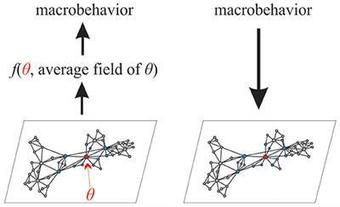
The relation between the behavior of a single element and the global dynamics of its host network is an open problem in the science of complex networks. We demonstrate that for a dynamic network that belongs to the Ising universality class, this problem can be approached analytically through a subordination procedure. The analysis leads to a linear fractional differential equation of motion for the average trajectory of the individual, whose analytic solution for the probability of changing states is a Mittag-Leffler function. Consequently, the analysis provides a linear description of the average dynamics of an individual, without linearization of the complex network dynamics.


Fractional Dynamics of Individuals in Complex Networks
Malgorzata Turalska and Bruce J. West

Front. Phys., 16 October 2018 | https://doi.org/10.3389/fphy.2018.00110

Source: www.frontiersin.org

Information Dynamics in Urban Crime

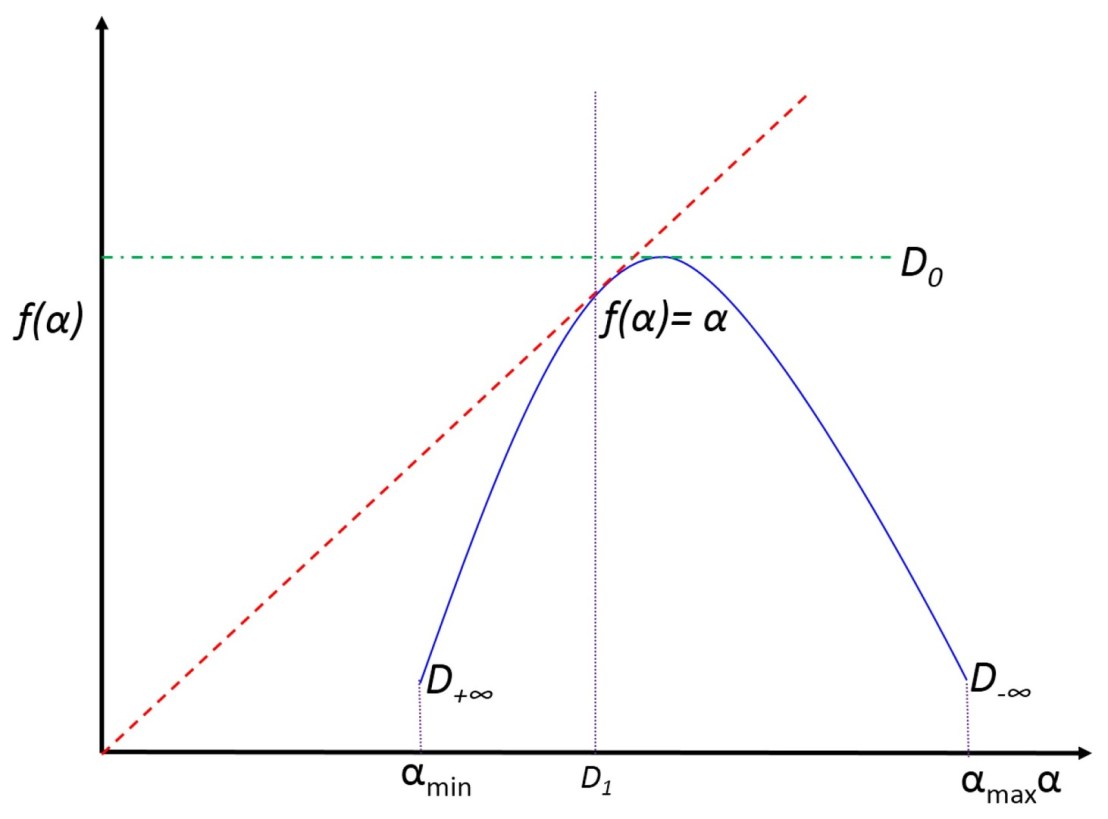
Information production in both space and time has been highlighted as one of the elements that shapes the footprint of complexity in natural and socio-technical systems. However, information production in urban crime has barely been studied. This work copes with this problem by using multifractal analysis to characterize the spatial information scaling in urban crime reports and nonlinear processing tools to study the temporal behavior of this scaling. Our results suggest that information scaling in urban crime exhibits dynamics that evolve in low-dimensional chaotic attractors, and this can be observed in several spatio-temporal scales, although some of them are more favorable than others. This evidence has practical implications in terms of defining the characteristic scales to approach urban crime from available data and supporting theoretical perspectives about the complexity of urban crime.


Information Dynamics in Urban Crime
Miguel Melgarejo and Nelson Obregon

Entropy 2018, 20(11), 874; https://doi.org/10.3390/e20110874

Source: www.mdpi.com

Cities, from Information to Interaction

From physics to the social sciences, information is now seen as a fundamental component of reality. However, a form of information seems still underestimated, perhaps precisely because it is so pervasive that we take it for granted: the information encoded in the very environment we live in. We still do not fully understand how information takes the form of cities, and how our minds deal with it in order to learn about the world, make daily decisions, and take part in the complex system of interactions we create as we live together. This paper addresses three related problems that need to be solved if we are to understand the role of environmental information: (1) the physical problem: how can we preserve information in the built environment? (2) The semantic problem: how do we make environmental information meaningful? and (3) the pragmatic problem: how do we use environmental information in our daily lives? Attempting to devise a solution to these problems, we introduce a three-layered model of information in cities, namely environmental information in physical space, environmental information in semantic space, and the information enacted by interacting agents. We propose forms of estimating entropy in these different layers, and apply these measures to emblematic urban cases and simulated scenarios. Our results suggest that ordered spatial structures and diverse land use patterns encode information, and that aspects of physical and semantic information affect coordination in interaction systems.


Cities, from Information to Interaction.
Netto, V.M.; Brigatti, E.; Meirelles, J.; Ribeiro, F.L.; Pace, B.; Cacholas, C.; Sanches, P.
Entropy 2018, 20, 834.
https://www.mdpi.com/1099-4300/20/11/834

Source: www.mdpi.com

Power and Leadership: A Complex Systems Science Approach Part I—Representation and Dynamics

Historical social narratives are dominated by the actions of powerful individuals as well as competitions for power including warfare, revolutions, and political change. Advancing our understanding of the origins, types and competitive strength of different kinds of power may yield a scaffolding for understanding historical processes and mechanisms for winning or avoiding conflicts. Michael Mann introduced a framework distinguishing four types of power: political, military, economic, and ideological. We show this framework can be justified based upon motivations of individuals to transfer decision making authority to leaders: Desire to be a member of a collective, avoiding harm due to threat, gaining benefit due to payment, acquiring a value system. Constructing models of societies based upon these types of power enables us to distinguish between social systems and describe their dynamics. Dynamical processes include (a) competition between power systems, (b) competition between powerful individuals within a power system of a society, and (c) the dynamics of values within a powerful individual. A historical trend in kinds of power systems is the progressive separation of types of power to distinct groups of individuals. In ancient empires all forms of power were concentrated in a single individual, e.g. Caesar during the Pax Romana period. In an idealized modern democratic state, the four types of power are concentrated in distinct sets of individuals. The progressive separation of the types of power suggests that in some contexts this confers a "fitness" advantage in an evolutionary process similar to the selection of biological organisms. However, individual countries may not separate power completely. The influence of wealth in politics and regulatory capture is a signature of the dominance of economic leaders, e.g. the US. Important roles of political leaders in economics and corruption are a signature of the dominance of political leaders, e.g. China. Ideological leaders dominate in theocracies, e.g. Iran. Military leaders dominate in dictatorships or countries where military leaders play a role in the selection of leaders, e.g. Egypt.


Yaneer Bar-Yam, Power and leadership: A complex systems science approach Part I—Representation and dynamics, arXiv:1811.02896 (November 7, 2018).

Source: www.necsi.edu