
Category: Papers

Centrality-Friendship Paradoxes: When Our Friends Are More Important Than Us

The friendship paradox states that, on average, our friends have more friends than we do. In network terms, the average degree over the nodes can never exceed the average degree over the neighbours of nodes. This effect, which is a classic example of sampling bias, has attracted much attention in the social science and network science literature, with variations and extensions of the paradox being defined, tested and interpreted. Here, we show that a version of the paradox holds rigorously for eigenvector centrality: on average, our friends are more important than us. We then consider general matrix-function centrality, including Katz centrality, and give sufficient conditions for the paradox to hold. We also discuss which results can be generalized to the cases of directed and weighted edges. In this way, we add theoretical support for a field that has largely been evolving through empirical testing.


Centrality-Friendship Paradoxes: When Our Friends Are More Important Than Us
Desmond J. Higham

Source: arxiv.org
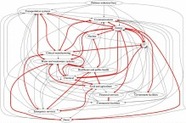
Optimization of privacy-utility trade-offs under informational self-determination

•A generic and novel computational framework is introduced for measuring and optimizing privacy-utility trade-offs.

•The framework applicability is validated analytically and empirically using real-world data from a Smart Grid pilot project.

•Privacy-utility trade-offs are optimized under informational self determination.


Optimization of privacy-utility trade-offs under informational self-determination
Thomas Asikis, Evangelos Pournaras

Future Generation Computer Systems

Source: www.sciencedirect.com

Social interactions shape individual and collective personality in social spiders

The behavioural composition of a group and the dynamics of social interactions can both influence how social animals work collectively. For example, individuals exhibiting certain behavioural tendencies may have a disproportionately large impact on the group, and so are referred to as keystone individuals, while interactions between individuals can facilitate information transmission about resources. Despite the potential impact of both behavioural composition and interactions on collective behaviour, the relationship between consistent behaviours (also known as personalities) and social interactions remains poorly understood. Here, we use stochastic actor-oriented models to uncover the interdependencies between boldness and social interactions in the social spider Stegodyphus dumicola. We find that boldness has no effect on the likelihood of forming social interactions, but interactions do affect boldness, and lead to an increase in the boldness of the shyer individual. Furthermore, spiders tend to interact with the same individuals as their neighbours. In general, boldness decreases over time, but once an individual’s boldness begins to increase, this increase accelerates, suggesting a positive feedback mechanism. These dynamics of interactions and boldness result in skewed boldness distributions of a few bold individuals and many shy individuals, as observed in nature. This group behavioural composition facilitates efficient collective behaviours, such as rapid collective prey attack. Thus, by examining the relationship between behaviour and interactions, we reveal the mechanisms that underlie the emergence of adaptive group composition and collective behaviour.


Social interactions shape individual and collective personality in social spiders
Edmund R. Hunt, Brian Mi, Camila Fernandez, Brandyn M. Wong, Jonathan N. Pruitt, Noa Pinter-Wollman

Proc. Roy. Soc. B
Published 5 September 2018.DOI: 10.1098/rspb.2018.1366

Source: rspb.royalsocietypublishing.org

Architecture and design for resilient networked systems

There is a need for new architectures and designs of resilient networked systems that are capable of supporting critical services and infrastructures. The arguments have previously been well rehearsed, but much remains to be done, not least to demonstrate the feasibility of building such systems.

Key among the remaining challenges is how to specify and realise appropriate components that interact with each other to produce a resulting resilient system. This paper reviews the state of the art, describes recent contributions, and looks ahead to future research and prospects.


Architecture and design for resilient networked systems
David Hutchison, James P.G.Sterbenz

Computer Communications

Source: www.sciencedirect.com

Geometrical effects on mobility

In this paper we analyze the effect of randomly deleting streets of a synthetic city on the statistics of displacements. Our city is constituted initially by a set of streets that form a regular tessellation of the euclidean plane. Therefore we will have three types of cities, formed by squares, triangles or hexagons. We studied the complementary cumulative distribution function for displacements (CCDF). For the whole set of streets the CCDF is a stretched exponential, and as streets are deleted this function becomes a linear function and then two clear different exponentials. This behavior is qualitatively the same for all the tessellations. Most of this functions has been reported in the literature when studying the displacements of individuals based on cell data trajectories and GPS information. However, in the light of this work, the appearance of different functions for displacements CCDF can be attributed to the connectivity of the underlying street network. It is remarkably that for some proportion of streets we got a linear function for such function, and as far as we know this behavior has not been reported nor considered. Therefore, it is advisable to analyze experimental in the light of connectivity of the street network to make correlations with the present work.


Geometrical effects on mobility
Jorge H. Lopez

Source: arxiv.org