Category: Papers

Robot Collection and Transport of Objects: A Biomimetic Process

Animals as diverse as ants and humans are faced with the tasks of collecting, transporting or herding objects. Sheepdogs do this daily when they collect, herd, and maneuver flocks of sheep. Here, we adapt a shepherding algorithm inspired by sheepdogs to collect and transport objects using a robot. Our approach produces an effective robot collection process that autonomously adapts to changing environmental conditions and is robust to noise from various sources. We suggest that this biomimetic process could be implemented into suitable robots to perform collection and transport tasks that might include – for example – cleaning up objects in the environment, keeping animals away from sensitive areas or collecting and herding animals to a specific location. Furthermore, the feedback controlled interactions between the robot and objects which we study can be used to interrogate and understand the local and global interactions of real animal groups, thus offering a novel methodology of value to researchers studying collective animal behavior.


Robot Collection and Transport of Objects: A Biomimetic Process

Daniel Strömbom and Andrew J. King

Front. Robot. AI, 18 May 2018 | https://doi.org/10.3389/frobt.2018.00048

Source: www.frontiersin.org
Meeting resistance

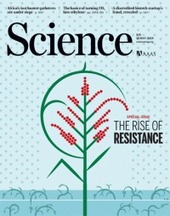
Almost as soon as antibiotics were discovered to be valuable in medicine, resistance emerged among bacteria. Whenever mutating or recombining organisms are faced with extirpation, those individuals with variations that avert death will survive and reproduce to take over the population. This can happen rapidly among organisms that reproduce fast and outpace our efforts to combat them. Thus, our use of chemical entities to rid ourselves of clinical, domestic, and agricultural pathogens and pests has selected for resistance.

Today, we find ourselves at the nexus of an alarming acceleration of resistance to antibiotics, insecticides, and herbicides. Through chemical misuse, resistance also brings widespread collateral damage to natural, social, and economic systems. Resistance to antifungal agents poses a particular challenge because a limited suite of chemicals is used in both agricultural and clinical settings.


INTRODUCTION TO SPECIAL ISSUE
Meeting resistance
Caroline Ash

Science  18 May 2018:
Vol. 360, Issue 6390, pp. 726-727
DOI: 10.1126/science.360.6390.726

Source: science.sciencemag.org

10 Breakthrough Technologies Making Promising Progress in 2018

Dueling neural networks. Artificial embryos. AI in the cloud. Welcome to our annual list of the 10 technology advances we think will shape the way we work and live now and for years to come.


Every year since 2001 the people at Technology Review have picked what they call the 10 Breakthrough Technologies. People often ask, what exactly is meant by “breakthrough”? It’s a reasonable question—some of the picks haven’t yet reached widespread use, while others may be on the cusp of becoming commercially available. What Technology Review is really looking for is a technology, or perhaps even a collection of technologies, that will have a profound effect on our lives.


For 2018, a new technique in artificial intelligence called GANs is giving machines imagination; artificial embryos, despite some thorny ethical constraints, are redefining how life can be created and are opening a research window into the early moments of a human life; and a pilot plant in the heart of Texas’s petrochemical industry is attempting to create completely clean power from natural gas—probably a major energy source for the foreseeable future.

Source: www.technologyreview.com

The reachability of contagion in temporal contact networks: how disease latency can exploit the rhythm of human behavior

The reproductive potential of pathogens is linked inextricably to the host social behavior required for transmission. We propose that future work should consider contact periodicity in models of disease dynamics, and suggest the possibility that disease control strategies may be designed to optimize against the effects of synchronization.


The reachability of contagion in temporal contact networks: how disease latency can exploit the rhythm of human behavior
Ewan ColmanEmail author, Kristen Spies and Shweta Bansal
BMC Infectious Diseases201818:219
https://doi.org/10.1186/s12879-018-3117-6

Source: bmcinfectdis.biomedcentral.com

The gender gap in science: How long until women are equally represented?

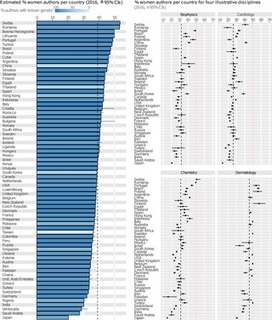
In most fields of science, medicine, and technology research, men comprise more than half of the workforce, particularly at senior levels. Most previous work has concluded that the gender gap is smaller today than it was in the past, giving the impression that there will soon be equal numbers of men and women researchers and that current initiatives to recruit and retain more women are working adequately. Here, we used computational methods to determine the numbers of men and women authors listed on >10 million academic papers published since 2002, allowing us to precisely estimate the gender gap among researchers, as well as its rate of change, for most disciplines of science and medicine. We conclude that many research specialties (e.g., surgery, computer science, physics, and maths) will not reach gender parity this century, given present-day rates of increase in the number of women authors. Additionally, the gender gap varies greatly across countries, with Japan, Germany, and Switzerland having strikingly few women authors. Women were less often commissioned to write ‘invited’ papers, consistent with gender bias by journal editors, and were less often found in authorship positions usually associated with seniority (i.e., the last-listed or sole author). Our results support a need for further reforms to close the gender gap.


Holman L, Stuart-Fox D, Hauser CE (2018) The gender gap in science: How long until women are equally represented? PLoS Biol 16(4): e2004956. https://doi.org/10.1371/journal.pbio.2004956

Source: journals.plos.org