
My last post was about Paul Cilliers’s 7 characteristics of complex systems. In this post I want to explore 7 of the implications of complexity that he thought was important for those working in and on organisations (…)
Source: www.morebeyond.co.za
Networking the complexity community since 1999
Category: Papers
My last post was about Paul Cilliers’s 7 characteristics of complex systems. In this post I want to explore 7 of the implications of complexity that he thought was important for those working in and on organisations (…)
Source: www.morebeyond.co.za

Recent research on the network modeling of complex systems has led to a convenient representation of numerous natural, social, and engineered systems that are now recognized as networks of interacting parts. Such systems can exhibit a wealth of phenomena that not only cannot be anticipated from merely examining their parts, as per the textbook definition of complexity, but also challenge intuition even when considered in the context of what is now known in network science. Here, we review the recent literature on two major classes of such phenomena that have far-reaching implications: (a) antagonistic responses to changes of states or parameters and (b) coexistence of seemingly incongruous behaviors or properties—both deriving from the collective and inherently decentralized nature of the dynamics. They include effects as diverse as negative compressibility in engineered materials, rescue interactions in biological networks, negative resistance in fluid networks, and the Braess paradox occurring across transport and supply networks. They also include remote synchronization, chimera states, and the converse of symmetry breaking in brain, power-grid, and oscillator networks as well as remote control in biological and bioinspired systems. By offering a unified view of these various scenarios, we suggest that they are representative of a yet broader class of unprecedented network phenomena that ought to be revealed and explained by future research.
Antagonistic Phenomena in Network Dynamics
Adilson E. Motter and Marc Timme
Annual Review of Condensed Matter Physics
Vol. 9:463-484 (Volume publication date March 2018)
https://doi.org/10.1146/annurev-conmatphys-033117-054054
Source: www.annualreviews.org
Debates on lethal autonomous weapon systems have proliferated in the past 5 years. Ethical concerns have been voiced about a possible raise in the number of wrongs and crimes in military operations and about the creation of a “responsibility gap” for harms caused by these systems. To address these concerns, the principle of “meaningful human control” has been introduced in the legal–political debate; according to this principle, humans not computers and their algorithms should ultimately remain in control of, and thus morally responsible for, relevant decisions about (lethal) military operations. However, policy-makers and technical designers lack a detailed theory of what “meaningful human control” exactly means. In this paper, we lay the foundation of a philosophical account of meaningful human control, based on the concept of “guidance control” as elaborated in the philosophical debate on free will and moral responsibility. Following the ideals of “Responsible Innovation” and “Value-sensitive Design,” our account of meaningful human control is cast in the form of design requirements. We identify two general necessary conditions to be satisfied for an autonomous system to remain under meaningful human control: first, a “tracking” condition, according to which the system should be able to respond to both the relevant moral reasons of the humans designing and deploying the system and the relevant facts in the environment in which the system operates; second, a “tracing” condition, according to which the system should be designed in such a way as to grant the possibility to always trace back the outcome of its operations to at least one human along the chain of design and operation. As we think that meaningful human control can be one of the central notions in ethics of robotics and AI, in the last part of the paper, we start exploring the implications of our account for the design and use of non-military autonomous systems, for instance, self-driving cars.
Meaningful Human Control over Autonomous Systems: A Philosophical Account
Filippo Santoni de Sio and Jeroen Van den Hoven
Front. Robot. AI, 28 February 2018 | https://doi.org/10.3389/frobt.2018.00015
Source: www.frontiersin.org
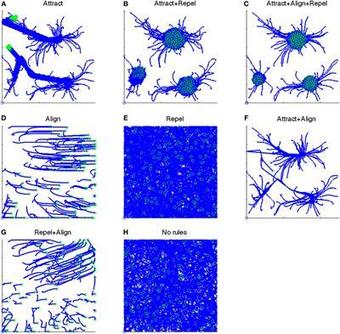
Computer-based swarm systems, aiming to replicate the flocking behavior of birds, were first introduced by Reynolds in 1987. In his initial work, Reynolds noted that while it was difficult to quantify the dynamics of the behavior from the model, observers of his model immediately recognized them as a representation of a natural flock. Considerable analysis has been conducted since then on quantifying the dynamics of flocking/swarming behavior. However, no systematic analysis has been conducted on human identification of swarming. In this paper, we assess subjects’ assessment of the behavior of a simplified version of Reynolds’ model. Factors that affect the identification of swarming are discussed and future applications of the resulting models are proposed. Differences in decision times for swarming-related questions asked during the study indicate that different brain mechanisms may be involved in different elements of the behavior assessment task. The relatively simple but finely tunable model used in this study provides a useful methodology for assessing individual human judgment of swarming behavior.
Assessing Human Judgment of Computationally Generated Swarming Behavior
John Harvey, Kathryn Elizabeth Merrick and Hussein A. Abbass
Front. Robot. AI, 22 February 2018 | https://doi.org/10.3389/frobt.2018.00013
Source: www.frontiersin.org
Through theoretical analysis, we show how a superorganism may react to stimulus variations according to psychophysical laws observed in humans and other animals. We investigate an empirically-motivated honeybee house-hunting model, which describes a value-sensitive decision process over potential nest-sites, at the level of the colony. In this study, we show how colony decision time increases with the number of available nests, in agreement with the Hick-Hyman law of psychophysics, and decreases with mean nest quality, in agreement with Piéron’s law. We also show that colony error rate depends on mean nest quality, and difference in quality, in agreement with Weber’s law. Psychophysical laws, particularly Weber’s law, have been found in diverse species, including unicellular organisms. Our theoretical results predict that superorganisms may also exhibit such behaviour, suggesting that these laws arise from fundamental mechanisms of information processing and decision-making. Finally, we propose a combined psychophysical law which unifies Hick-Hyman’s law and Piéron’s law, traditionally studied independently; this unified law makes predictions that can be empirically tested.
A. Reina, T. Bose, V. Trianni, J.A.R. Marshall (2018). Psychophysical Laws and the Superorganism. Scientific Reports 8:4387. doi:10.1038/s41598-018-22616-y
https://www.nature.com/articles/s41598-018-22616-y
Source: www.nature.com

