

Category: Papers

Evolving Ecosystems: Inheritance and Selection in the Light of the Microbiome

The importance of microorganisms in human biology is undeniable. The amount of research that supports that microbes have a fundamental role in animal and plant physiology is substantial and increasing every year. Even though we are only beginning to comprehend the broadness and complexity of microbial communities, evolutionary theories need to be recast in the light of such discoveries to fully understand and incorporate the role of microbes in our evolution. Fundamental evolutionary concepts such as diversity, heredity, selection, speciation, etc., which constitute the modern synthesis, are now being challenged, or at least expanded, by the emerging notion of the holobiont, which defines the genetic and metabolic networks of the host and its microbes as a single evolutionary unit. Several concepts originally developed to study ecosystems, can be used to understand the physiology and evolution of such complex systems that constitute “individuals.” In this review, we discuss these ecological concepts and also provide examples that range from squids, insects and koalas to other mammals and humans, suggesting that microorganisms have a fundamental role not only in physiology but also in evolution. Current evolutionary theories need to take into account the dynamics and interconnectedness of the host-microbiome network, as animals and plants not only owe their symbiogenetic origin to microbes, but also share a long evolutionary history together.


Evolving Ecosystems: Inheritance and Selection in the Light of the Microbiome

Santiago Sandoval-Motta, Maximino Aldana, Alejandro Frank

Archives of Medical Research

https://doi.org/10.1016/j.arcmed.2018.01.002

Source: www.arcmedres.com
A Review of Future and Ethical Perspectives of Robotics and AI

In recent years, there has been increased attention on the possible impact of future robotics and AI systems. Prominent thinkers have publicly warned about the risk of a dystopian future when the complexity of these systems progresses further. These warnings stand in contrast to the current state-of-the-art of the robotics and AI technology. This article reviews work considering both the future potential of robotics and AI systems, and ethical considerations that need to be taken in order to avoid a dystopian future. References to recent initiatives to outline ethical guidelines for both the design of systems and how they should operate are included.


A Review of Future and Ethical Perspectives of Robotics and AI

Jim Torresen

Front. Robot. AI, 15 January 2018 | https://doi.org/10.3389/frobt.2017.00075

Source: www.frontiersin.org

An interview based study of pioneering experiences in teaching and learning Complex Systems in Higher Education

Due to the interdisciplinary nature of complex systems as a field, students studying complex systems at University level have diverse disciplinary backgrounds. This brings challenges (e.g. wide range of computer programming skills) but also opportunities (e.g. facilitating interdisciplinary interactions and projects) for the classroom. However, there is little published regarding how these challenges and opportunities are handled in teaching and learning Complex Systems as an explicit subject in higher education, and how this differs in comparison to other subject areas. We seek to explore these particular challenges and opportunities via an interview-based study of pioneering teachers and learners (conducted amongst the authors) regarding their experiences. We compare and contrast those experiences, and analyse them with respect to the educational literature. Our discussions explored: approaches to curriculum design, how theories/models/frameworks of teaching and learning informed decisions and experience, how diversity in student backgrounds was addressed, and assessment task design. We found a striking level of commonality in the issues expressed as well as the strategies to handle them, for example a significant focus on problem-based learning, and the use of major student-led creative projects for both achieving and assessing learning outcomes.


J.T. Lizier, M.S. Harré, M. Mitchell, S. DeDeo, C. Finn, K. Lindgren, A.L. Lizier, H. Sayama

“An interview based study of pioneering experiences in teaching and learning Complex Systems in Higher Education”

arXiv:1802.02707, 2018

Source: arxiv.org

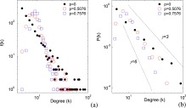
Generating clustered scale-free networks using Poisson based localization of edges

  • We introduce a variety of methods for generating clustered scale-free networks.
  • The Watts-Strogatz model is verified by reverse way.
  • Connections to spatially closer neighbors are promoted by Poisson based rewiring.
  • Barabasi-Albert model is rewired to have more local connections.
  • Growing clustered scale-free models with simple but efficient approaches are introduced.


Generating clustered scale-free networks using Poisson based localization of edges
İlker Türker

Physica A: Statistical Mechanics and its Applications

Source: www.sciencedirect.com

Editorial: Metastable Dynamics of Neural Ensembles

A classical view of neural computation is that it can be characterized in terms of convergence to fixed-point-type attractor states (representing for instance memory patterns in Hopfield, 1982) or limit-cycle-like sequential transitions among states (mapping e.g., motor or syntactical sequences in Elman, 1990). After over three decades, is this still a valid model of how brain dynamics implements cognition? The idea that neuro-computational dynamics is mainly deterministically driven by convergence to emergent stable states in a synaptic/network noisy background has been lively debated, and recently challenged both empirically and by computational work. This question touches on the very basics of our understanding of neural computation; and hence it is one of the most exciting topics currently in systems and computational neuroscience.

This e-book comprises a comprehensive collection of recent theoretical and experimental contributions addressing the question of stable versus transient neural population dynamics, and its implications for the observed variability in neural activity, from diverse, complementary angles.


Editorial: Metastable Dynamics of Neural Ensembles
Emili Balaguer-Ballester, Ruben Moreno-Bote, Gustavo Deco, and Daniel Durstewitz

Front. Syst. Neurosci., 26 January 2018 | https://doi.org/10.3389/fnsys.2017.00099

Source: www.frontiersin.org